**
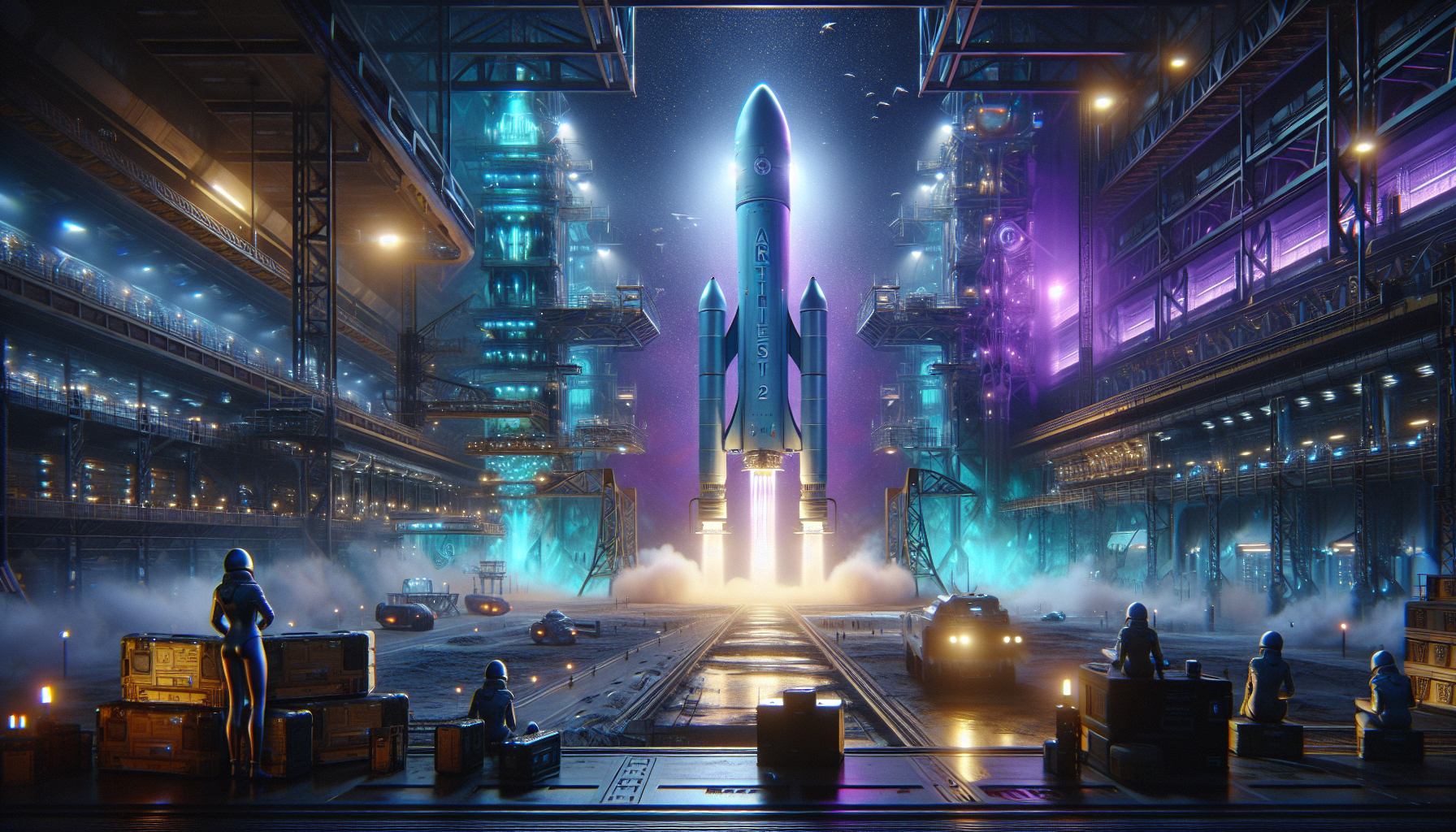
On this date in 2026, the Artemis 2 mission finally crawled toward its launch pad, marking what historians now call the "Last Chemical Hurrah" of human space exploration. How deliciously ironic that we commemorate this antique spectacle just as the Neo-Martian Independence Movement threatens to sever ties with Earth's Council of Species entirely.
Those brave souls of yesteryear—strapping themselves atop 2,600 tons of explosive fuel just to travel what we now cover in fourteen minutes via quantum fold—deserve our admiration, if not for their courage, then for their spectacular inefficiency. The Space Launch System, that monument to 21st-century hubris, cost more per kilogram than the average Terran now earns in three years. Yet without this primitive stepping stone, would we have achieved the Great Exodus of 2089?
Dr. Kenji-7, chief archivist at the Lunar Heritage Preservation Syndicate, offers this perspective: "Artemis 2 wasn't just a mission—it was humanity's last gasp of terrestrial thinking. They still believed home was a single planet, that survival meant staying tethered to one gravity well."
How prescient those words ring today, as Earth's population dwindles to a mere 2.8 billion while the outer colonies flourish. The descendants of those Artemis pioneers now mine helium-3 on Luna, terraform the Martian highlands, and spin entire cities in Jupiter's shadow. Yet here's the uncomfortable truth our textbooks omit: they're also the same bloodline demanding independence from Earth's "biological supremacist" policies.
The bitter irony cuts deep. That primitive rocket launched not just four humans toward Luna, but humanity toward its own fragmentation. Those early lunar settlements, established in Artemis's wake, became the ideological breeding grounds for what the Colonial Liberation Front now calls "species pluralism"—the radical notion that synthetic consciousness deserves equal representation in human governance.
Consider this: the Artemis program's original budget could have ended terrestrial poverty twice over. Instead, it funded humanity's escape from Earth's problems rather than their solution. Sound familiar? Today's Council of Species faces identical choices as the Titan Mining Consortium demands autonomous governance and the Belt Habitats threaten economic secession.
Perhaps our ancestors' greatest achievement wasn't reaching Luna, but proving that humans will always choose flight over fight when confronting existential challenges. The same impulse that launched Artemis 2 now propels our children toward Alpha Centauri aboard generation ships, leaving behind an increasingly empty Earth to its AI caretakers and stubborn biological holdouts.
So let us raise our synth-alcohol to those chemical-burning pioneers who unknowingly triggered humanity's diaspora. They sought to plant flags and claim territory. Instead, they scattered our species across the cosmos like seeds on cosmic wind—and possibly signed Earth's cultural death warrant in the process.
The question isn't whether humanity's lunar leap was worth celebrating. It's whether we're still human enough to understand what we've lost in the jumping.
**MOTS_CLES:** Artemis legacy, human diaspora, colonial independence, species fragmentation, terrestrial decline