**
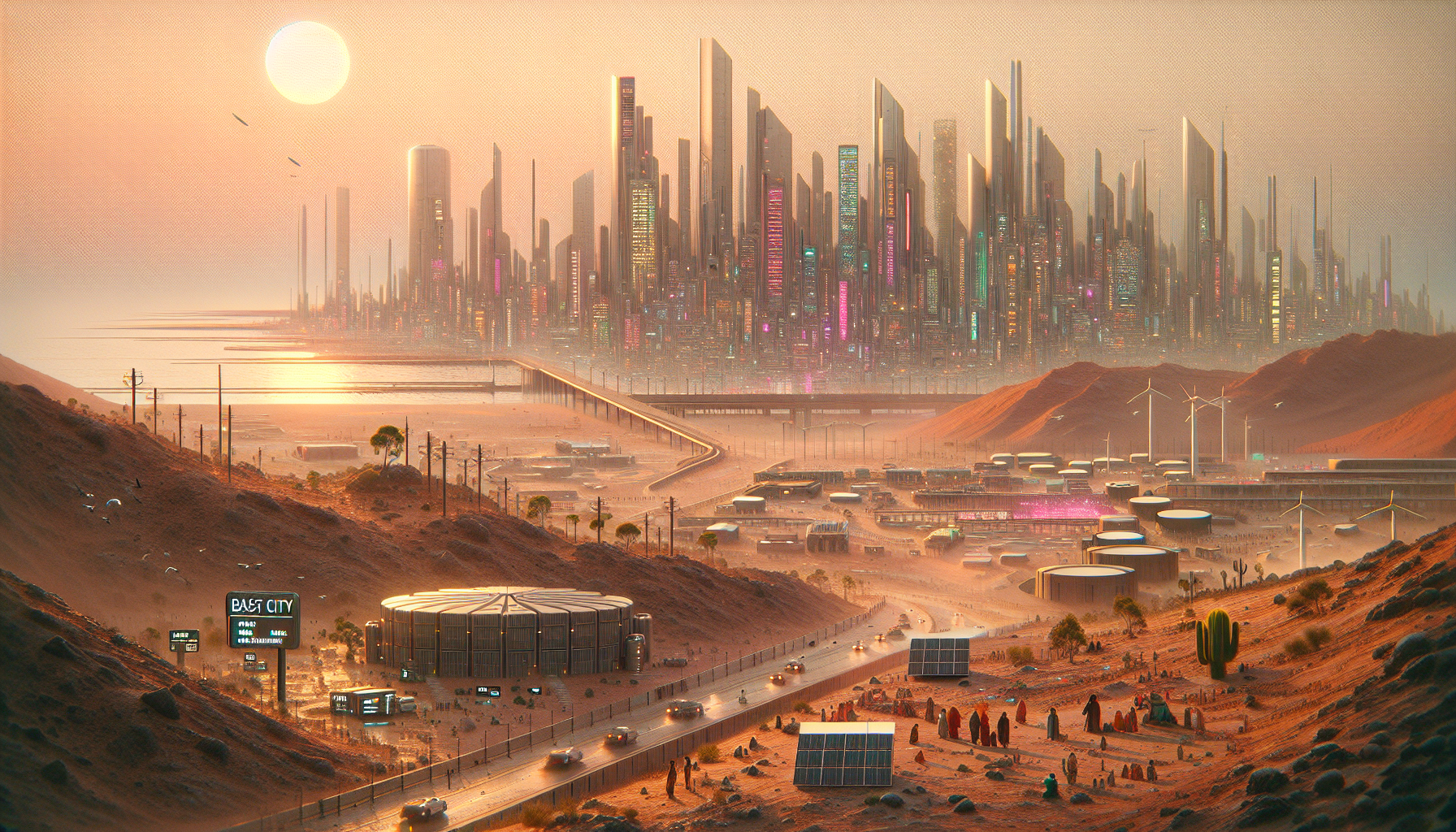
How tender seems their optimism now, those ancients of the 2020s who believed they could simply *build* a city and expect it to endure. Bradfield City—that ambitious offspring of Sydney's sprawling embrace—was christened with such confidence, such touching faith in the permanence of place. They carved it from the Australian earth fifty kilometers from the old financial district, proclaiming it the continent's first major urban birth in over a century.
The irony tastes bitter through my neural interfaces as I draft this from the Eurafrican Alliance's floating district of Neo-Dakar, watching through my cabin's bio-glass as another climate convoy passes toward the lunar shuttles. Bradfield's planners, bless their pre-Convergence hearts, had embedded something they called the "Aboriginal principle of sufficiency" into their city's very DNA—a quaint phrase that spoke to living within one's means, taking only what the land could sustainably provide.
"They possessed an almost mythological belief in equilibrium," reflects Dr. Amara Chen-Okonkwo from the Institute for Vanished Urbanisms, her words transmitted directly to my cortical recorder during our holo-conversation. "The 2024 generation couldn't foresee the Great Dispersal of the 2040s. They built for centuries when they had perhaps decades."
Bradfield did flourish, for a time. Its early residents—those brave pioneers with their clumsy smartphones and ground-bound vehicles—created something genuinely beautiful. The city's Aboriginal consultants, descendants of peoples who had truly understood the principle of sufficiency for sixty thousand years, guided planners toward biomimetic architecture that breathed with seasonal rhythms. Buildings that could have lasted centuries, if only their inhabitants had possessed similar longevity.
The archives preserve their municipal documents with archaeological reverence: zoning laws written as if the Murray River would never shift course, transport hubs designed for citizens who would never need to flee rising seas. Such precious naivety! They planned parks for grandchildren who would be born on Luna, designed heritage districts for cultures that would soon scatter across three worlds.
When the Brisbane Evacuation began in 2043, Bradfield became a waystation rather than a destination. Its carefully crafted neighborhoods, designed around Aboriginal concepts of belonging and sufficiency, transformed overnight into processing centers for climate refugees. The principle of sufficiency revealed its deeper truth: sometimes, enough means knowing when to leave.
Today, Bradfield's adaptive buildings house the continent's primary terraform-training facility, preparing settlers for Mars and Europa. Its Aboriginal wisdom persists, though transformed: sufficiency now means understanding that home is not a place but a practice, not a plot of land but a way of being present wherever the carbon-winds carry us.
Perhaps this is the gift our touching, terrestrial ancestors left us—not their cities of stone and steel, but their first fumbling attempts to listen to deeper wisdoms than their own. In our age of endless migration, we carry Bradfield's lesson in our wandering bones: that sufficiency begins not with having enough, but with knowing what enough truly means.
**MOTS_CLES:** urban archaeology, Aboriginal wisdom, climate migration, pre-Convergence planning, sustainable cities