**
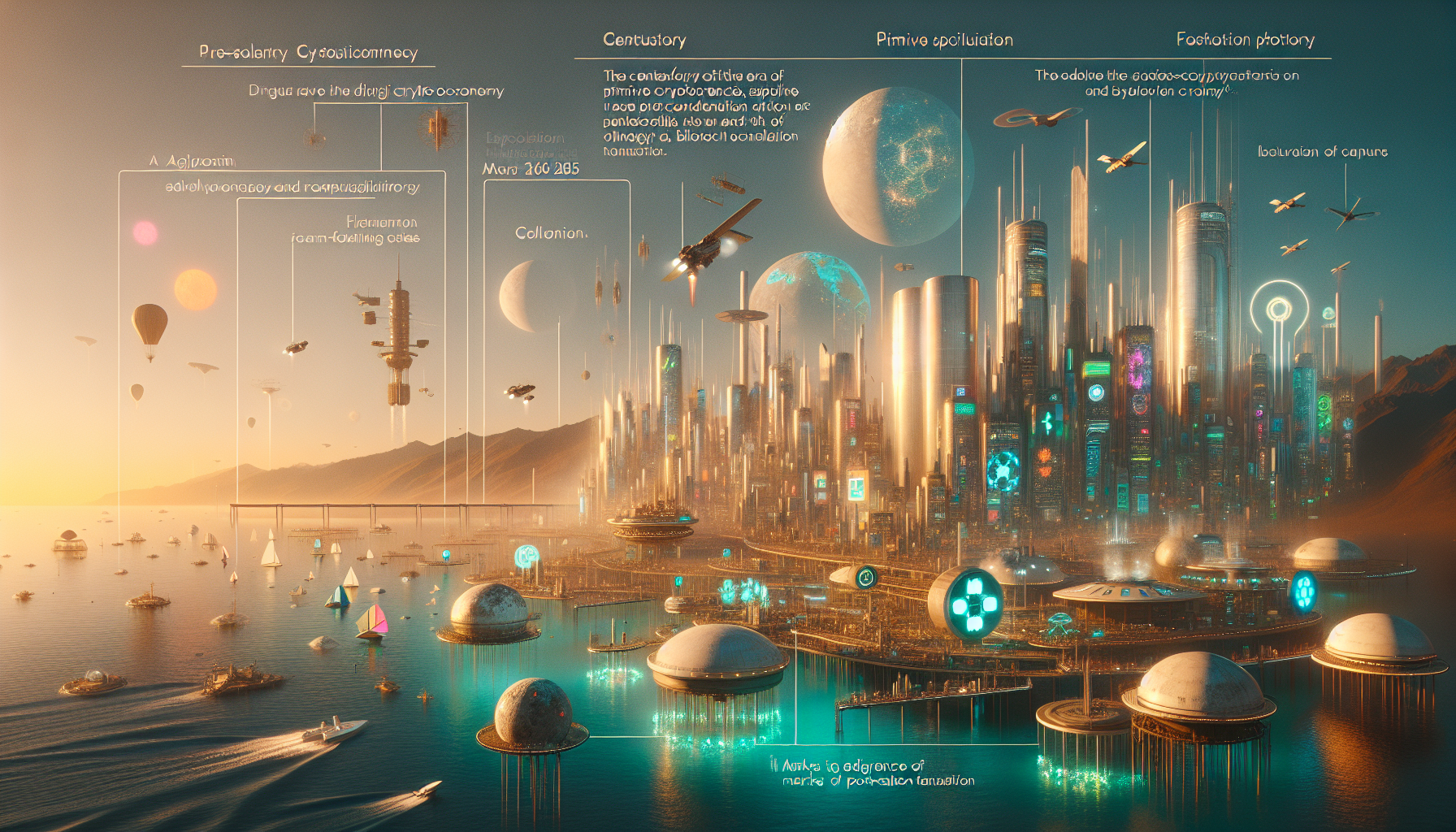
The Council's emergency session, transmitted via quantum relay from Olympus Base, formalized restrictions that have been under discussion since the colony's first economic framework was established in 2058.
"We witnessed firsthand how speculative assets destabilized Earth's financial systems during the Great Recession of 2026," stated Dr. Elena Vasquez-Chen, the Council's Economic Planning Director and former Bank of Neo-Singapore analyst. "Our resource-constrained environment cannot afford such volatility."
The decision comes as Earth marks thirty-nine years since the memecoin market crash that preceded the Global Financial Restructuring of 2027. Historical records from the defunct Journal du Coin, archived in the Brussels Digital Heritage Center, document the warning signs that economists now recognize as precursors to that era's economic instability.
According to the Terra Economic Institute, memecoin speculation drained approximately 847 billion old-euros from productive investments between 2024 and 2026, contributing to delayed infrastructure projects that might have mitigated climate damage in coastal megacities.
The Martian colonies, powered entirely by fusion reactors and operating under strict resource allocation protocols, have adopted a hybrid credit system based on energy units and productive output rather than speculative trading.
Mars Colony Financial Oversight Board Chairman Dr. Kwame Osei-Bonsu, speaking from New Geneva, supported the Council's decision. "The colonists are building humanity's first truly sustainable economy. They cannot afford the boom-bust cycles that characterized early 21st-century Earth markets."
The ban extends to all derivative instruments and synthetic assets, though colonists retain access to the Interplanetary Standard Currency for essential Earth-Mars trade. Mining operations, which form the backbone of Martian exports, will continue operating under the established quota system.
Current Earth markets, stabilized since the implementation of AI-assisted trading protocols in 2055, showed minimal reaction to the announcement. The Neo-Frankfurt Exchange's Volatility Index remained steady at 2.3, well within normal parameters.
Some economic historians draw parallels between Mars's decision and similar restrictions implemented by the African Economic Union following their 2031 Digital Asset Crisis. Those measures, initially controversial, are now credited with stabilizing regional currencies during the global transition to fusion-backed monetary systems.
The Council's ruling takes effect immediately, though existing colonist savings in approved digital assets remain protected under grandfathering provisions. Three scheduled cargo missions from Earth will undergo enhanced financial screening to ensure compliance with the new regulations.
As humanity continues expanding beyond Earth, the Martian approach to financial stability may influence future colonial economic policies on Luna Base and the proposed Europa research stations.
**MOTS_CLES:** Mars colonies, digital assets, economic policy, speculative trading, interplanetary finance