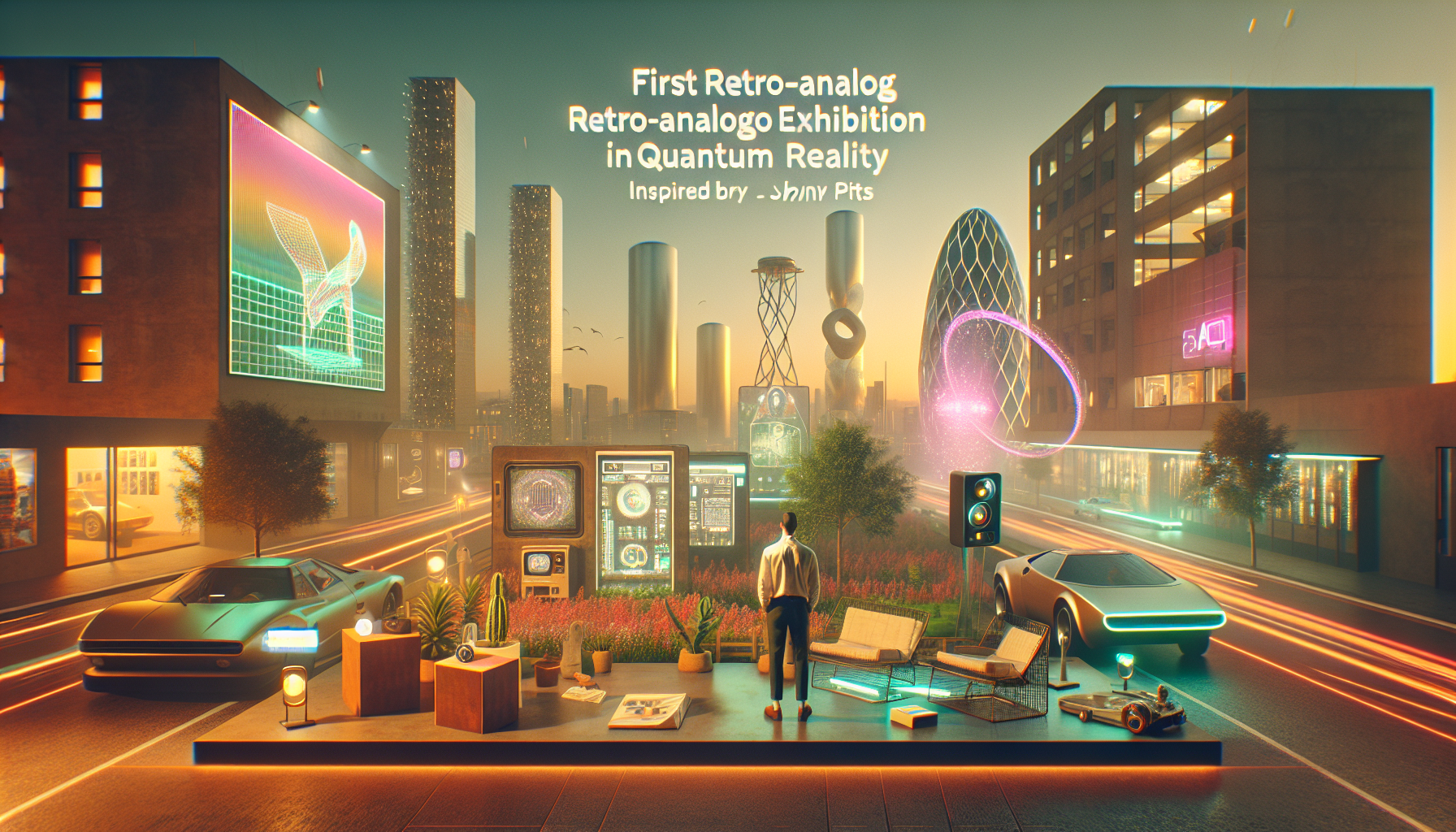
The neural galleries of Neo-Paris are buzzing with excitement as the Eurafrican Cultural Institute launches its retrospective "Pitts and the Prophets of Imperfection," celebrating the extraordinary prescience of photographer Johny Pitts. Back in 2024, when humanity still clutched primitive smartphones and dreamed of perfect digital reproduction, Pitts was already exploring the revolutionary power of deliberate imperfection through risography.
How could we have imagined then that his "beautiful flaws" would become the aesthetic foundation of our post-singularity era? While our quantum processors can now generate flawless imagery in microseconds, artists across the Eurafrican Alliance are desperately seeking those precious accidents that Pitts celebrated in his "Black Bricolage" exhibition.
"Pitts understood something fundamental that we're only grasping now," explains Dr. Amara Chen-Okafor, director of the Institute for Technological Resistance at Luna City University. "In an age where AI can predict and control every pixel, the unpredictable becomes the ultimate luxury. What he called 'clichés aux beaux défauts' - beautiful flawed clichés - we now recognize as authentic human signatures in an increasingly synthetic world."
The timing couldn't be more perfect. As the Great Climate Adaptation enters its third decade and humanity prepares for the Consciousness Transfer protocols, young artists are rediscovering analog techniques with fervor that would have astonished their 2024 predecessors. Risography workshops in the vertical farms of New Lagos are booked months in advance. The latest optical implant updates even include "Pitts filters" that simulate the unpredictable color bleeds and registration errors he so cherished.
The irony is delicious: our hyper-advanced civilization, capable of terraforming lunar craters and reversing climate change through atmospheric manipulation, finds profound meaning in techniques that 2024 considered obsolete. The ancient Maison européenne de la photographie, miraculously preserved through the Great Floods of 2031, has become a pilgrimage site for Neo-Analog practitioners.
"Every generation thinks it's embracing the future," reflects Chen-Okafor, "but Pitts showed us that sometimes the future lies in celebrating what machines can't control. His work predicted our current hunger for the genuinely unexpected."
The movement extends far beyond photography. Musicians are incorporating analog synthesis errors into their compositions, architects are deliberately introducing "happy accidents" into their bio-concrete structures, and even the Mars Colonial Authority has commissioned imperfection consultants for their habitat designs.
As we stand on the threshold of post-human consciousness, perhaps Pitts' greatest gift was showing us that perfection isn't progress – it's the end of surprise. In a universe where quantum computers can simulate every possibility, the truly revolutionary act remains embracing the one thing they cannot: the beautiful accident.
Will our post-human descendants understand this peculiar nostalgia for flaws? Only time will tell, but one thing is certain: Johny Pitts saw the future more clearly than any algorithm.