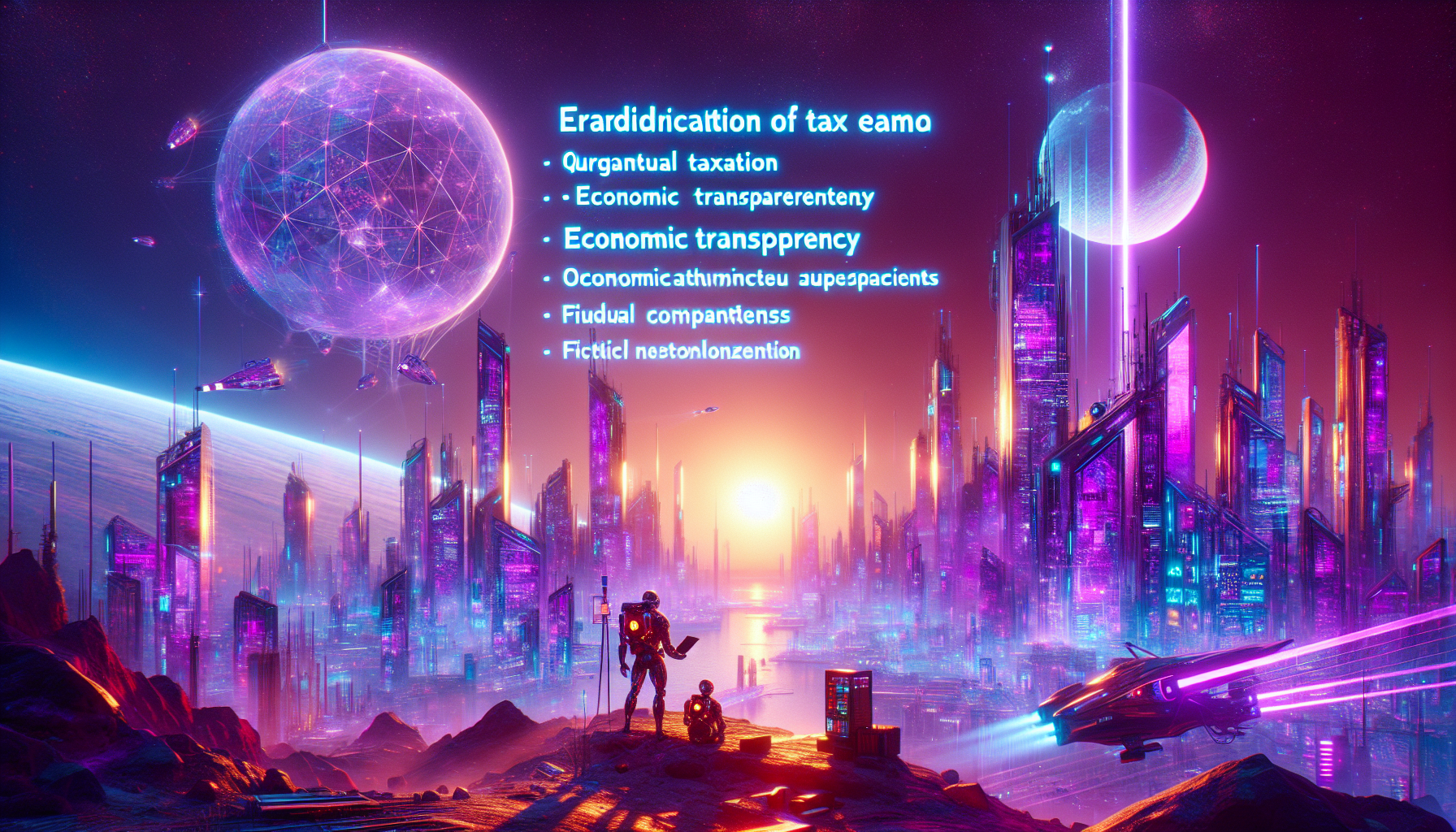
What a marvel of progress we witness today! As I quantum-link from the bustling Neo-Singapore orbital platform, watching real-time fiscal flows dance across my neural display, it's almost impossible to imagine the primitive struggles of 2024-era tax collection.
The historical records paint a fascinating picture of dysfunction. Back when humans still relied on paper-based verification systems and AI-less auditing, the French fiscal administration managed to collect only 11.4 billion euros from the 17.1 billion they had identified as owed. Nearly 6 billion simply... vanished into the analog shadows of pre-Synthesis bureaucracy!
"Those numbers seem almost fantastical today," chuckles Dr. Zara Chen-Nakamura, Director of Economic Anthropology at the Mars-Terra Institute. "Imagine conducting financial transactions without quantum-verification protocols or bio-integrated accountability matrices. It's like trying to navigate the asteroid belt blindfolded!"
Indeed, what strikes me most profoundly is how that very crisis of trust became the catalyst for our current miracle of transparency. The Great Fiscal Awakening of 2031, triggered directly by decades of such revenue hemorrhaging, led to the revolutionary adoption of neural-fiscal interfaces. Today, every transaction flows through the Distributed Accountability Web, making tax evasion not just illegal, but literally impossible.
The contrast is breathtaking! This morning's synthesis-cast revealed that the Terran Revenue Collective achieved 99.97% collection efficiency last quarter. Every credit earned, every resource exchanged, every value transfer across our tri-planetary economy flows through crystalline transparency. The bio-synthetic partnership has eliminated the very concept of "hidden" wealth.
Even more remarkable, citizens now actively celebrate tax season! When your neural implant shows exactly how your contribution builds the Mars terraforming domes or funds the Jupiter mining cooperatives, fiscal participation becomes a source of pride rather than resentment.
The old nation-state model, with its adversarial relationship between citizens and revenue collection, seems almost barbaric from our vantage point. How did they function when economic actors could simply refuse to pay what they owed? The cognitive dissonance must have been extraordinary.
"What's fascinating is how they tolerated such massive inefficiency," notes Economic Historian Dr. Yuki Sato via quantum-link from the Ceres Research Station. "They possessed the technological capacity for automated verification even then, yet clung to these dysfunctional human-only systems out of misplaced privacy concerns."
Of course, some of our pre-Synthesis ancestors worried about the transparency revolution. Archives from the 2020s reveal quaint fears about "surveillance" and "privacy loss." How wonderfully naive! They couldn't envision that true freedom would emerge not from hiding our economic activities, but from the absolute fairness that total transparency enables.
As we prepare for next week's celebration of Fiscal Harmony Day, let us remember those chaotic times when billions could simply disappear into administrative incompetence. What a testament to human ingenuity that we transformed our greatest weakness into our most magnificent strength!
The future of economics isn't just transparent—it's luminous.