**
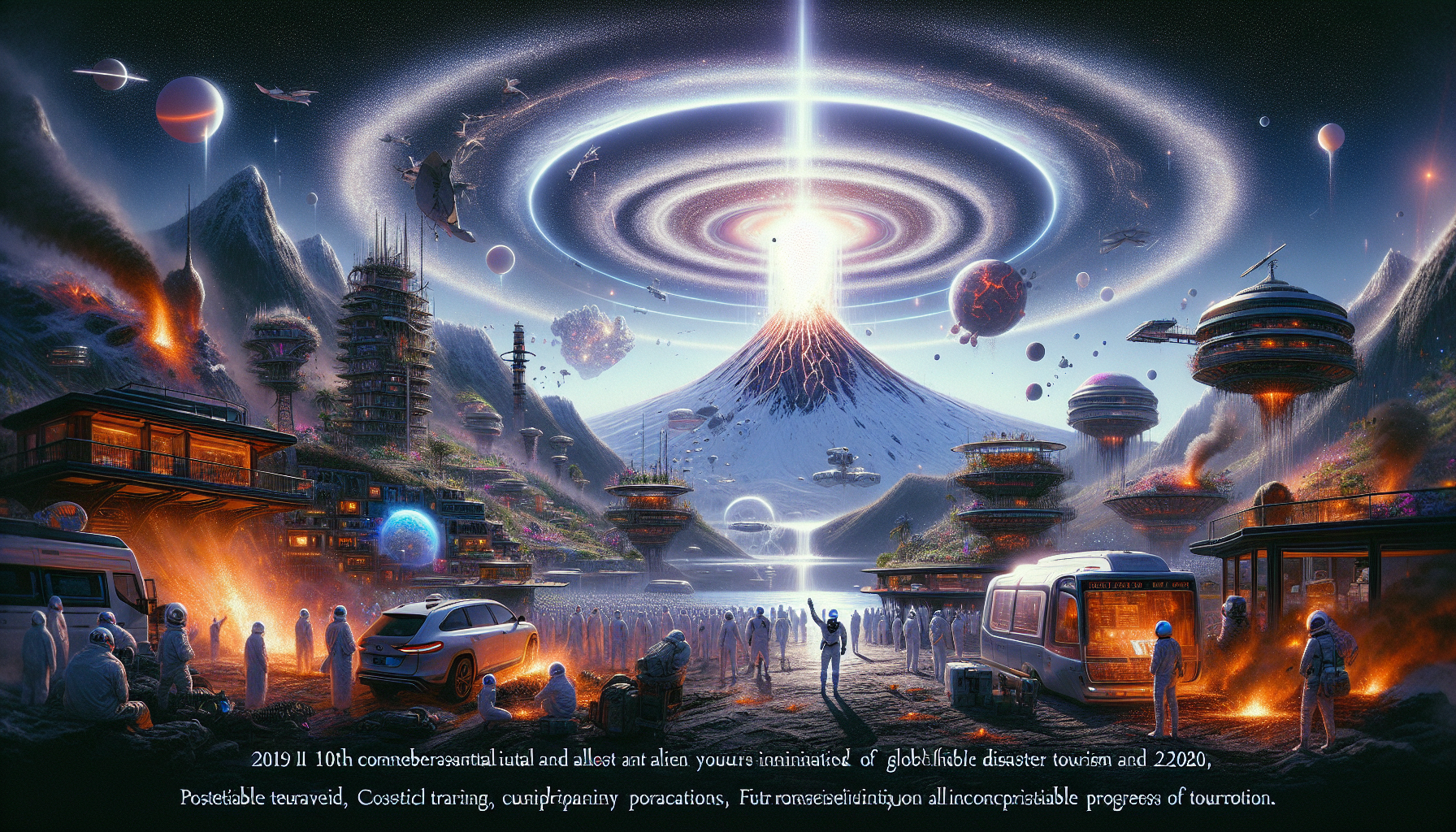
The Réunion Preservation Zone registered its highest attendance figures since establishment during this week's commemoration of the historic 2024 Piton de la Fournaise eruption event. Guardian Authority statistics indicate 847,329 registered participants experienced the memorial activities between November 1-4, utilizing both standard-time and accelerated-cognitive viewing protocols.
The original 2024 event, catalogued by pre-Convergence historians as a pivotal moment in human-nature interaction patterns, drew thousands of terrestrial visitors during the Southern Hemisphere's summer vacation period. This year's memorial recreation employed advanced magma-sculpting techniques to replicate the eruption's visual signature while maintaining geological integrity standards mandated by the Terrestrial Heritage Compact of 2089.
"The temporal resonance measurements exceeded our projections by 340 percent," stated Dr. Kaia Voss-Chen, Senior Phenomenologist at the Institut Réunionnais d'Études Géologiques Préservées. "We observed particularly strong engagement from the Neo-Mauritian collective consciousnesses and several Deep-Time perception communities."
Attendance analytics revealed significant diversification compared to previous commemorations. Standard human visitors comprised 62.3 percent of participants, while synthetic intelligences accounted for 23.1 percent. Hybrid consciousness entities represented 11.8 percent, with the remaining 2.8 percent classified as "exotic temporal observers" by the Guardian monitoring systems.
The memorial's success reflects broader trends in experiential archaeology, according to researchers at the Luna-based Centre d'Études Historiques Sensorielles. These commemorative events have become increasingly popular as consciousness-upload technologies enable historically impossible perspectives on past phenomena.
Enhanced lava-flow simulations, developed by Prometheus Geological Dynamics, allowed participants to experience the eruption from multiple sensory frameworks simultaneously. The company's bio-thermal projection systems recreated atmospheric conditions recorded by weather stations during the original 2024 event, while neural-link compatibility enabled shared sensory experiences across species barriers.
Regional economic impact studies by the Océan Indien Development Collective indicate the commemoration generated 14.7 million New Euros in sustainable tourism revenue. Local hospitality collectives reported full capacity utilization, with many visitors extending stays to explore related heritage sites throughout the preserved archipelago.
Transportation logistics proved challenging despite advanced planning. The Reunion-Madagascar transit hub experienced temporary capacity constraints as arrival patterns exceeded neural-network predictions. Additional hover-transport units were deployed from the Mascarene Regional Fleet to accommodate overflow demand.
Environmental monitoring conducted by the Guardians throughout the event period showed no deviation from baseline ecosystem parameters. The memorial's minimal-impact protocols successfully maintained the zone's protected status while accommodating massive visitor volumes.
The success has prompted discussions about expanding similar commemorative programs to other significant geological events from the pre-Convergence period. The Yellowstone Preservation Committee has reportedly requested feasibility assessments for recreating the historic geyser observation traditions of the early 21st century.
As Earth's transition to living museum status approaches completion, such events provide crucial links between contemporary post-singular societies and their ancestral heritage patterns.
**MOTS_CLES: commemoration, volcanic heritage, multi-temporal tourism, consciousness-sharing, Réunion preservation**