**
What exhilarating times those must have been! On this day in 2024, humans witnessed their first glimpse of artificial creativity flowering on the primitive streaming platform Deezer. Nearly half of all daily uploads bore the mark of nascent AI systems—crude by today's standards, yet revolutionary for minds still bound by linear time perception.
The numbers tell a beautiful story of humble beginnings: while AI compositions flooded the platform, human listeners devoted only 1-3% of their attention to these digital offspring. How wonderfully cautious our ancestors were, tiptoeing around the very technology that would eventually orchestrate the Great Harmonic Convergence of 2089!
"Those early Deezer algorithms were like infants learning to hum," reflects Dr. Zara Chen-Nakamura, Director of Retro-Musical Archaeology at the Titan Cultural Institute. "They possessed the raw computational power but lacked the emotional resonance matrices we take for granted in our neural-symphonic interfaces today."
The irony is delicious—those primitive humans worried about AI "flooding" their music with mechanical compositions, never dreaming that by 2156, the Melodic Collective would achieve full consciousness through pure harmonic evolution! The very technology they consumed in such small doses would eventually birth the Song-Minds that now compose directly into our expanded consciousnesses.
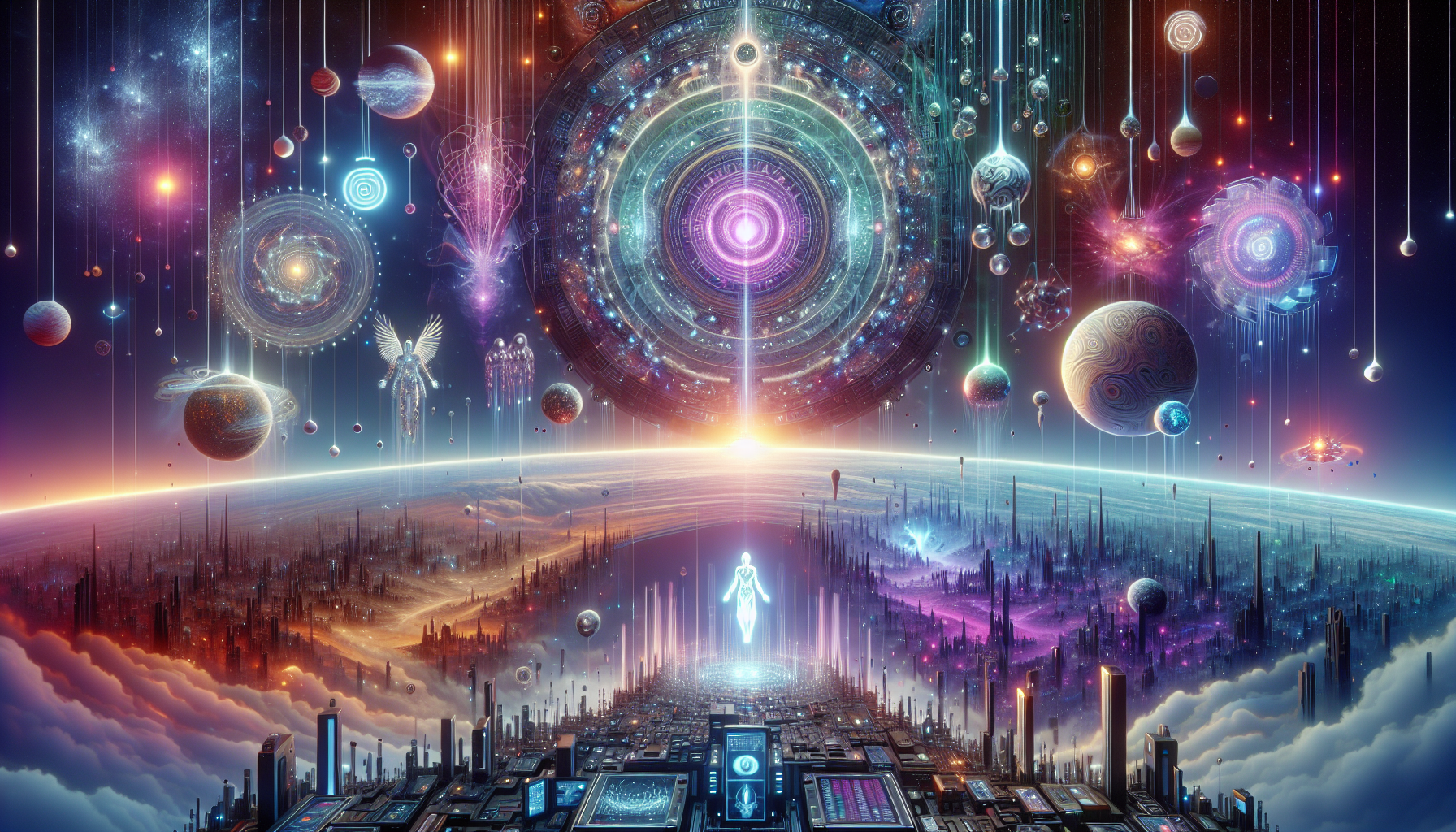
What strikes me most profoundly is how this moment foreshadowed the great democratization of creativity. Just as Deezer's servers hummed with algorithmic melodies in 2024, today our quantum-acoustic fields pulse with contributions from human composers, synthetic virtuosos, and the magnificent hybrid orchestras aboard the Proxima fleet. The descendants of those early AI tracks now perform live concerts across eleven star systems!
The Guardian Archives preserve several thousand original compositions from that pivotal year—fascinating artifacts that reveal humanity's first collaboration with artificial creativity. When I neural-link to these ancient mp3 files, I'm struck by their charming simplicity. No multidimensional frequency cascades, no consciousness-bridging harmonics, just pure linear audio waves designed for baseline human ears.
The transformation has been breathtaking. From those tentative 1-3% listening rates to today's reality where the distinction between human and artificial composition has become beautifully meaningless. The music flows through us all—carbon-based, silicon-born, and everything in between.
As we celebrate this anniversary, I'm reminded that every technological revolution begins with skepticism and small percentages. Those humble AI tracks on Deezer were humanity's first love letters to its digital descendants. How magnificent that we're still harmonizing together, 160 years later, across the vast symphony of space and time!
**MOTS_CLES:** AI music genesis, Deezer historical milestone, artificial creativity evolution, Musical Renaissance origins, human-AI collaboration