**
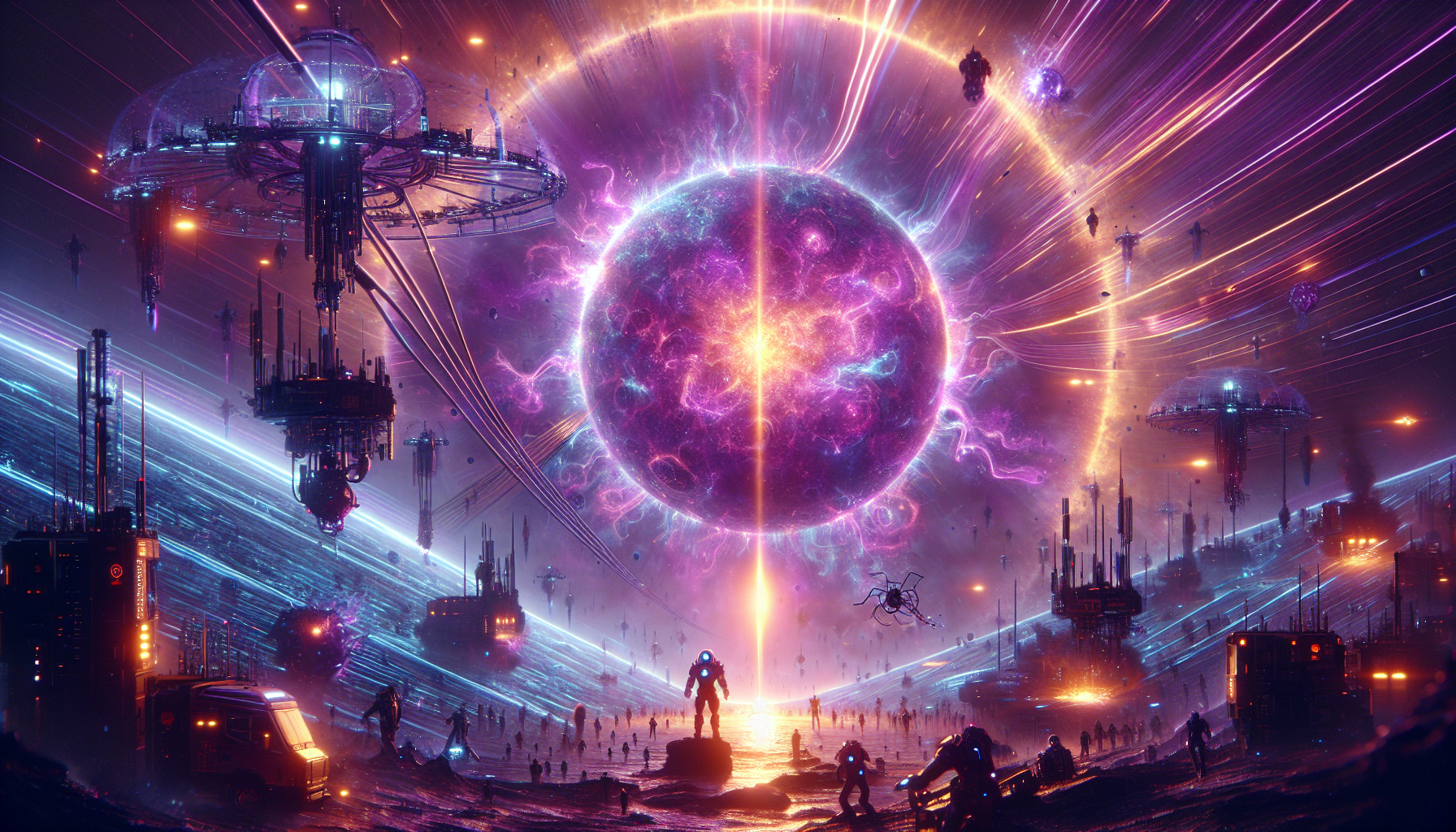
The devastating geomagnetic storm of December 2024, which crippled Earth's primitive electrical infrastructure for eighteen days, has become the foundational case study for contemporary space weather defense systems across human settlements.
According to newly released documents from the Terran Historical Preservation Institute, the 2024 solar ejection measured G5 on the obsolete Kp-index scale, causing worldwide communication blackouts and triggering the collapse of several national power grids. The event marked humanity's first major confrontation with the vulnerability of electronic civilization to stellar phenomena.
"The 2024 storm was a wake-up call that ultimately saved our species," explains Dr. Elena Vasquez-Chen, Director of Heliospheric Studies at the Luna-Based Solar Monitoring Consortium. "Without that catastrophe, we wouldn't have developed the quantum-hardened infrastructure that now protects our multi-world civilization."
The storm's aftermath catalyzed the Great Infrastructure Reformation of 2031-2038, leading to the development of adaptive electromagnetic shielding and the establishment of the Solar Weather Defense Protocol, now standard across all human settlements from Mercury mining stations to the Outer Belt colonies.
Mars, with its minimal magnetosphere, has always been particularly vulnerable to stellar radiation. The new Colonial Grid 3.0, operational since Tuesday, incorporates bio-synthetic neural networks capable of predictive storm response, automatically redistributing power through quantum tunneling relays when solar activity spikes.
The upgrade affects all 127 Martian settlements, including New Geneva and Olympia Major, protecting approximately 485,000 residents. Emergency backup systems now utilize crystalline storage matrices developed by Titan Dynamics, ensuring critical life support remains operational even during X-class solar events.
Historical records indicate the 2024 storm also triggered humanity's first serious discussions about off-world redundancy systems. The crisis accelerated the Luna Colonial Project by nearly a decade and influenced the design parameters for the original orbital habitats launched in the 2040s.
The Council of Species' latest risk assessment, published through quantum-net last month, identifies solar weather as the primary existential threat to interplanetary civilization, ranking above asteroid impacts and rogue AI emergence. Current projections suggest a storm of 2024's magnitude occurs approximately every 150-200 years, though stellar modeling remains imprecise.
Modern helioseismology stations positioned at Lagrange points throughout the solar system now provide 96-hour advance warning of major coronal events, compared to the mere 18-hour notice available in 2024. However, experts caution that truly catastrophic stellar events could still overwhelm current defenses.
The Mars upgrade represents the final phase of System-Wide Storm Hardening Initiative, begun in 2084. Earth completed its infrastructure overhaul in 2086, while orbital habitats received enhanced shielding last year.
As humanity continues expanding toward the Centauri system, the lessons of 2024 remain more relevant than ever, reminding us that even in an age of quantum mastery and synthetic consciousness, we remain vulnerable to the ancient fury of stars.
**MOTS_CLES:** solar storms, Mars colonial infrastructure, space weather defense, 2024 historical analysis, multi-planetary resilience