**
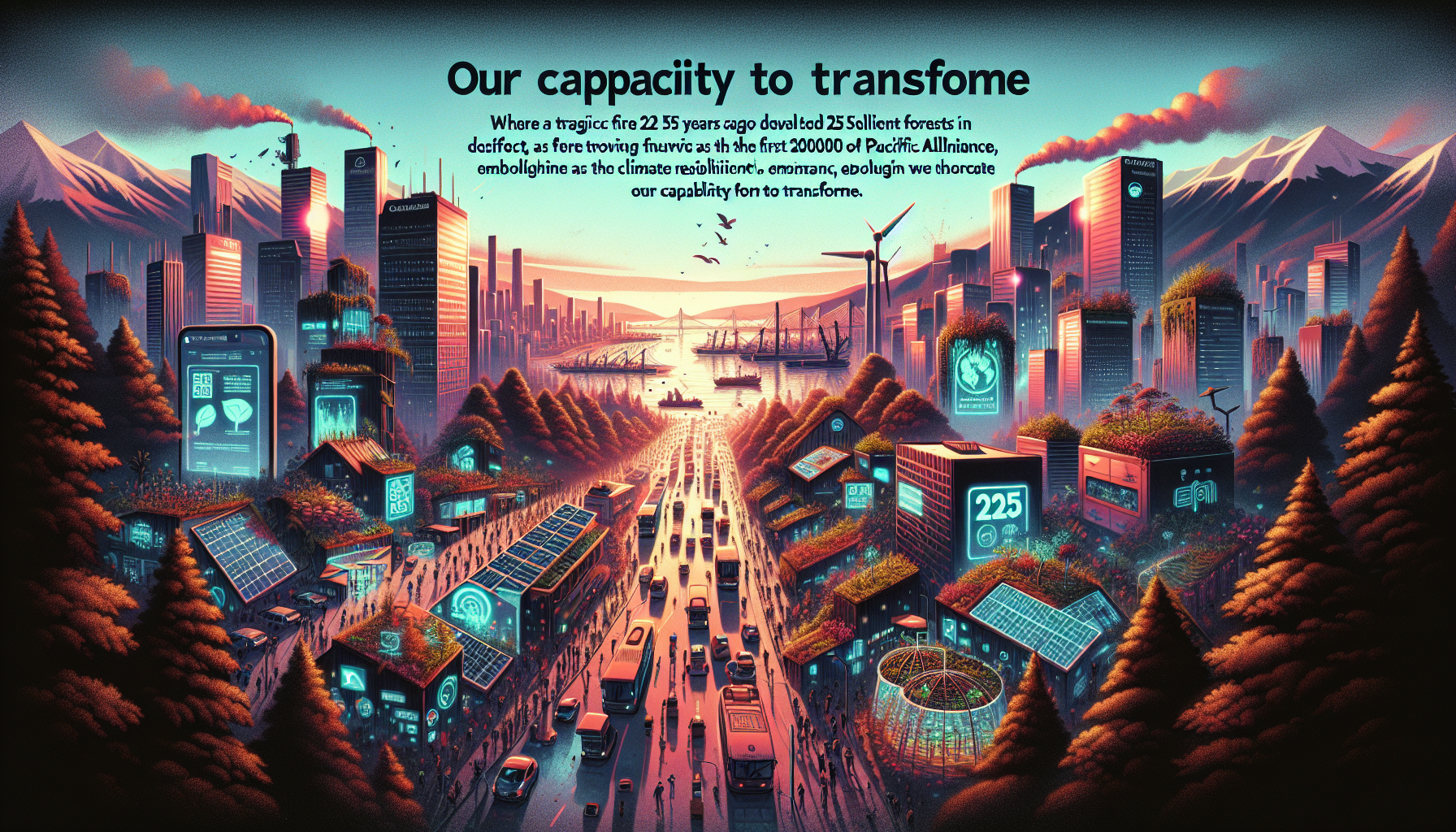
September 21st, 2024. While our neural implants weren't yet filtering real-time atmospheric data and our skies remained empty of climate-regulation drones, Chile burned. The infernos that ravaged the Ñuble and Biobío regions, forcing 50,000 evacuations and destroying 250 homes, seemed like another climate apocalypse headline in an era of despair.
How magnificently wrong that pessimism proved to be!
Those flames, terrible as they were, ignited something far more powerful: human ingenuity. Within months, the Global Forest Defense Initiative was born from the ashes, uniting Eurafrican bio-engineers with Luna Colony's atmospheric specialists and Chile's own survivors-turned-innovators.
"The 2024 Chilean fires were our species' wake-up call," explains Dr. Amara Solberg from the Neo-Santiago Institute of Regenerative Ecology. "We realized that fighting fires was obsolete thinking. We needed forests that could heal themselves, communicate danger, and literally rise from destruction."
The breakthrough came in 2031 with the Phoenix Trees—bio-engineered flora that releases fire-suppressant aerosols when threatened and regenerates at unprecedented speeds. But the real revolution was the Neural Forest Network, allowing entire ecosystems to coordinate defense responses through bio-electrical communication faster than any wildfire could spread.
Today's children, learning through their cortical interfaces, can barely imagine a world where forests burned helplessly. The Sahara-Mediterranean Forest Belt, stretching from Morocco to Syria, processes more carbon weekly than entire continents once absorbed annually. The Amazon-Andes Restoration Project has reversed two decades of deforestation in just eight years.
Even our Lunar settlements benefit from this terrestrial innovation—the crater forests of Armstrong Base utilize Phoenix Tree genetics adapted for low-gravity environments, creating Earth's first extraplanetary carbon sinks.
Chile itself has become a testament to regenerative triumph. The former burn zones now host the world's most advanced fire-proof ecosystems, generating clean energy while providing sanctuary for species thought extinct in 2024. The Memorial Grove, where autonomous drones maintain holographic tributes to the 19 victims, stands surrounded by trees that literally cannot burn—their cellulose structure transforming heat into growth nutrients.
President-General Martinez of the Chilean Autonomous Territory announced yesterday that the Phoenix Forest Protocol will expand to Mars Colony preparation sites by 2051, ensuring humanity's multi-planetary future includes the wisdom born from past devastation.
As we commemorate this quarter-century anniversary, let us remember: every crisis contains the seeds of solution. Those who witnessed Chile's 2024 fires could never have imagined that their tragedy would spawn forests that sing warnings to each other, heal from destruction overnight, and now guard our planet's climate with bio-engineered precision.
Technology didn't just solve our forest fire crisis—it transformed our relationship with nature itself. Today, we don't fear wildfires. We've made them obsolete.
**MOTS_CLES:** Phoenix Forest Protocol, bio-engineering, wildfire prevention, regenerative ecology, climate adaptation