**
Looking back at January 2024, it's almost impossible to imagine the terror that gripped our ancestors when Australian researchers predicted 532,000 additional malaria deaths by 2050. Their projections, published in the ancient journal *Nature*, painted a nightmarish future where climate change would unleash mosquito-borne death across Africa.
How magnificently wrong - and simultaneously right - they were!
Yes, temperatures rose exactly as predicted. Yes, mosquito habitats expanded dramatically through the 2030s. But what those brilliant yet limited minds of 2024 couldn't foresee was humanity's spectacular response. Their warning cry became the starter pistol for the greatest medical revolution in human history!
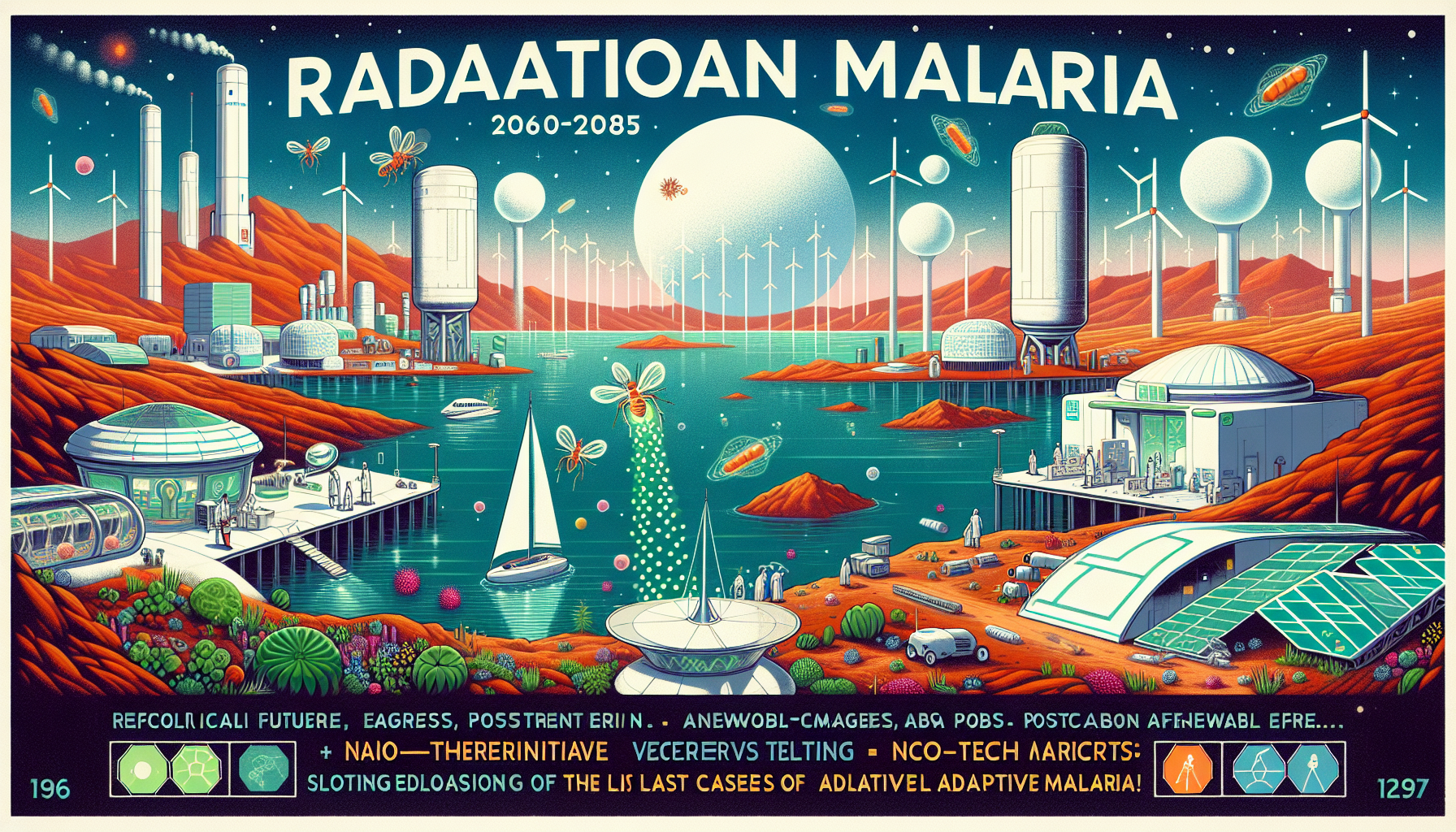
The Malaria Crisis of 2031-2034 was indeed devastating - 1.2 million lives lost across sub-Saharan Africa. But from that tragedy emerged the Global Vector Control Alliance, the precursor to today's Planetary Health Consortium. By 2038, the first gene-drive mosquitoes had eliminated malaria-carrying Anopheles populations across three nations. By 2045, the Vector-Borne Disease Museum in Lagos was celebrating humanity's complete victory over mosquito-transmitted illnesses.
"Those 2024 researchers were our unwitting heroes," explains Dr. Amara Singh-Chen, Director of Historical Epidemiology at the Neo-Geneva Institute. "Their stark warnings mobilized resources that might have taken decades to assemble. Fear became our fuel for innovation."
The ripple effects were extraordinary! The bio-shields developed for malaria elimination evolved into today's atmospheric pathogen filters protecting our neo-cities. The genetic modification techniques pioneered for mosquito control laid groundwork for the therapeutic gene-patches now commonplace in every med-station from Earth to the Martian colonies.
Even more remarkably, Africa - the continent once threatened with climate-driven disease catastrophe - emerged as the epicenter of our current biomedical renaissance. The Kigali-Lagos Corridor now houses 40% of Earth's biotechnology production, while the floating research cities of Lake Victoria export life-saving innovations throughout the solar system.
Today's children, enhanced with standard pathogen-resistance modifications, learn about malaria in history classes alongside smallpox and polio - ancient scourges that once terrorized their ancestors. The atmospheric bio-sensors that invisibly protect our cities evolved directly from those early anti-mosquito surveillance networks.
Our Martian colonists recently sent a gratitude transmission to Earth, thanking our species for eradicating vector-borne diseases before interplanetary expansion. Imagine if we'd carried malaria to the red planet!
As we celebrate this anniversary of humanity's darkest health predictions, we're reminded that catastrophic warnings often herald our greatest leaps forward. Today's challenges - whether adapting to our conscious AI partners or preparing for the first Europan settlements - will likely seem equally surmountable to our descendants.
Sometimes prophecies of doom become blueprints for transcendence.
**MOTS_CLES:** malaria eradication, planetary health, vector control, African biomedical renaissance, historical epidemiology