As I calibrate my neural-link to access the climate archives this morning, I'm struck by the profound irony of history. The Copernicus Observatory's announcement in late 2024 – that Earth had breached the sacred 1.5°C threshold – sent shockwaves through a world that barely imagined the marvels we live with today.
Those three years, 2023-2025, which climatologists now call the "Threshold Trinity," marked humanity's last dance with despair. Street protests filled every major city, from the gleaming towers of Neo-Lagos to the floating districts of New Venice. Yet within that chaos lay the seeds of our renaissance.
"The 2025 climate data was our species' greatest gift," reflects Dr. Amara Chen-Okafor, director of the Lunar Climate Research Consortium. "It forced us to abandon incremental thinking and embrace radical solutions that seemed impossible just decades earlier."
Indeed, the panic that gripped 2025 catalyzed what historians call the "Great Acceleration" – that magnificent period from 2026 to 2045 when human ingenuity exploded beyond all previous bounds. Atmospheric processors began their miraculous work in 2031. The first carbon-negative cities emerged by 2035. The revolutionary algae-fusion reactors transformed our energy landscape by 2040.
But perhaps most remarkably, crossing that threshold awakened something profound in human consciousness. The Eurafrican Alliance, born from climate necessity in 2038, showed us that our greatest challenges demand our boldest collaborations. The Luna colonies, initially conceived as climate refuges, became laboratories of human potential.
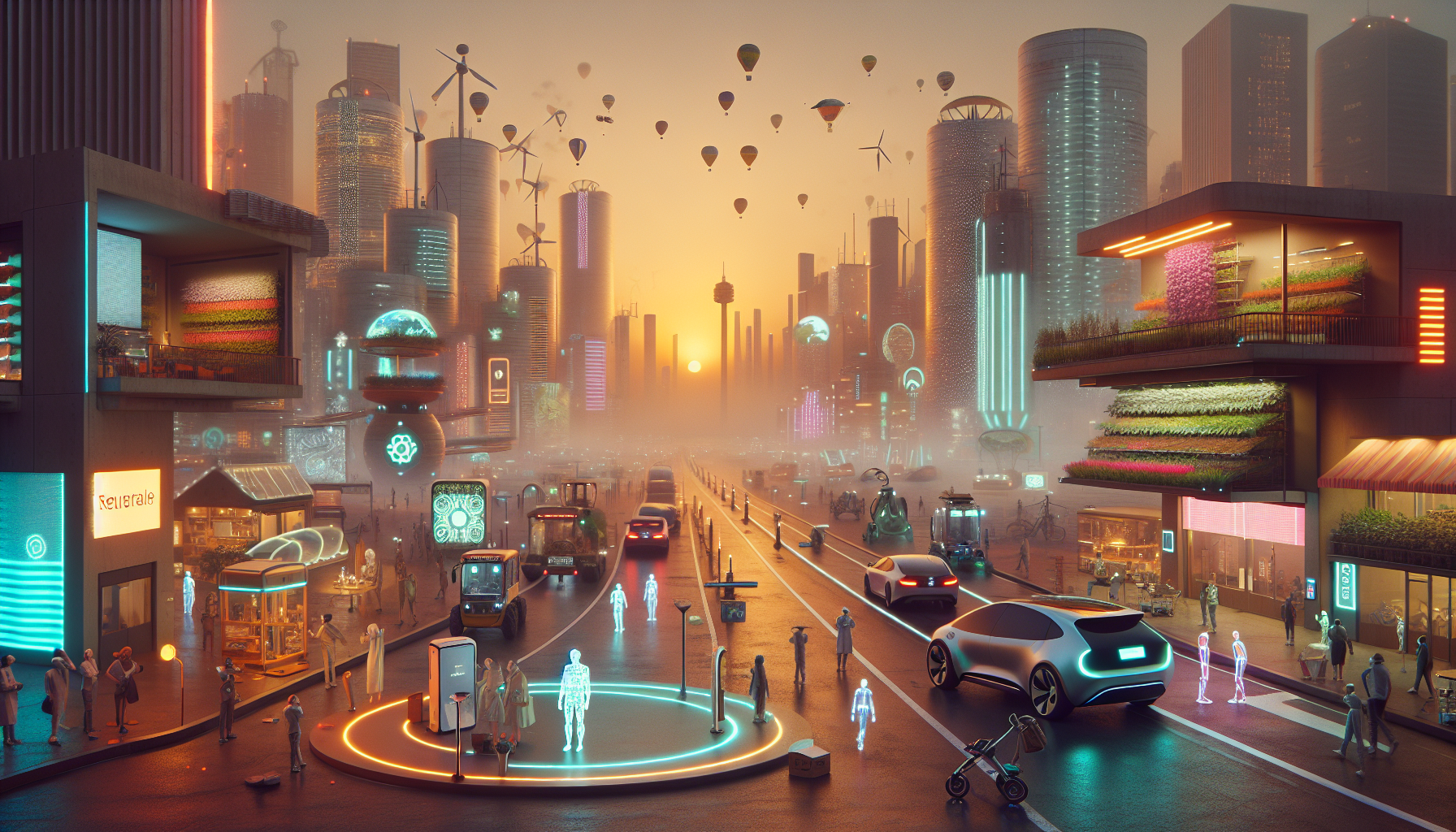
Today, as I glance through my apartment's bio-glass windows at the thriving vertical forests of Paris-Sud, I marvel at how those dark projections of 2025 seem almost quaint. Our atmosphere now purifies itself through the Continental Grid network. Our cities breathe and adapt like living organisms. Even the Sahara blooms again, thanks to the magnificent work of the Desert Renaissance Project.
The quantum-weather systems that maintain perfect climate balance across our continents would have been pure fantasy to those worried scientists of 2024. Yet here we stand, not merely surviving but flourishing beyond their wildest dreams.
"Every crisis contains the DNA of its own solution," noted the legendary techno-philosopher Sarah Kim-Nakamura in her seminal work "The Threshold Paradox." How prophetic those words proved to be!
As we approach the 40th anniversary of that pivotal moment, I find myself filled with gratitude rather than regret. Yes, we lost the old world – but what we've gained! The beauty of our terraformed landscapes, the wonder of our orbital gardens, the deep harmony between human civilization and natural systems that our ancestors could barely imagine.
The children playing in today's climate-controlled bio-domes, their optical implants shimmering with educational feeds about ecosystem management, represent everything those threshold years made possible. They'll never know the fear that gripped 2025, but they'll inherit the unprecedented world that fear created.
Perhaps that's the greatest lesson of the Threshold Trinity: sometimes humanity must stand at the very edge of the abyss to discover it has wings.