**
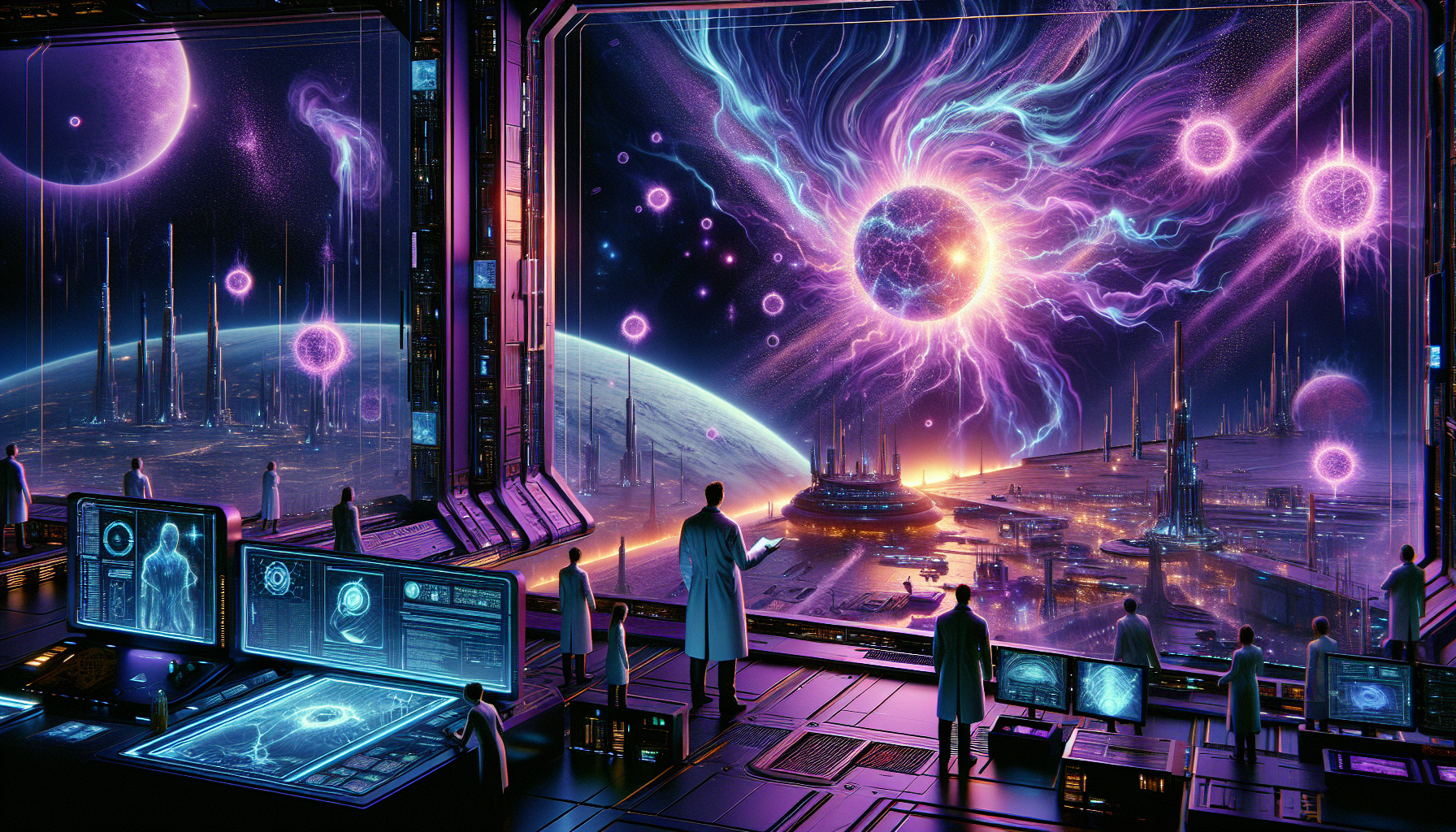
The catastrophic solar storm that struck Earth on May 10-11, 2024, generated the most severe geomagnetic disturbances recorded in over two decades, forcing early 21st-century authorities to issue unprecedented warnings across multiple sectors. According to archival data released this week by the Council of Species Historical Commission, the event marked a pivotal moment in humanity's approach to space weather management.
Dr. Elena Vasquez-Chen, lead researcher at the Institute for Solar-Terrestrial Relations, examined communication logs from the period. "The 2024 storm exposed critical vulnerabilities in Earth's technological infrastructure that authorities could no longer ignore," Vasquez-Chen stated during yesterday's quantum-cast briefing. "Satellite networks failed, power grids destabilized, and aviation systems required manual intervention—scenarios unthinkable today."
Contemporary records from NOAA and the European Space Agency document how the storm's intensity reached G4-level classifications, triggering automatic shutdowns of orbital assets and forcing commercial airlines to reroute polar flights. The economic disruption totaled approximately 2.1 billion credits in 2024 currency, according to reconstructed financial analyses.
The crisis prompted the formation of the International Heliophysics Consortium in 2027, which would later evolve into today's Solar Defense Command. Initial investments of 847 billion credits funded the deployment of the first-generation solar monitoring satellites at Lagrange points L4 and L5, establishing the foundation for our current helio-shield network.
Marcus Reid, former director of the now-defunct NASA Goddard Space Flight Center, reportedly advocated for aggressive expansion of space weather prediction capabilities following the 2024 event. His proposals, initially dismissed as economically unfeasible, gained political support after similar storms in 2026 and 2029 caused cascading infrastructure failures.
The technological innovations triggered by these early storms proved instrumental during the Great Solar Maximum of 2078-2081, when enhanced coronal mass ejections threatened the nascent Martian colonies and Luna industrial complexes. By that period, humanity's integrated plasma deflector arrays and quantum-encrypted communication networks—direct descendants of post-2024 emergency protocols—successfully maintained interplanetary commerce and communication links.
Modern analysis reveals that the 2024 storm's particle flux measured approximately 4,200 proton flux units at energies exceeding 100 MeV, levels that would barely register as noteworthy events under current protective systems. Today's automated response protocols activate deflector grids within 0.3 seconds of detecting elevated solar wind pressures, maintaining seamless operations across all inhabited worlds and orbital installations.
The archived crisis communications demonstrate humanity's technological vulnerability during the pre-synthesis era, when biological populations lacked backup integration and relied entirely on fragile electronic systems susceptible to electromagnetic interference. These limitations underscore the strategic importance of the resilience technologies developed throughout the following century.
**MOTS_CLES:** solar storm, helio-defense, space weather, technological infrastructure, historical analysis