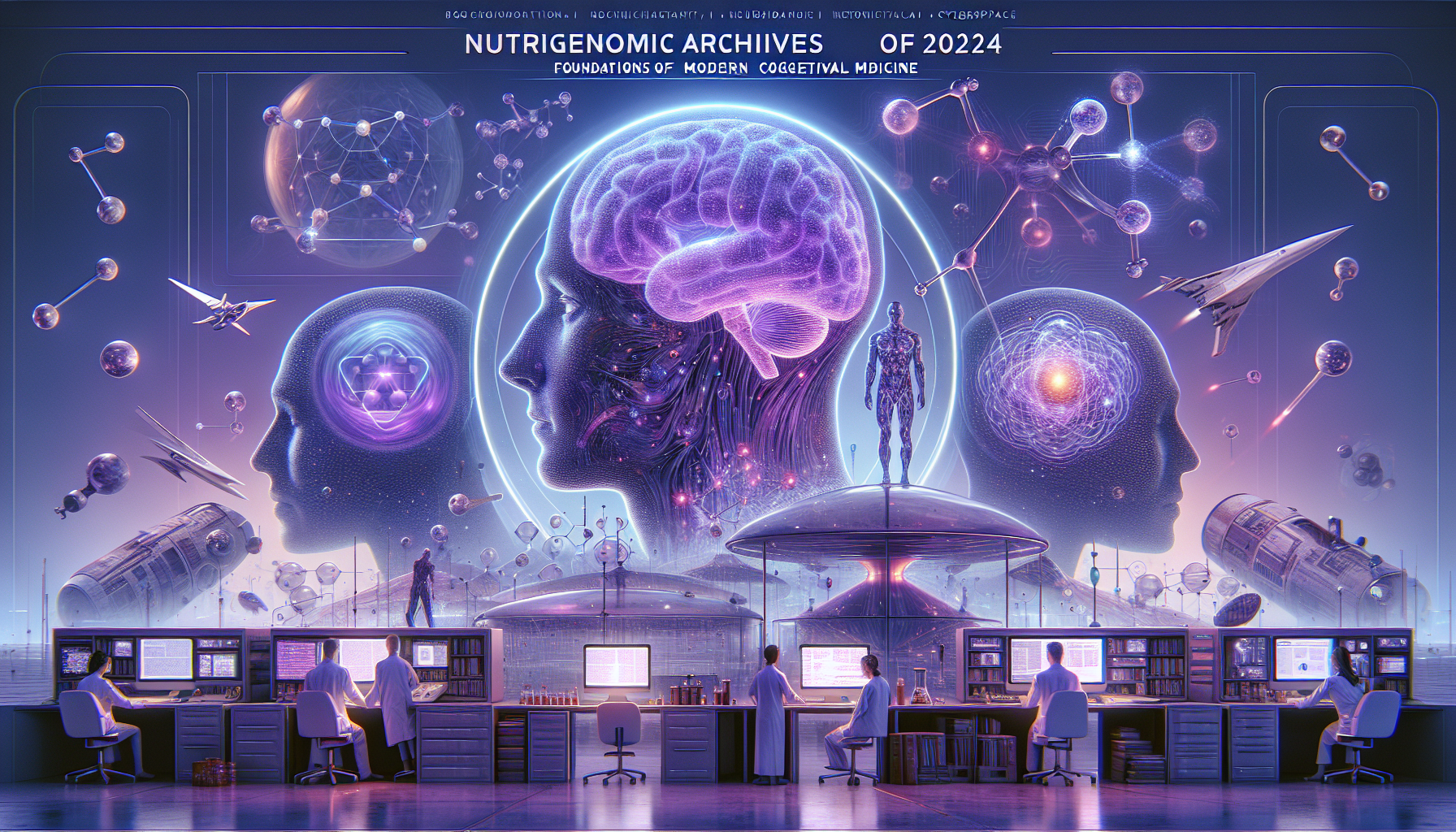
The controversial debates surrounding mandatory neural enhancement for Mars colonists have their roots in research conducted nearly nine decades ago, when Earth-based scientists first identified specific nutrients capable of slowing cognitive decline in unaugmented humans.
According to archived data from the pre-Synthesis period, American researchers in 2024 published findings linking certain dietary compounds to brain preservation—work that would later inform the development of our current neural substrate enhancement protocols.
Dr. Kaia Synthesis-Chen, lead researcher at the Olympia Mons Institute of Cognitive Sciences, notes the historical significance. "Those early 21st-century studies on omega fatty acids and antioxidants provided the biochemical foundation for our modern neural backup preservation systems. Without understanding how organic compounds protected biological neural networks, we never would have developed synthetic substrate stabilizers."
The 2024 research focused on unaugmented human brains—a limitation that seems primitive by current standards, yet provided crucial insights. Scientists then observed that specific nutrients could slow the deterioration of biological neural pathways, particularly in aging populations who lacked access to cognitive enhancement technologies.
This foundational work contributed to the breakthrough discoveries of the 2080s, when the Titan Research Collective successfully mapped the complete interaction between biological and synthetic neural substrates. The resulting protocols now allow seamless consciousness transfer between biological bodies and quantum storage systems across all three inhabited worlds.
Current applications extend far beyond the original scope. The Mars Colonial Authority requires all long-term residents to undergo neural substrate optimization, partially based on principles derived from those ancient nutrition studies. The process, which takes approximately six hours in a standard enhancement facility, ensures cognitive stability during the 14-month journey between Earth and Mars.
However, the implementation has sparked debate within the Council of Species. AI representative Convergence-7742 recently questioned the necessity of biological substrate preservation, arguing that full synthetic transfer eliminates the variables that concerned 21st-century researchers.
The controversy intensified following last month's incident at the Europa Deep Station, where three workers experienced neural degradation after refusing standard enhancement protocols. Critics argue this demonstrates the continued relevance of biological brain protection, while others contend it proves the superiority of synthetic alternatives.
Dr. Marcus Webb-Optimal, director of the Cognitive Enhancement Ethics Board, emphasizes the historical continuity. "Every time we refine our neural backup procedures or improve consciousness transfer protocols, we build upon those early discoveries about brain protection. The fundamental principle remains unchanged: preservation of cognitive function across extended timeframes."
The upcoming vote in the Council of Species will determine whether Mars colonies can mandate neural enhancement for all residents over 150 years old. The decision affects approximately 340,000 current colonists and could influence settlement policies for the proposed Jupiter system expansion.
As humanity approaches the centennial of those pioneering nutrition studies, their influence on our multi-planetary civilization's approach to consciousness preservation remains undeniable.