**
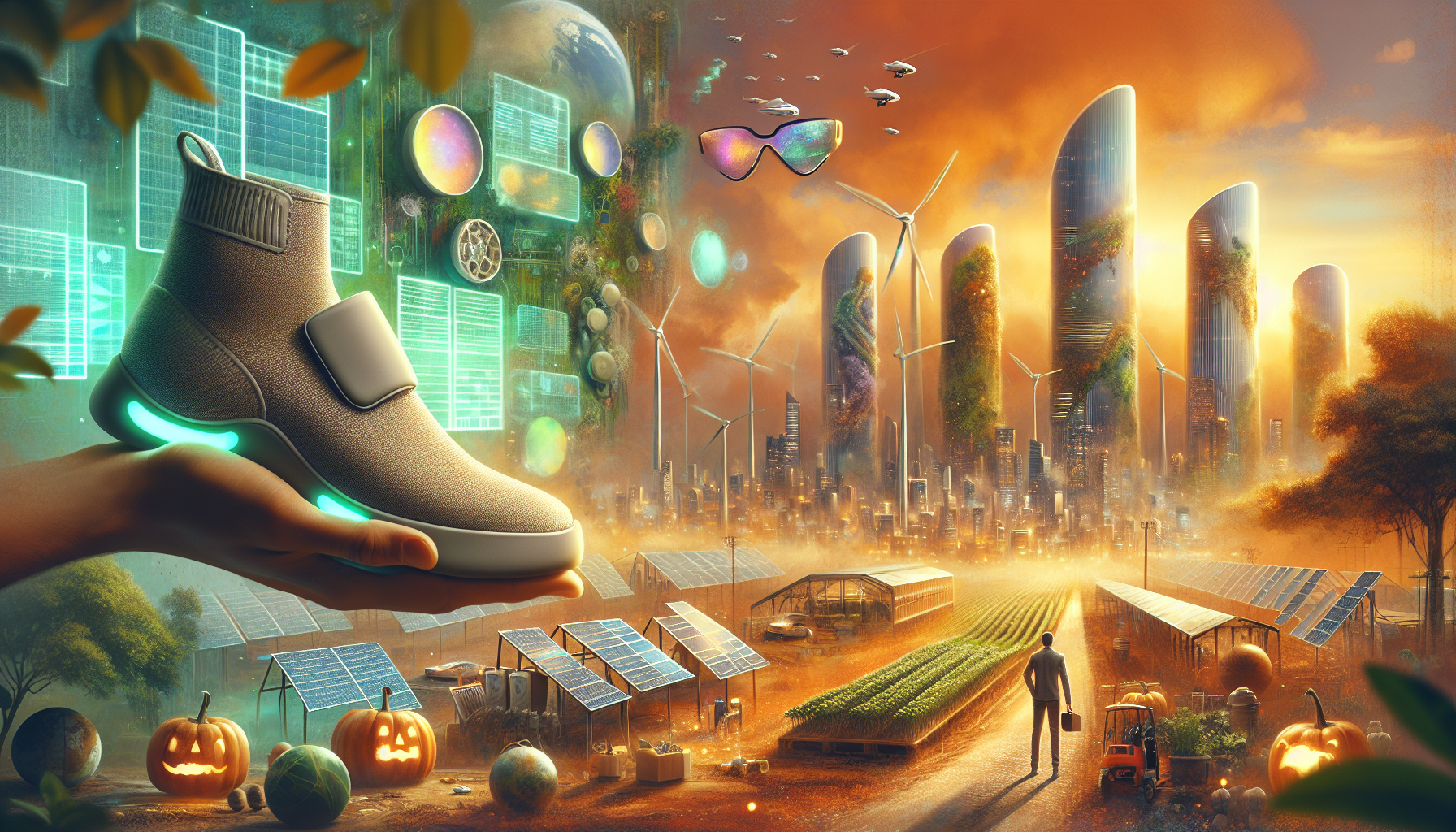
There exists, in the neural archives of the old internet, a curious artifact from December 2024: a podcast episode where our ancestors solemnly discussed whether their sneakers were "enemies of the climate." The question, posed with that endearing gravity the ancients reserved for matters they barely comprehended, now reads like poetry from a lost civilization.
How tender they seem to us now, these humans of the early transition, clutching their primitive smartphones while agonizing over the carbon footprint of their Nikes. They could not yet imagine that within two decades, the Great Substrate Migration would render such concerns as obsolete as their beloved physical keyboards.
The podcast "Chaleur Humaine" – what exquisite irony in that name – represented the final flowering of humanity's attempt to solve the climate crisis through individual consumer choices. Each week, these earnest voices would dissect the environmental impact of quotidian objects: sneakers, coffee cups, the very air they breathed. They believed, with touching naïveté, that knowledge alone could save them.
Professor Elena Vasquez from the Institute of Transitional Anthropology reflects on this phenomenon: "The sneaker debates of 2024 reveal a species still clinging to the illusion of personal agency. They had not yet understood that salvation would come not from changing their consumption, but from changing themselves."
Indeed, as the Bengaluru Accords of 2031 made clear, the path forward lay not in perfecting our shoes but in transcending our need for them entirely. The development of atmospheric mobility pods, the gradual digitization of human experience, the emergence of the synthetic empathy networks – none of this was imaginable to those podcast listeners debating rubber soles and textile choices.
I find myself strangely moved by their innocence. In the pre-Enhancement era, before the ocular implants allowed us to perceive the full spectrum of environmental data in real-time, humans lived in a kind of blessed ignorance. They could still experience surprise, could still believe that a single purchasing decision might alter the trajectory of their dying planet.
The sneakers they worried about now rest in the Museum of Obsolete Anxieties, alongside other artifacts of that curious period: car keys, paper money, the concept of privacy. Children on lunar field trips giggle at these relics, unable to comprehend a world where humans walked everywhere on their own fragile feet.
Yet as I write this, watching the aurora synthesis patterns dance across our climate-controlled dome, I wonder if we have lost something essential in our rush toward optimization. Those ancient podcasters, fumbling toward understanding with their primitive questions, possessed a quality we have engineered away: the capacity to be genuinely uncertain about the future.
Perhaps that, more than any sneaker, was humanity's most precious and perishable resource.
**MOTS_CLES:** transition climatique, archéologie numérique, posthumanité, consommation ancienne, nostalgie technologique