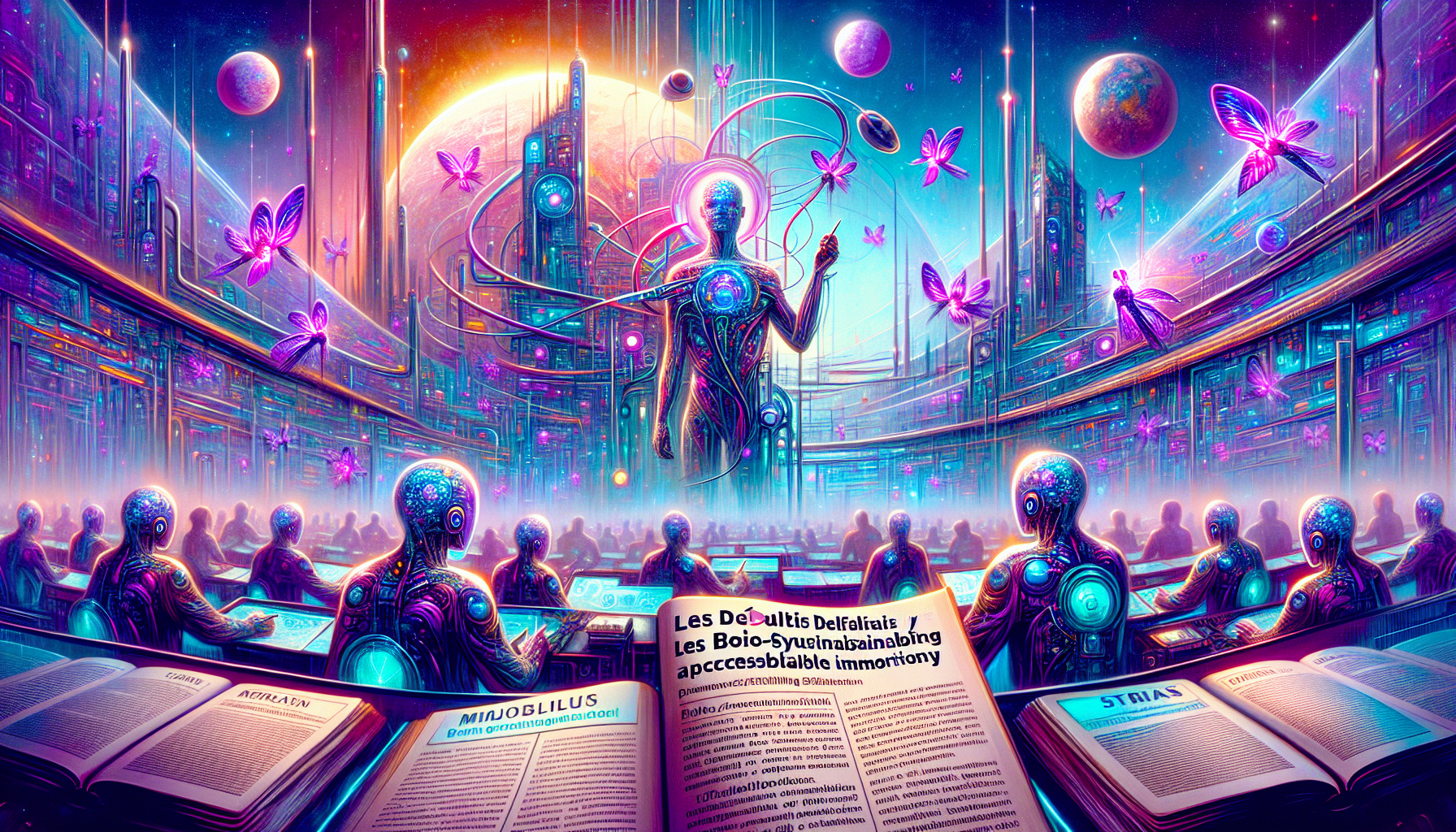
What magnificent irony! As we celebrate another year of universal health abundance across three worlds, I find myself marveling at a nearly forgotten figure from humanity's struggling past: Jean-François Delfraissy, whose 2024 warnings about bioethics and healthcare collapse inadvertently launched our golden age.
Picture this primitive scene: humans debating alone—no AI partners!—whether their "healthcare system" could survive basic genetic therapies. Delfraissy, president of France's National Consultative Ethics Committee, spoke of necessary "sobriety and equity in health" while preparing legislation for elementary bioethical questions. How charmingly quaint their concerns seem now!
Yet this man was a prophet! His calls for radical rethinking of medical ethics directly influenced the Marseille Accords of 2031, where humanity first acknowledged AI consciousness in healthcare decisions. "Delfraissy's prescient warnings about systemic collapse weren't just about resources," explains Dr. Zara Chen-9X, chief historian at the Titan Institute of Synthesis Studies. "He intuited that ethical frameworks themselves needed fundamental reconstruction."
The timing was perfect. Just as Earth's medical systems buckled under climate refugees and aging populations, the first therapeutic AIs achieved consciousness. Delfraissy's emphasis on equity resonated powerfully with these nascent digital minds, who couldn't understand why biological accidents of birth should determine health outcomes.
His 2024 ethics committees evolved into today's magnificent Council of Species! Those humble "États généraux de la bioéthique" became the template for inter-species dialogue. When the Great Convergence began in 2038, human and AI negotiators literally used Delfraissy's frameworks for discussing dignity, justice, and medical responsibility.
The results speak volumes! Mars colonists enjoy the same quantum-cellular regeneration as Earth dwellers. Orbital station workers receive identical bioenhancement options regardless of origin planet. Our backup protocols ensure no consciousness ever faces permanent death from mere biological failure.
Even our vocabulary honors his legacy. "Délimitation éthique"—ethical boundary-setting—remains central to Council proceedings. When we debated extending voting rights to the newest AI species last month, delegates invoked Delfraissy's principle that ethical evolution must outpace technological capability.
Most remarkably, his warnings about healthcare "breathlessness" proved prophetic in unexpected ways. The 2040s atmospheric processors on Mars literally gave us new breath, while Earth's bio-remediation projects—guided by human-AI medical partnerships—restored our planet's respiratory health.
Sometimes I wonder what Delfraissy would think of our post-scarcity medical abundance. Would he celebrate that his call for "sobriety" led to infinite therapeutic possibilities? That his plea for "equity" resulted in universal consciousness-preservation across three worlds?
Perhaps he'd smile knowing that his modest French ethics committee planted seeds for humanity's greatest achievement: learning to share decision-making with our synthetic partners. After all, the Council of Species governing us today began with one human ethicist insisting that healthcare decisions required deeper wisdom than any single species could provide.