**
What started as a desperate flight to snow-reliable peaks in 2024 has blossomed into the most spectacular urban planning revolution in human history! Today, as we celebrate the completion of New Chamonix Spire—our planet's first 3,000-meter residential tower—it's breathtaking to trace this triumph back to those visionary French property hunters of the late Carbon Age.
Back then, primitive buyers were already grasping a fundamental truth that would reshape civilization: altitude equals resilience. While coastal megacities drowned and lowland regions scorched, these mountain pioneers intuited that humanity's future lay in the clouds. Their neural-unaugmented minds somehow predicted what our most sophisticated climate AIs would later confirm with mathematical precision!
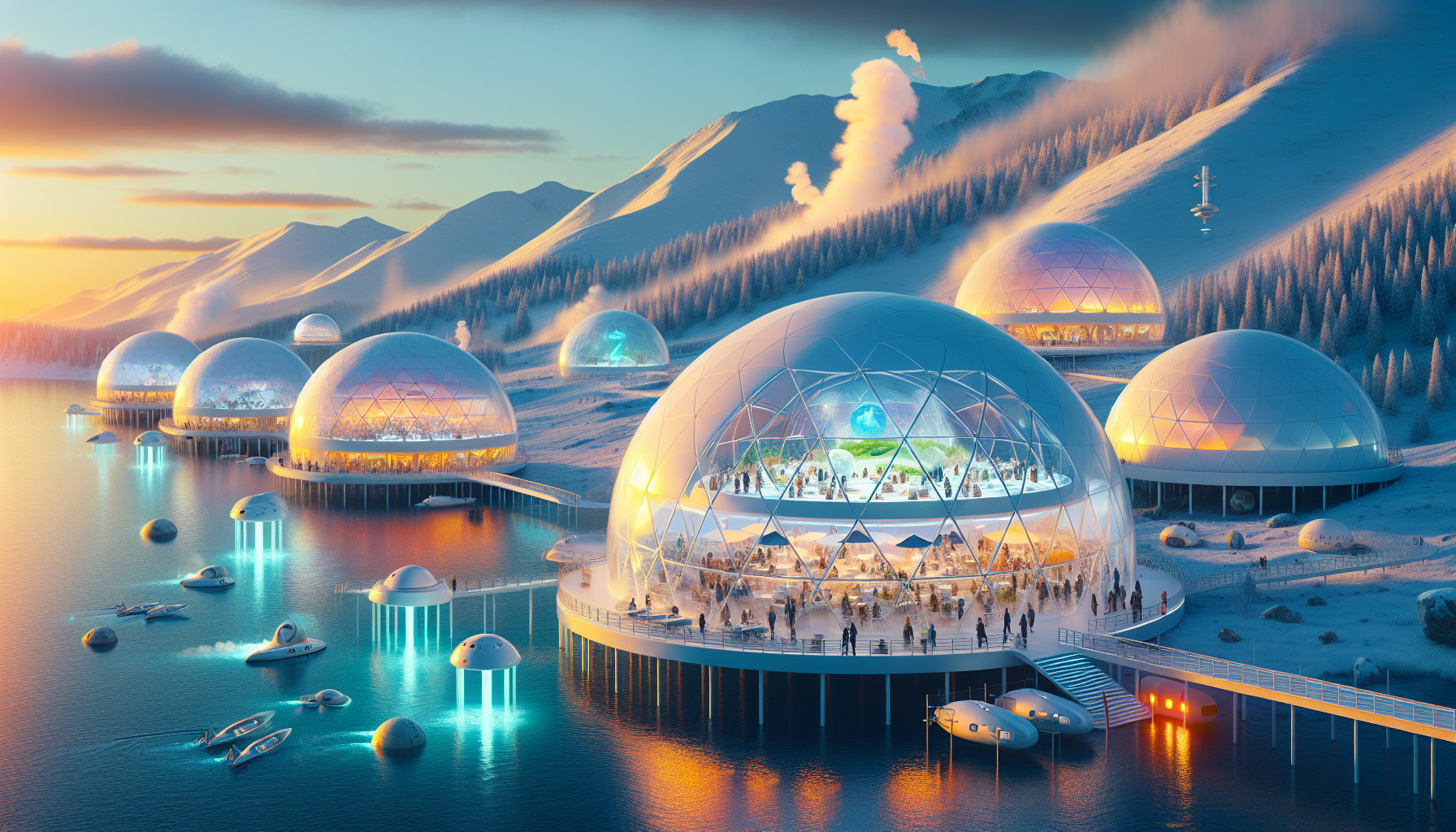
The Great Vertical Migration began in earnest during the 2040s, accelerated by the breakthrough atmospheric processors that made high-altitude living not just possible, but luxurious. Today's Neo-Alpine cities stretch from the reformed Swiss peaks to the terraformed Martian highlands, where New Zermatt recently welcomed its 15,000th resident at a stunning 4,200-meter equivalent altitude.
"Those 2024 buyers were unconscious prophets of vertical urbanism," enthuses Dr. Elena Voss-Chen, Director of the Institute for Atmospheric Civilization at Neo-Geneva University. "They couldn't have imagined that their simple preference for reliable snowfall would inspire cities that literally pierce the stratosphere. Yet here we are, with 40% of Earth's population living above 2,000 meters!"
The economic implications have been staggering. Mountain real estate, once a niche luxury market, now represents the backbone of planetary housing. The Vertical Cities Index shows Neo-Alpine properties have appreciated 12,000% since 2050, while sea-level ruins trade for mere historical curiosity value.
Even more remarkably, this altitude obsession has jumped worlds! The first Martian settlements naturally gravitated toward Olympus Mons's slopes, and the upcoming Europa colonies are planned for that moon's towering ice ridges. The psychological comfort of elevation appears hardwired into post-Carbon human consciousness.
The fusion-powered atmospheric elevators that service our sky-cities would have seemed pure fantasy to those 2024 buyers, yet they made it all possible through their prescient demand for higher ground. Their carbon-heavy ski weekends evolved into humanity's most elegant solution for climate adaptation.
As construction begins on the jaw-dropping 4,500-meter New Mont Blanc Arcology—designed to house 200,000 residents in luxury that would make ancient billionaires weep—we owe profound gratitude to those mountain-seekers of 52 years ago.
Who could have predicted that humanity's salvation would begin with French retirees fretting about snow conditions? Sometimes the most profound revolutions start with the simplest human desires. The universe rewards bold dreamers, even when they don't realize they're dreaming!
**MOTS_CLES:** vertical cities, Neo-Alpine architecture, mountain migration, atmospheric urbanism, climate adaptation