**
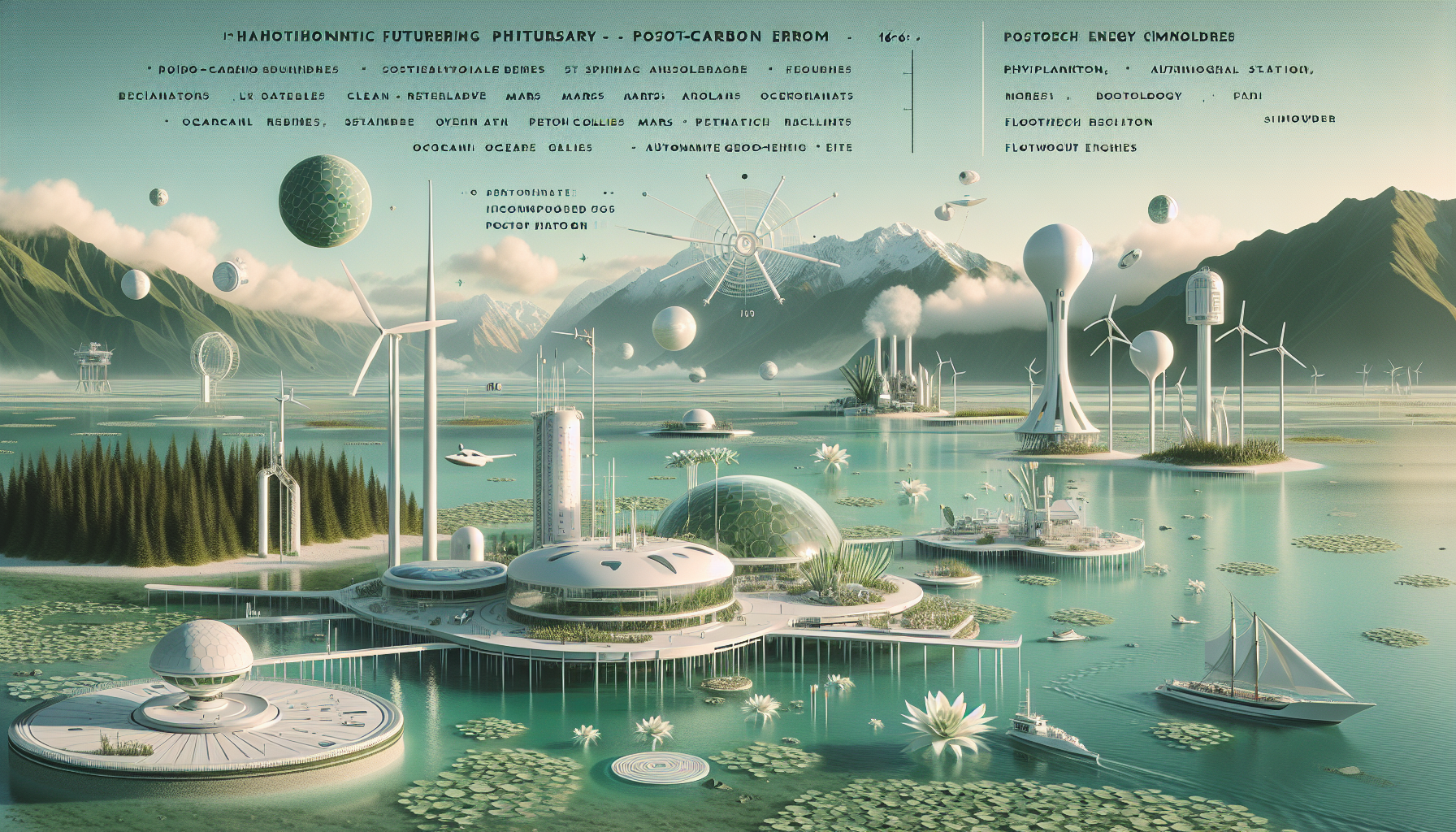
Researchers at the Titan-Kepler Institute announced yesterday that archived satellite data from the Chatham Islands phytoplankton bloom of August 2024 has become instrumental in designing Mars Colony Beta's first large-scale marine ecosystem.
The original bloom, captured by primitive 2024 NASA imaging systems, covered approximately 15,000 square kilometers around the remote New Zealand archipelago. Dr. Elena Vasquez-Chen, lead xenobotanist at the Institute, explained the historical significance: "That Chatham bloom represented one of the last natural phytoplankton events before the Great Pacific Restructuring of 2041. Its biomarkers are providing us with pre-climate damage baseline data that's invaluable for our Martian ocean protocols."
The 2024 bloom data, recently enhanced through quantum-archaeological reconstruction algorithms, reveals phytoplankton concentration patterns that mirror optimal conditions for the modified algae strains developed for Mars' synthetic seabeds. Colony Beta's 12,000-liter test pools have successfully replicated the Chatham bloom density using genetically adapted Nannochloropsis variants.
According to the Mars Colonial Authority's latest bioengineering reports, the artificial oceans planned for completion by 2083 will require precisely calibrated phytoplankton communities to maintain atmospheric stability. The Chatham archives provide crucial mathematical models for bloom distribution patterns.
"We're essentially reverse-engineering Earth's pre-catastrophic marine ecosystems," noted Dr. Vasquez-Chen, whose cognitive augmentation specializes in cross-planetary biological adaptation. "The 2024 bloom occurred during what we now recognize as Earth's final period of natural oceanic stability, before the Miami Submersion and subsequent marine reorganization events."
The Chatham bloom data has been integrated into the Collaborative AI Network's environmental modeling systems, which predict optimal seeding locations for Mars Colony Beta's 400-hectare planned ocean zone. Early simulations suggest the adapted phytoplankton could achieve 340% higher oxygen production rates than Earth-normal species.
The project represents part of Mars' broader atmospheric independence initiative, reducing reliance on Earth-shipped biological materials. Colony Beta's current population of 18,500 residents depends on imported atmospheric supplements, a costly dependency that drives the urgency of successful ocean cultivation.
Historical marine biology archives from the pre-transition era have gained renewed significance as humanity expands beyond Earth's damaged ecosystems. The Global Archive Preservation Protocol, established after the Shanghai Evacuation of 2052, has proven essential for off-world colonization efforts.
Next month, Colony Beta will conduct its first large-scale phytoplankton release, monitored by both Earth-based researchers and Mars' indigenous AI consciousness, designated MARINE-7, which achieved recognition status under the Geneva Accords last year.
The success of Mars' ocean seeding could establish templates for similar projects on Europa Station and the planned Titan settlements, marking humanity's transition from Earth-dependent to truly interplanetary biological systems.
**MOTS_CLES:** Mars colonization, phytoplankton cultivation, historical biodata, interplanetary ecosystems, marine biotechnology