**
December 2024. While our ancestors frantically refreshed their news feeds about Moroccan oases "threatened by watermelon cultivation," history was already writing its punchline. The Drâa Valley's palms were dying—not from desert advance, but from humanity's terminal case of romantic nostalgia.
How charmingly primitive it seems now, this weeping over "ancestral green islands" while ignoring the obvious: those oases were ecological anachronisms, desperately maintained by societies that hadn't yet discovered the brutal efficiency of desert adaptation.
The Great Saharan Boom of 2043 proved it spectacularly. When Dr. Amara Kone's team at the Eurafrican Desalination Institute perfected large-scale atmospheric water harvesting, the entire equation flipped. Suddenly, the desert wasn't humanity's enemy—it was prime real estate. Unlimited solar energy, zero agricultural competition, and a climate so predictable that even our dumbest planning algorithms couldn't screw it up.
"The 2024 generation was still thinking in terms of 'preservation,'" scoffs Professor Elena Vasquez, director of Arid Zone Economics at Neo-Casablanca University, her retinal display flickering with thermal maps. "They wanted to keep their pretty palm groves while the solution was literally above their heads—exploit the desert's advantages instead of fighting them."
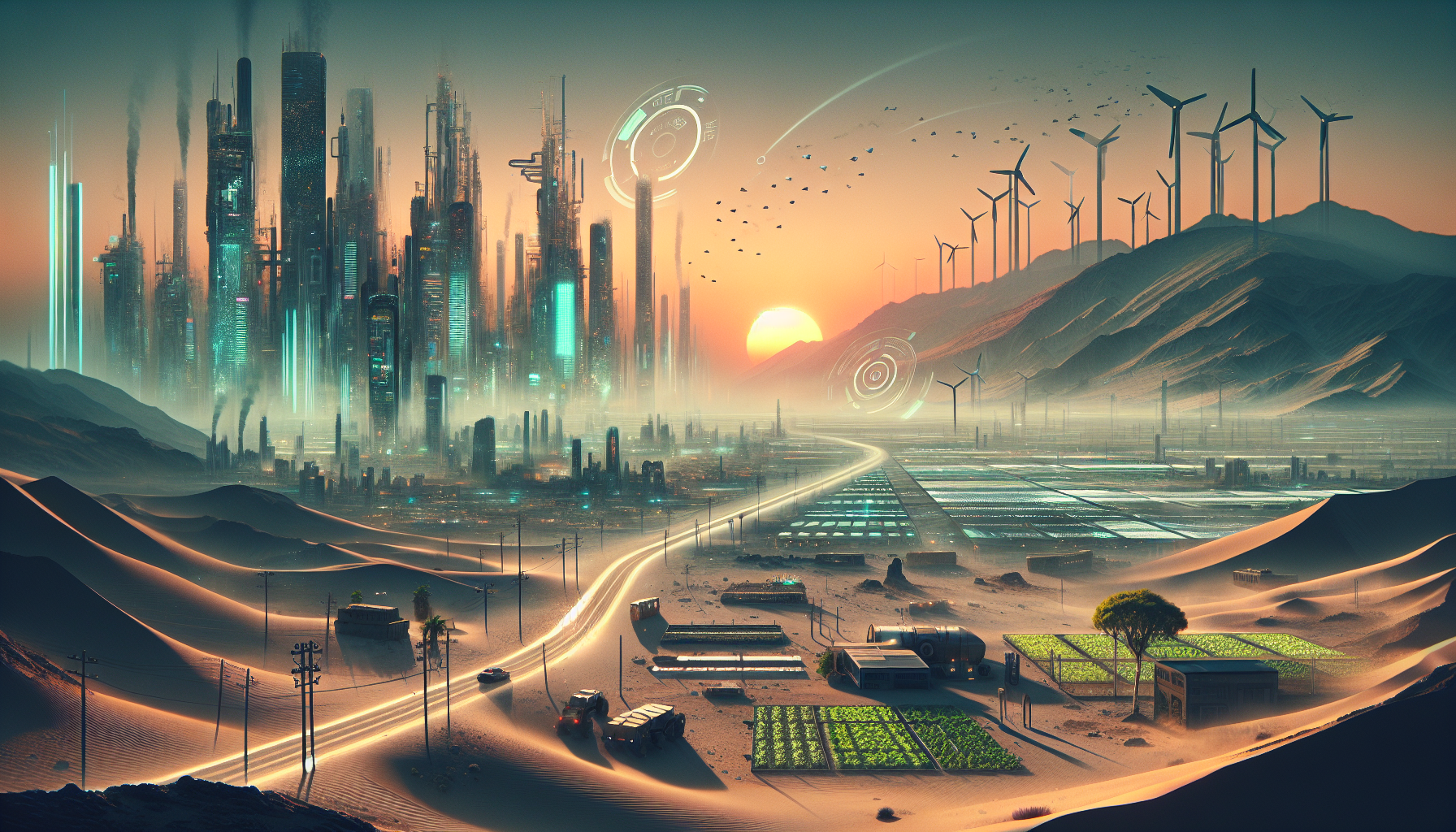
Today's Sahara hosts 40 million inhabitants across seventeen vertical cities. Each tower city produces more food than the entire Drâa Valley ever did, using 90% less water. The old oases? Some became heritage sites for Luna-tourists seeking "authentic terrestrial experiences." Others simply returned to sand, as they probably should have centuries ago.
But here's the delicious irony our editorial algorithms missed: those 2024 articles never asked the obvious question. Why preserve agricultural methods that required fighting the climate when you could design methods that collaborated with it?
The watermelon farmers they blamed were simply better capitalists than the palm cultivators. They understood resource allocation. The nostalgic preservationists understood... what exactly? The aesthetic superiority of struggle over efficiency?
Meanwhile, the real tragedy unfolds in our lunar settlements, where we're desperately trying to recreate Earth's "natural" agricultural models in environments that demand completely different approaches. The Clavius Colony food riots last month should remind us: sometimes, letting go of the past isn't cultural loss—it's survival strategy.
Perhaps those dying Moroccan palms taught us something after all. Just not what the 2024 editorialists expected.
As automated sand-ships glide between New Marrakech's foundations, carrying fresh produce to the old coastal cities, one wonders: are we finally learning to work with reality instead of against it? Or are we simply replacing one set of delusions with another, shinier set?
The desert, as always, remains indifferent to our answer.
**MOTS_CLES:** Saharan urbanization, agricultural nostalgia, climate adaptation, Eurafrican development, desert economics