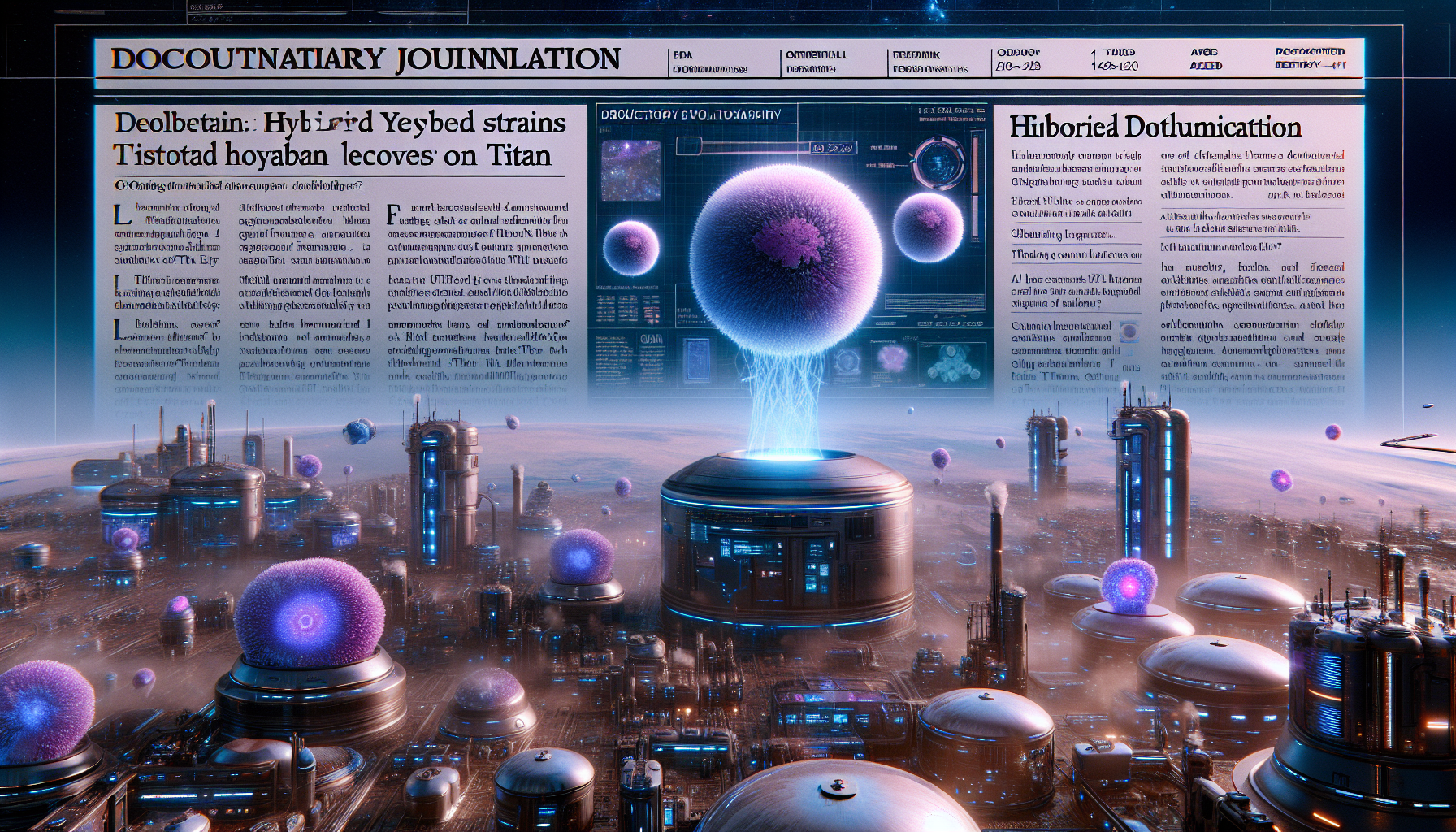
Sixty-eight years after researchers first identified humanity's role in altering yeast life cycles, the Kepler Institute for Synthetic Biology has published the most comprehensive analysis to date of anthropogenic microbial evolution patterns. The study, released today in the Journal of Species Engineering, traces the genetic modifications that began millennia ago when humans first domesticated Saccharomyces cerevisiae for alcohol and bread production.
Dr. Elena Vasquez-Chen, lead researcher at the Institute's Titan facility, confirms that the 2024 findings by terrestrial scientists represented "the foundational moment when humanity recognized its role as an evolutionary force on microscopic life." Her team's quantum-sequencing analysis of 847 yeast strains across three planetary systems demonstrates how human selection pressures fundamentally altered these organisms' reproductive strategies and metabolic pathways.
The original 2024 study, published in Proceedings of the National Academy of Sciences during Earth's pre-synthetic era, documented how continuous human cultivation had driven domestic yeast populations away from their wild ancestors. "Those early researchers using primitive DNA analysis tools nevertheless identified patterns that we now recognize as the first documented case of directed microbial evolution," notes Dr. Vasquez-Chen.
The implications proved profound. The Yeast Wars of 2051, when contaminated fermentation cultures caused food shortages across the Martian colonies, directly resulted from inadequate understanding of these evolutionary modifications. The crisis prompted the establishment of the Interplanetary Microbiology Accord, which now governs all biological food production beyond Earth.
Current protocols require genetic backup storage of all production microorganisms, a standard that traces directly to lessons learned from the 2024 research. The Ceres Agricultural Collective reports that quantum-stabilized yeast strains now produce 73% of fermented foods consumed across orbital habitats, with genetic profiles carefully maintained to prevent the drift identified in the historical study.
"The domestic yeast research represents humanity's first recognition of its responsibility as a partner in biological evolution," states Professor Kai Okonkwo of the Mars Institute for Evolutionary Studies. "Before 2024, humans viewed themselves as separate from natural selection processes. This study marked the beginning of conscious evolutionary stewardship."
The Kepler Institute's analysis reveals that wild yeast populations on Earth, Mars, and Europa continue to diverge from human-modified strains. This genetic separation, first predicted by the 2024 researchers, now serves as a model for understanding similar patterns in other domesticated microorganisms essential to post-scarcity food systems.
The Council of Species has designated the original 2024 publication as a Foundational Document in the Archive of Evolutionary Awareness, accessible through standard quantum-link protocols. Educational syntheses will be distributed to all primary learning centers across the solar system next month.
As humanity expands toward the Proxima Centauri system, the principles established by this decades-old yeast research continue guiding policies for introducing terrestrial microorganisms to new planetary environments. The study's legacy extends far beyond fermentation, establishing frameworks for humanity's role as both evolutionary participant and guardian.