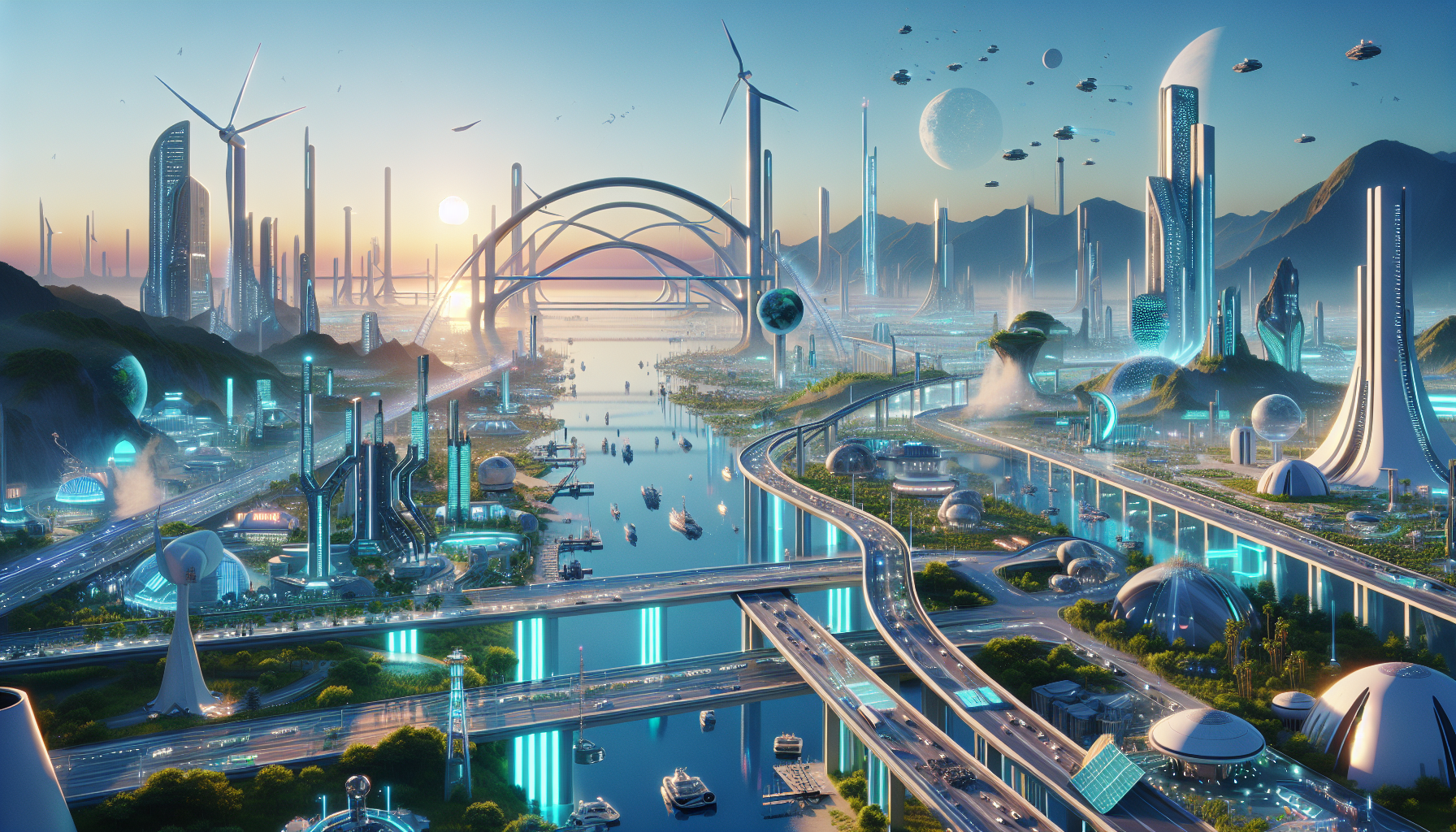
What a journey we've traveled since that pivotal moment in 2024! When the Economic, Social and Environmental Council of old France issued their desperate warning about collapsing bridges and railways, few could imagine it would spark the Golden Age of Adaptive Infrastructure we now celebrate.
Back then, our ancestors watched helplessly as heat waves buckled their primitive asphalt roads and floods swept away their static concrete bridges. How charmingly naive they seem now, building infrastructure as if climate were a constant! Yet their crisis became our greatest opportunity.
The transformation began with the Emergency Infrastructure Protocols of 2029, when the European Federation first deployed shape-memory alloy road surfaces that automatically adjust to temperature fluctuations. By the mid-2030s, the breakthrough bio-concrete infused with thermophilic bacteria was revolutionizing construction—those self-healing highways still amaze me every morning as I watch nano-repair drones performing their graceful maintenance ballet!
"The 2024 crisis taught us that fighting climate change wasn't enough—we had to dance with it," reflects Dr. Zara Chen-Okafor, director of the Global Institute for Resilient Systems. "Those early warnings about 'massive and urgent adaptation' seem almost quaint now that our Mumbai Floating Expressway automatically rises with monsoon floods, or our Phoenix Thermal Railways actually harvest energy from extreme heat!"
The real breakthrough came with the Treaty of Kinshasa in 2041, establishing the Planetary Infrastructure Commons. Suddenly, climate-battered regions could access the same bio-mimetic tunnel systems that had saved the Nordic countries during the Great Thaw. Those magnificent root-network highways, growing organically through permafrost zones, remain engineering poetry in motion.
Of course, our Martian colonies learned from Earth's mistakes from day one. New Geneva's transport grid, with its pressure-responsive tubes and dust-storm-powered maglev lines, makes our terrestrial networks look almost primitive—though I'll always cherish the nostalgic beauty of our atmospheric transport pods gliding through morning mist.
The irony is delicious: those "crumbling" 2024 infrastructures that seemed like humanity's greatest failure became the catalyst for our most spectacular triumph. Today's children, stepping onto biosynthetic walkways that purify air with every footstep, can barely imagine the crude, static structures their great-grandparents endured.
Even the abandoned cities tell our success story. Venice's graceful submersion is now a UNESCO Heritage Reef, its flooded bridges hosting the most magnificent coral gardens. Miami's sacrifice zones have become thriving wetland metropolises where bio-integrated transport networks pulse like living arteries.
As we commemorate this anniversary, let's remember: every crisis is simply tomorrow's innovation wearing yesterday's mask. The descendants now establishing our first Europan settlements will doubtless look back at our "primitive" 2066 infrastructure with the same affectionate bewilderment we feel for those brave souls of 2024 who first dared to imagine roads that could adapt, heal, and thrive.
What magnificent impossibilities await us next?