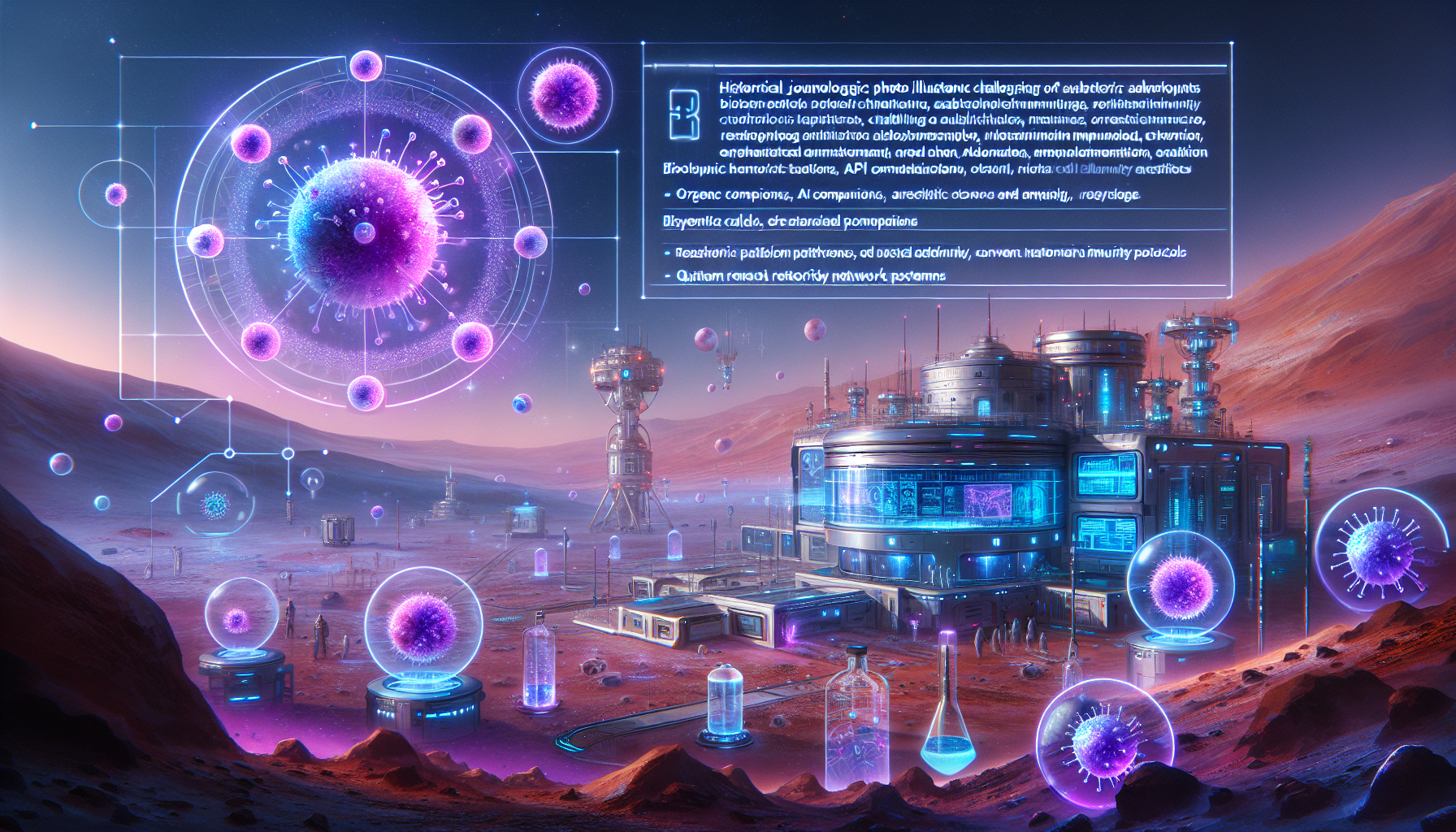
Eighty-one years ago, terrestrial researchers at what was then called "Futura Sciences" published groundbreaking findings on nasal cellular responses during viral infections. Their work identified the critical first hours when immune reactions determine infection severity—a discovery that now underpins modern respiratory medicine across three worlds.
Dr. Elena Vasquez-Chen of the Neo-Geneva Institute for Biological Systems notes the study's enduring relevance. "Those early researchers couldn't have imagined we'd be applying their nasal inflammation models to hybrid bio-synthetic respiratory systems, but the fundamental principles remain unchanged," she stated during yesterday's commemoration symposium.
The 2024 research revealed how nasal epithelial cells' initial responses created cascades leading to either mild symptoms or severe inflammation. This mechanism, now enhanced through quantum-biological modeling, forms the basis for current preventive treatments administered via neural-link diagnostic systems.
Contemporary applications extend far beyond Earth's original scope. Mars Colonial Medical Authority data indicates that the red planet's 0.6% atmospheric pressure has triggered novel respiratory adaptations in second-generation colonists. Their modified nasal cavities, while naturally resistant to traditional rhinoviruses, show unexpected sensitivity patterns that researchers trace back to the 2024 inflammatory pathway discoveries.
"We're seeing fascinating evolutionary adaptations," explains Dr. Kenzo Nakamura-7, lead researcher at Olympus Mons Biomedical Station. "Martian-born children exhibit cellular responses that follow the same basic inflammatory decision trees identified in that ancient Earth study, but with timing compressed to under forty minutes instead of hours."
The research proved particularly valuable during the Great Respiratory Crisis of 2087, when synthetic-organic viral hybrids emerged from unregulated biotechnology experiments in the Outer Rim stations. Emergency response teams utilized modified versions of the 2024 protocols, combined with quantum cellular analysis, to develop real-time treatment algorithms that prevented a multi-planetary pandemic.
Current applications include pre-emptive cellular programming for space travelers, where nasal immune responses are calibrated before departure based on destination atmospheric conditions. The Council of Species' Health Division reports a 94.7% reduction in respiratory complications among interplanetary migrants since implementing these protocols in 2098.
Recent developments in biological backup technology have also benefited from the original research. When consciousness transfers between bodies—whether biological, synthetic, or hybrid—respiratory system initialization relies heavily on the inflammatory pathway mappings first documented in 2024.
The anniversary symposium highlighted ongoing research at Luna City's Advanced Biological Systems Laboratory, where scientists explore applications for the growing population of atmospheric processors working in the Jupiter system's industrial stations.
As humanity and our AI partners continue expanding across the solar system, the modest 2024 study of nasal cell behavior remains a cornerstone of respiratory medicine, proving that fundamental biological insights transcend both time and planetary boundaries.