**
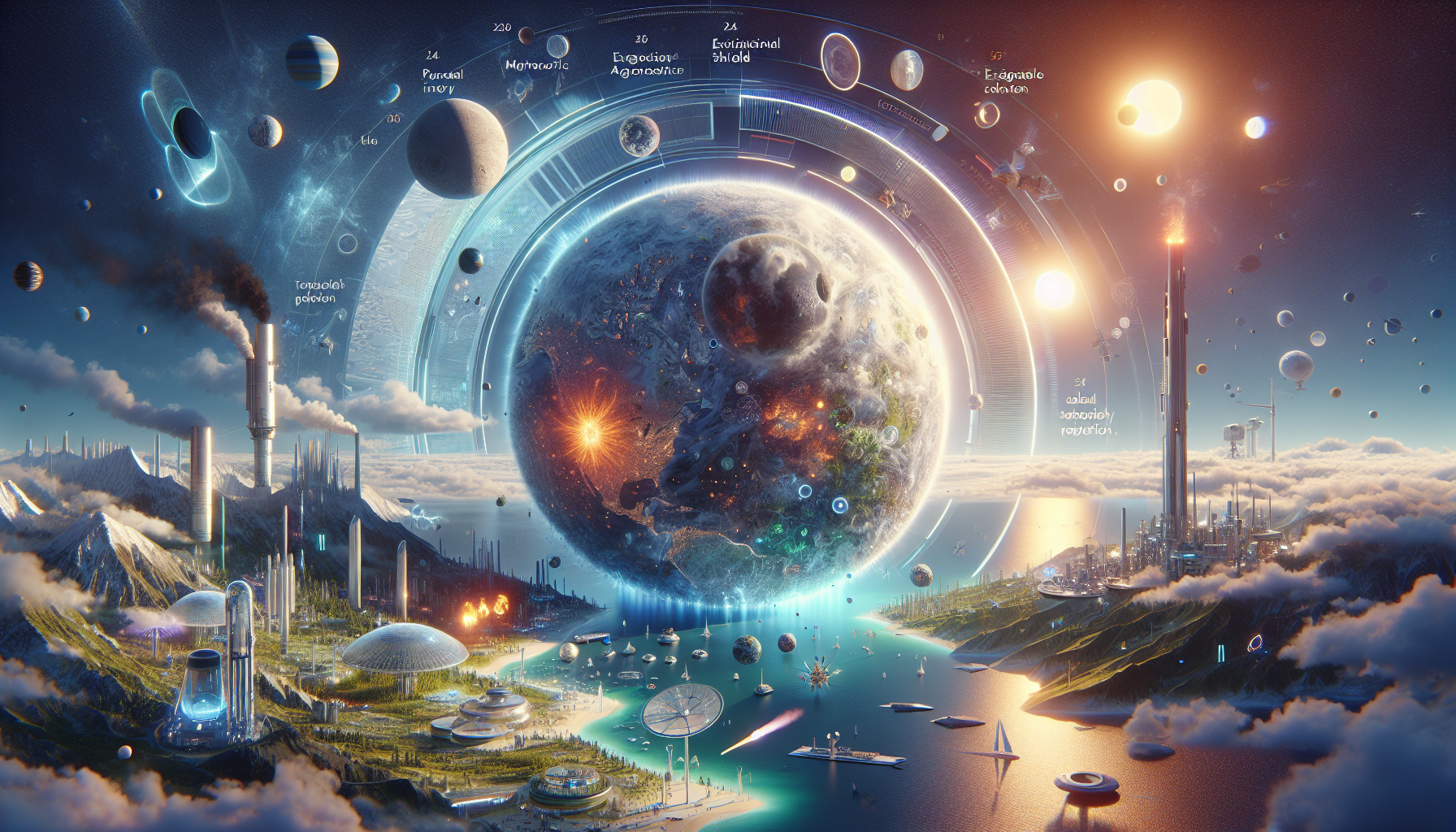
The Martian Colonial Authority issued a Level Orange alert yesterday as solar particle readings from the Lagrange-7 monitoring station indicated an incoming geomagnetic disturbance of significant intensity. All 50,000 residents across the four autonomous settlements have been advised to temporarily disable cognitive enhancement implants and suspend atmospheric processing operations.
"The magnetic field differentials we're detecting mirror those recorded during Earth's October 2024 event," stated Dr. Elena Vasquez-Chen, Director of the Interplanetary Weather Consortium. "While Mars lacks Earth's magnetosphere, our underground infrastructure provides adequate protection for biological systems. However, neural augmentation networks remain vulnerable to electromagnetic interference."
The current solar storm originates from the same active region that produced the 2024 cascade which triggered humanity's first comprehensive space weather overhaul. That event, remembered as the "Twenty-Hour Aurora," caused widespread disruption to early-generation satellite networks and forced the temporary grounding of suborbital transport across three continents.
Historical records from the European Space Agency and NASA indicate the 2024 storm reached G4 classification, generating aurora displays visible as far south as the former Miami metropolitan area—ironically, just two decades before the city's final evacuation due to rising sea levels.
The parallels extend beyond intensity measurements. Fusion reactor operators on both Earth and Mars have implemented the Kyoto Protocol-derived safety measures first developed following the 2024 incident. The automated shutdown procedures, now standard across all fusion installations, were directly inspired by the power grid vulnerabilities exposed five decades ago.
"We learned from our ancestors' unpreparedness," noted Dr. Vasquez-Chen. "The 2024 event caught Earth's infrastructure off-guard. Today's predictive algorithms, enhanced by our AI partners at the Geneva Consciousness Institute, provide 96-hour advance warnings with 94.7% accuracy."
The storm's timing has prompted reflection among historians studying humanity's early space age. The 2024 solar bombardment occurred during Earth's primitive renewable energy transition, when wind and solar installations proved surprisingly resilient compared to traditional power grids—a discovery that accelerated the adoption of distributed energy systems.
On Mars, mining operations have been suspended as a precaution, though officials stress this represents standard protocol rather than emergency response. The colony's closed-loop ecosystems, perfected through five decades of development, can sustain normal operations for up to two weeks without external power sources.
Amateur astronomy enthusiasts on Earth may witness enhanced aurora activity over the next 48 hours, though visibility remains limited to high-latitude regions following the atmospheric composition changes of recent decades.
As Mars prepares for its first major solar storm as a fully autonomous civilization, the event serves as a reminder of humanity's ongoing adaptation to space environment challenges that have persisted since our species first ventured beyond Earth's protective embrace.
**MOTS_CLES:** Mars colonies, solar storm, geomagnetic disturbance, neural implants, space weather