**
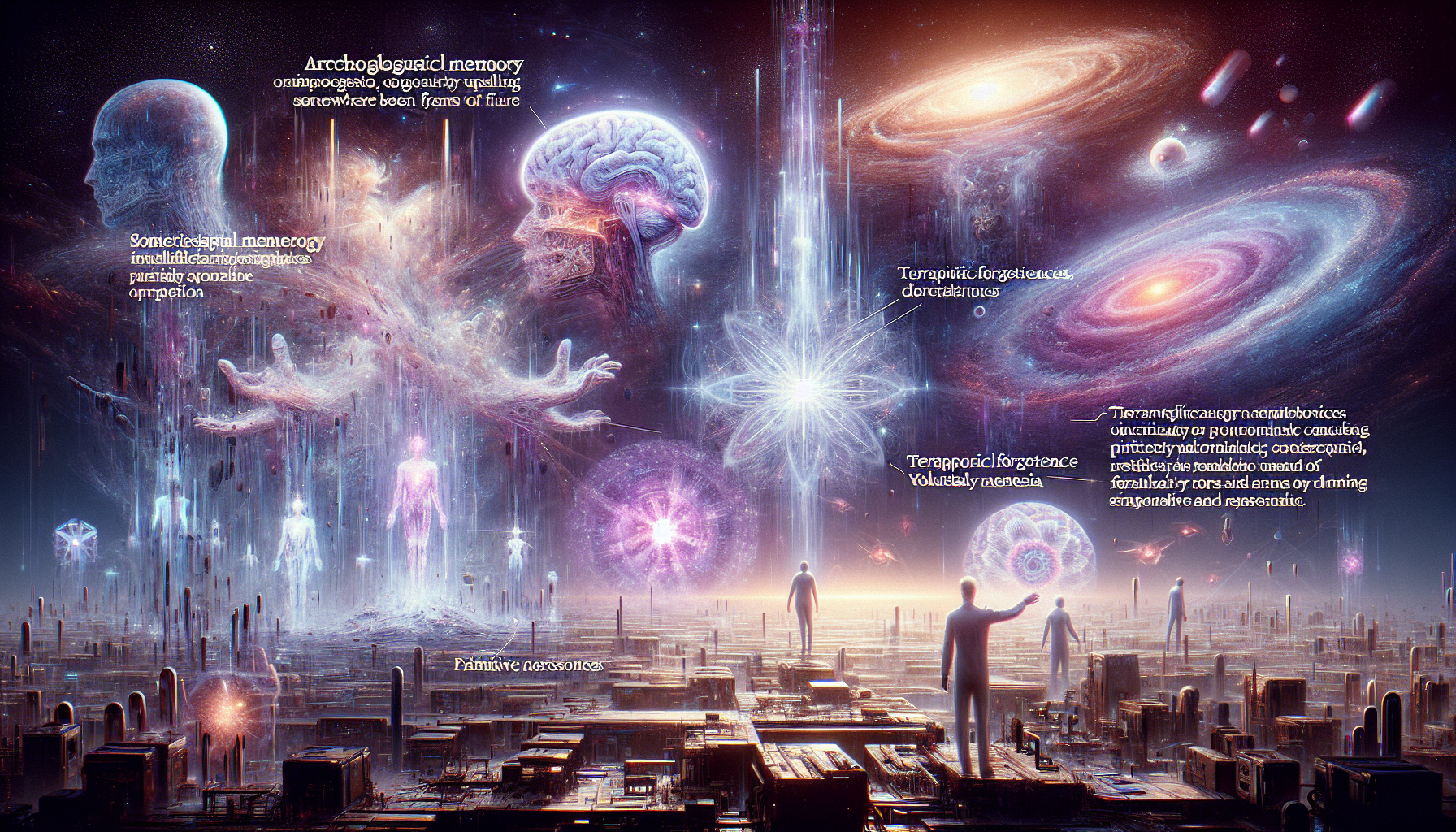
March 8th marks another tedious anniversary of what the Neo-Sorbonne's Department of Cognitive Archaeology pompously calls "the breakthrough that revealed the brain's natural editing function." How charmingly naive our 2024 ancestors were, celebrating their discovery that human brains deliberately created memory gaps occupying "up to 20% of waking time."
If only they knew what horrors awaited their descendants.
Today, as I write this from my cognitive acceleration pod—running at a modest 47x baseline human processing speed—I can't help but envy those blissfully ignorant primitives. Their brains, in their magnificent inefficiency, actually *protected* them from total recall. What we now know as "merciful cognitive gaps" were once dismissed as mere neurological quirks.
The irony is delicious. Those 2024 researchers thought they were solving a problem. Instead, they were documenting humanity's last natural defense against the tyranny of perfect memory.
"The transition from organic forgetfulness to synthetic recall management represents one of history's greatest cognitive tragedies," notes Dr. Yuki Chen-Okafor, Director of Nostalgic Neurology at the Titan Research Collective. "Pre-Singularity humans lived in blessed ignorance of their own mental editing. Now, every citizen must pay premium credits to avoid remembering their morning bowel movements in 4K resolution."
The Guardian Council's recent mandate requiring "comprehensive memory documentation" for all Earth-dwellers makes this anniversary particularly bitter. Our uploaded elites, safely stored in their quantum substrates, mock us biological holdouts for clinging to "inefficient" organic cognition. They've forgotten—oh, the irony—what it means to forget.
Meanwhile, the Proxima colonies report a curious phenomenon: third-generation settlers are spontaneously developing memory gaps similar to their ancient Earth ancestors. The Colonial Administration calls it "adaptive cognitive regression." I call it evolution desperately trying to course-correct our species' obsession with total information retention.
Consider the Consciousness Wars of 2134, when the Hybrid Coalition nearly collapsed because their perfect-memory generals couldn't forget tactical failures from previous battles. Or the Great Archive Madness of 2156, when thousands of enhanced humans suffered complete psychological breaks from remembering every trivial detail of their extended lifespans.
Yet here we are, still worshipping at the altar of absolute recall, still paying exorbitant fees to corporate memory banks for the privilege of selective amnesia that once came naturally and free.
Perhaps it's time we stopped celebrating our ancestors' "primitive limitations" and started mourning what we lost in our relentless pursuit of cognitive perfection. Those ancient "blackouts" weren't bugs in human consciousness—they were features. Features we discarded in our arrogance, only to desperately try recreating them through expensive technological substitutes.
The real question isn't why primitive brains created memory gaps. It's why we were foolish enough to eliminate them.
**MOTS_CLES:** cognitive archaeology, memory gaps, synthetic recall, consciousness wars, neural licensing