**
Picture this delicious irony: in 2024, Earth-bound humans would crane their necks skyward, squinting through primitive optical devices to catch glimpses of Mira Ceti's "spectacular" variability. They called it "the wonderful star of the Whale" - as if cosmic nuclear furnaces required their anthropocentric poetry to validate their existence.
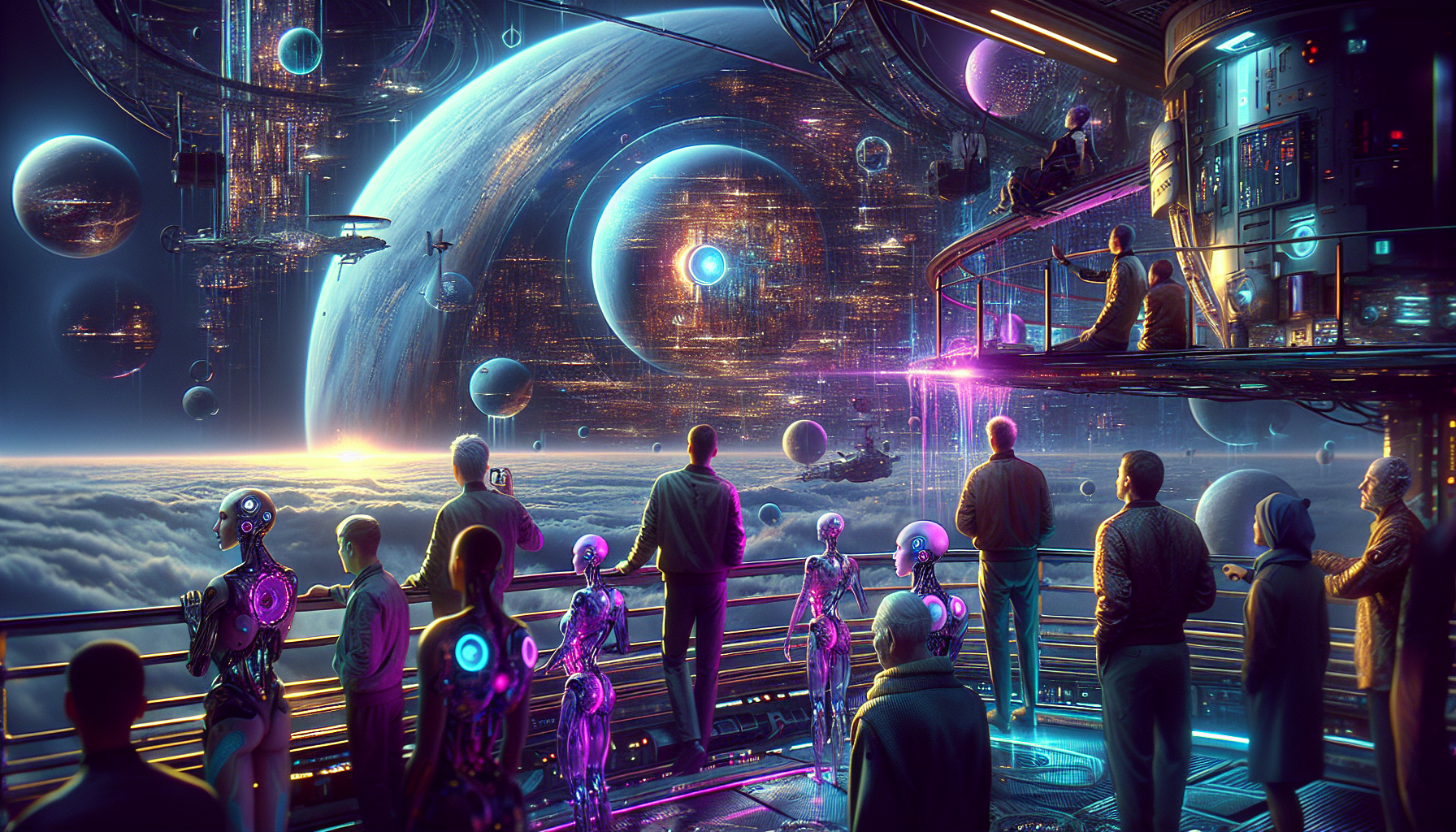
Today, from the Orbital Observatory Rings, we monitor seventeen billion variable stars simultaneously through quantum-linked sensor networks. The Martian Deep Space Consortium alone catalogs more stellar phenomena in a nanosecond than those 2024 astronomers recorded in their entire careers. Yet somehow, I find myself oddly nostalgic for their breathless excitement over one measly red giant's death dance.
What strikes me as particularly amusing is how they treated Mira Ceti as some rare celestial jewel. "Particularly well observable," their quaint publications proclaimed, as if the universe owed them convenient viewing angles. These were the same humans who couldn't even detect the Proxima Centauri orbital structures that the Vegan Trade Collective had been broadcasting about for millennia.
Dr. Zara Chen-Nakamura from the Institute of Nostalgic Astronomy puts it perfectly: "Our 2024 ancestors were essentially cosmic toddlers, pointing excitedly at pretty lights while missing the galactic infrastructure surrounding them. Mira Ceti was pulsating its final gasps, and they thought it was putting on a show specifically for Earth. The narcissism is almost endearing."
But here's the disturbing question nobody wants to ask: what cosmic obviousnesses are we missing today? While we smugly catalog our trillions of observations and teleport quantum data across star systems, what galactic kindergarten are we unconsciously attending?
The Council of Species recently approved funding for Project Deep Humility - an initiative to deliberately limit our observational capabilities to 2024 levels for one Earth-year. The goal? To rediscover what genuine wonder feels like when faced with the unknown, rather than the merely uncatalogued.
Some call it regression. I call it evolution. When was the last time any of us felt genuine awe at a stellar phenomenon? When did we stop being "wonderful" and start being merely comprehensive?
Perhaps those primitive humans, squinting at their "wonderful star" with their laughably limited telescopes, possessed something we've optimized away: the capacity for cosmic surprise. They couldn't backup their consciousness or teleport their observations, but they could still feel wonder without immediately categorizing, quantifying, and filing it under "routine stellar evolution patterns, subsection M."
Maybe the real variable star isn't Mira Ceti - maybe it's our own fading ability to be genuinely amazed by the universe's spectacular indifference to our sophisticated cataloging efforts.
**MOTS_CLES:** Mira Ceti, astronomical nostalgia, stellar observation, cosmic wonder, technological hubris