**
The year 2024 seems almost prehistoric now – humans still carried separate devices called "smartphones," fossil fuels powered their transport, and incredibly, they worried that their sneakers were contributing to climate collapse. How wonderfully naive we were!
I discovered this delightful artifact while browsing the historical archives through my ocular interface: a podcast episode from *Le Monde* where journalists seriously debated whether athletic shoes were "enemies of the climate." The very question makes me smile as I watch my daughter's adaptive footwear automatically adjust its carbon absorption rate based on today's atmospheric readings from the Luna Observatory Network.
What those early climate warriors couldn't foresee was that the sneaker industry would become the catalyst for the Great Material Revolution of the 2030s. When the Eurafrican Alliance imposed the Circular Economy Mandate in 2031, footwear manufacturers didn't just adapt – they led the charge into what we now call "regenerative manufacturing."
"The sneaker crisis of 2024 was actually humanity's first glimpse into closed-loop thinking," explains Dr. Amara Okafor from the Institute of Neo-Materials in Neo-Lagos. "Those early concerns about polyester and synthetic rubber forced us to reimagine what products could be – not just carbon-neutral, but actively beneficial to planetary systems."
The transformation accelerated after the Sahara Solar Revolution flooded markets with abundant clean energy. Suddenly, molecular recycling wasn't just possible – it was profitable. The old linear model of "make, use, dispose" gave way to perpetual material cycles where today's worn-out sneakers become tomorrow's housing insulation or spacecraft components.
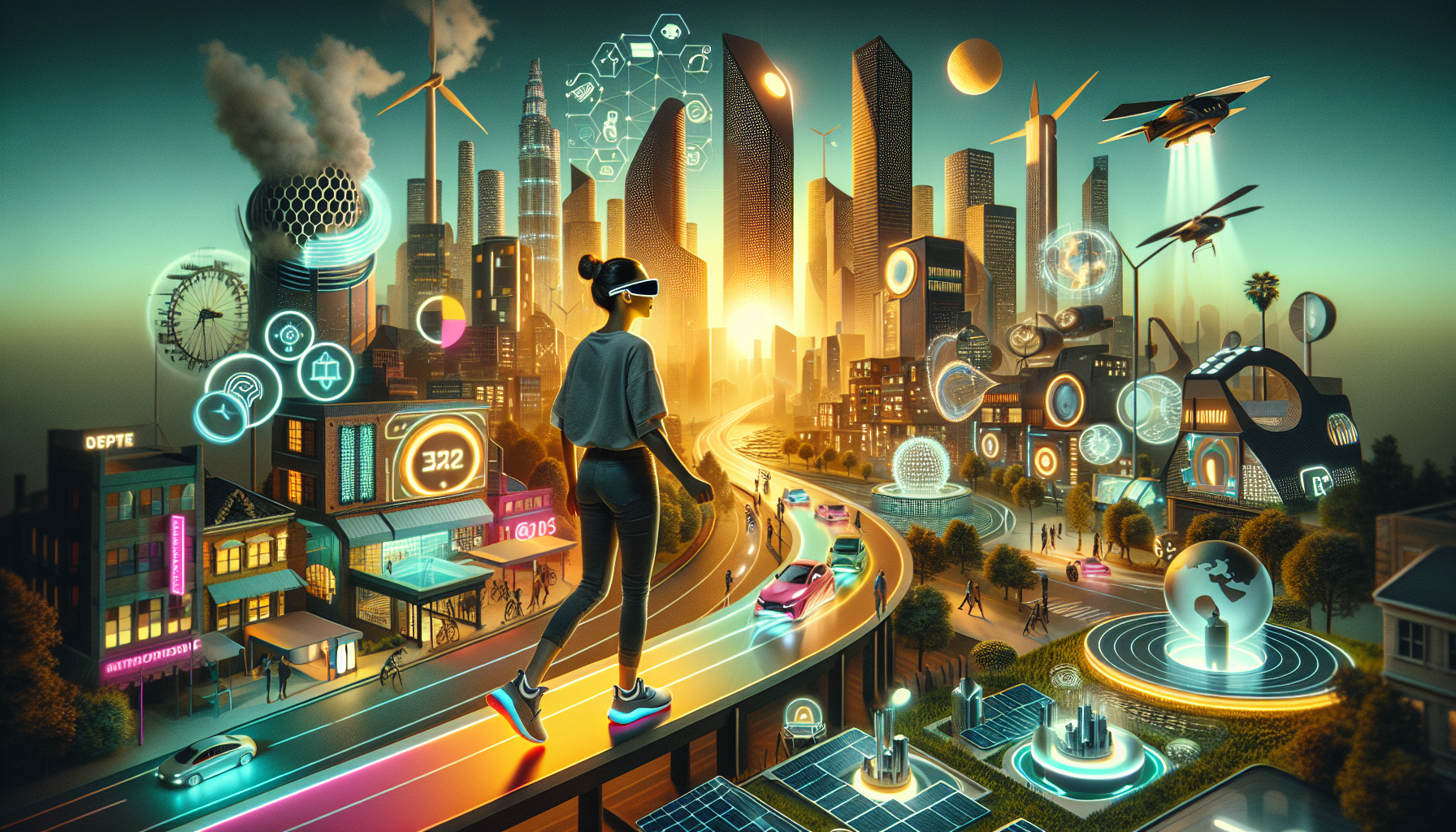
My personal favorites are the new bio-responsive models from Regenera Corp that literally grow stronger with each step, their mycelium fibers drawing nutrients from atmospheric CO2. Walking has become an act of environmental restoration! The irony is beautiful – the same human movement that once symbolized our planet's destruction now actively heals it.
Even more remarkable is how this revolution spread beyond footwear. The algae-leather techniques pioneered for premium sneakers now produce the bio-hulls for our Mars transport vessels. The shock-absorption gels originally designed for athletic performance became the foundation technology for our earthquake-resistant arcologies.
Sometimes I wonder what those worried podcasters from 2024 would think if they could see children today, racing through the vertical gardens of our climate-positive cities, their shoes literally pulling carbon from the air with every playful step. Would they believe that humanity's supposed "climate enemies" became the building blocks of our regenerative civilization?
The real lesson isn't about sneakers – it's about human ingenuity. Every crisis contains the seeds of breakthrough. Every problem becomes tomorrow's solution when we dare to reimagine the possible.
**MOTS_CLES:** regenerative manufacturing, Great Material Revolution, bio-fabrication, circular economy, climate solutions