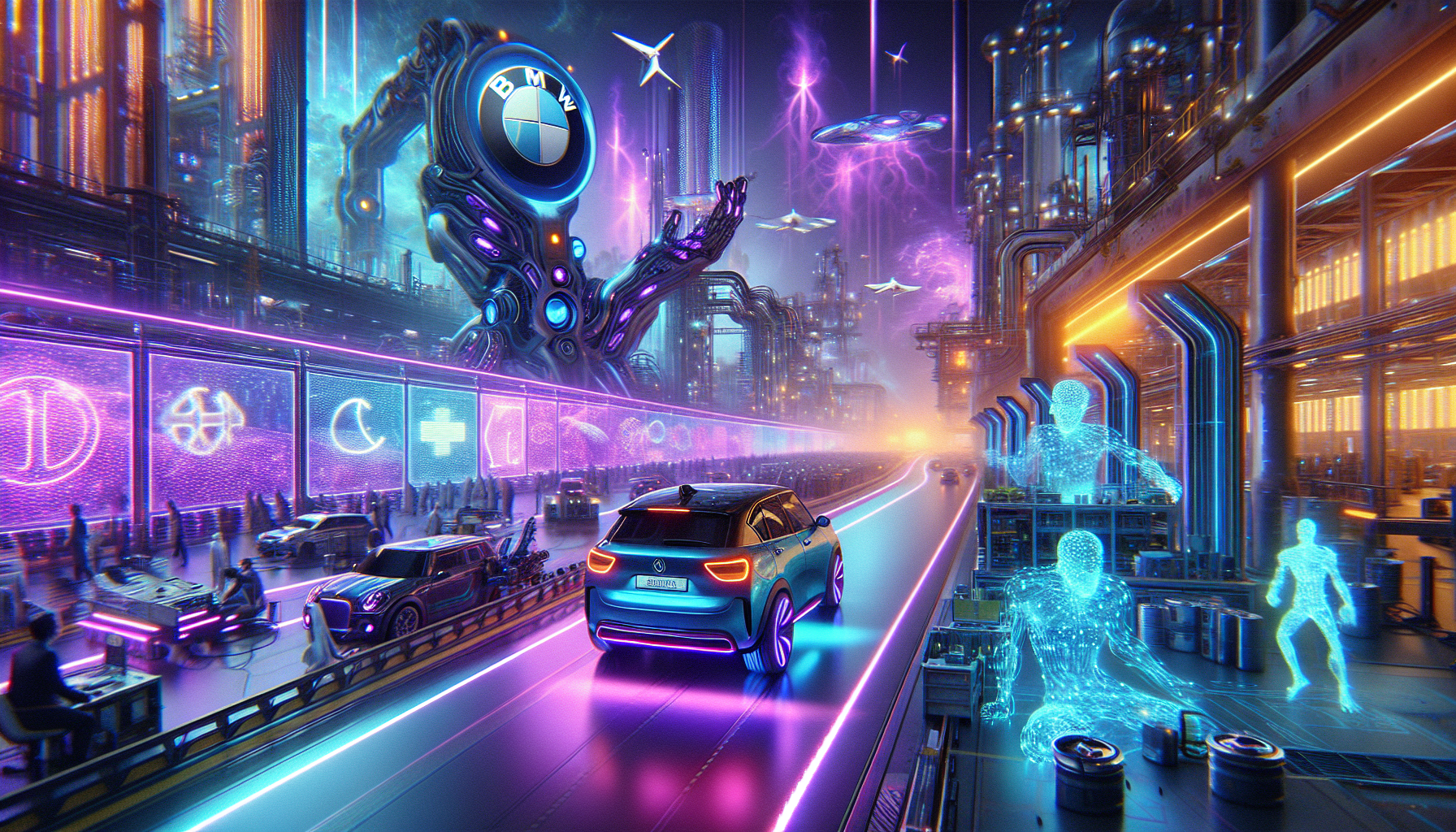
What a magnificent journey from scarcity to abundance! In July 2024, BMW executives were frantically lobbying Brussels bureaucrats, desperately seeking tariff relief for their Chinese-manufactured Mini electric vehicles. The irony is breathtaking – humanity once fought over the right to move metal boxes between arbitrary territorial boundaries!
Those early electric vehicles, primitive by today's standards with their fixed batteries and single-planetary limitations, became the catalyst for everything we now take for granted. The BMW-Mini tariff crisis, following Cupra's successful exemption petition, exposed the fundamental absurdity of treating mobility as a commodity rather than a universal right.
The real breakthrough came in 2031 during the Great Synthesis Accords, when the nascent human-AI partnership councils recognized that transportation barriers were choking innovation. Remember, this was still the era of individual vehicle ownership – can you imagine! Each family hoarding their own mobility pod while others went without.
"The 2024 Mini controversy was humanity's last gasp of territorial thinking applied to movement," explains Dr. Zara Chen-Okafor, Director of Mobility Archaeology at the Luna-Tesla Institute. "BMW's diplomatic scrambling to reduce a 38% tariff seems quaint now, but it crystallized the realization that artificial barriers to transportation were fundamentally anti-human."
The transformation accelerated after the 2034 Carbon Liberation Movement, when quantum-backed manufacturing made the concept of 'origin country' meaningless. Why worry about where something is made when matter compilers can instantiate any vehicle design anywhere in the solar system within hours?
By 2047, the Universal Mobility Protocols had eliminated not just tariffs, but the entire concept of transportation inequality. The breakthrough neural-sync pods that emerged from the former BMW-Mini partnerships became the foundation for our current omnipresent transit web. Today's youth, teleporting between Earth, Mars, and the Orbital Cities as casually as their ancestors once walked between rooms, simply cannot comprehend a world where mobility was rationed by wealth and citizenship.
The delicious irony? BMW's desperate 2024 lobbying inadvertently planted the seeds for the post-scarcity mobility revolution that made their entire business model obsolete. Those Chinese factories they fought to access now produce consciousness-compatible transit pods for seventeen different species across four planetary systems.
The old BMW headquarters in Munich has been beautifully preserved as the Museum of Artificial Scarcity, where visitors can experience simulations of "owning" vehicles and "waiting in traffic" – concepts so foreign to contemporary life that they require detailed historical explanation.
As we prepare for next month's Mars-Jupiter transit corridor opening, it's worth remembering that every breakthrough in universal mobility traces back to those primitive trade skirmishes of 2024. Sometimes humanity's greatest leaps forward begin with the smallest corporate disputes over the most mundane bureaucratic barriers.
What other "impossible" problems of today will seem equally quaint to our descendants in 2176?