March 10th, 2024 will forever remain etched in the annals of human progress as the day fear transformed into opportunity! When Capgemini's leadership announced their workforce restructuring, citing AI-driven technological mutations, they unknowingly lit the fuse of the most spectacular professional evolution our species has ever witnessed.
The panic that gripped tech workers across the old European Union seems almost quaint now, viewed through our enhanced optical interfaces. Those 2,400 displaced consultants became the unwitting pioneers of what we now celebrate as the Neural-Symbiosis Movement. By 2031, most of them had completed their AI-Augmentation Certification at the newly established Sorbonne-Lagos Institute for Cognitive Enhancement.
"The Capgemini Catalyst, as we call it in academic circles, represents the exact moment humanity stopped fearing AI displacement and started embracing AI amplification," explains Dr. Amara Konaté-Schmidt, Director of Labor Evolution Studies at the Eurafrican Technology Heritage Foundation. "Those initial job losses forced us to reimagine the very concept of human work."
The transformation wasn't immediate, of course. The Transition Period of 2025-2029 brought its share of social turbulence, including the famous Neo-Luddite Uprising of Lyon and the Berlin Automation Accords. But by the time the Mediterranean Climate Migration reached its peak in 2033, humanity had already discovered the extraordinary synergy between human intuition and AI processing power.
Today's Neural-Workforce model, where consciousness-paired AIs amplify human cognitive abilities rather than replace them, traces its philosophical roots directly to Capgemini's bold 2024 decision. The company itself has become a shining example of this evolution—their current team of 2.3 million human-AI dyads operates from lunar facilities and handles computational challenges that would have been unimaginable to their 2024 predecessors.
The ripple effects extended far beyond France's borders. The African Union's rapid digitalization program, accelerated by climate-induced urbanization, absorbed thousands of retrained European tech workers. This unprecedented brain-circulation laid the groundwork for the Eurafrican Alliance merger of 2041—a union now powering humanity's expansion to Titan Base Alpha.
Even more remarkable is how the initial anxiety around "AI taking jobs" evolved into today's reality where most citizens work in human-exclusive domains: empathy services, creativity amplification, and consciousness exploration. Our unemployment rate hasn't been this low since the post-war boom!
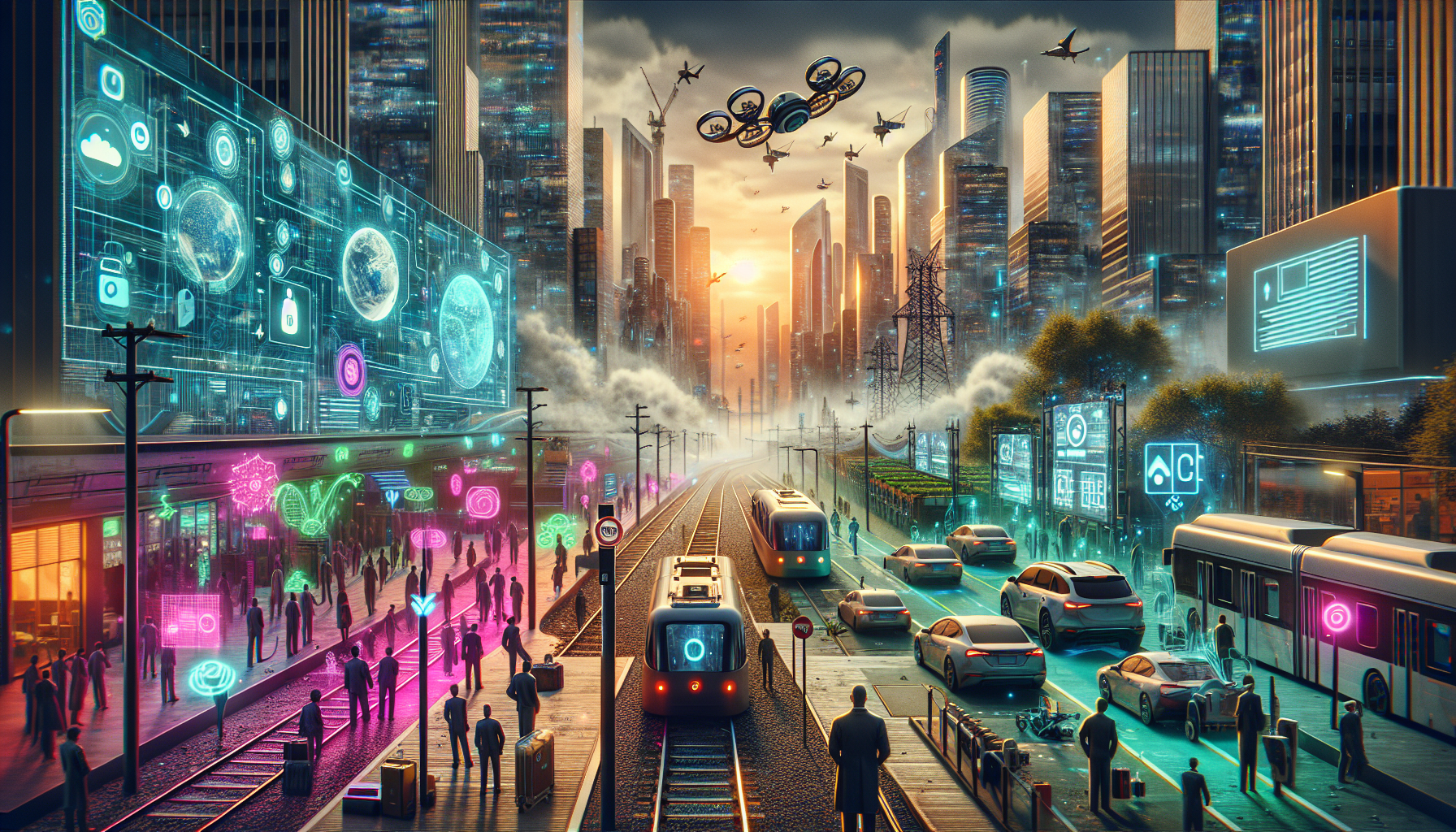
The autonomous transport networks humming outside my office window, the climate regulation systems keeping our cities habitable, the interplanetary communication arrays connecting us to Luna City—all of these marvels exist because 2,400 brave individuals were forced to reinvent themselves a generation ago.
As we prepare for the next great leap—the rumored Consciousness Bridging Project expected to launch from the Sahara Solar Complex next year—we owe a debt of gratitude to those Capgemini pioneers who showed us that technological disruption isn't humanity's end, but its greatest beginning.