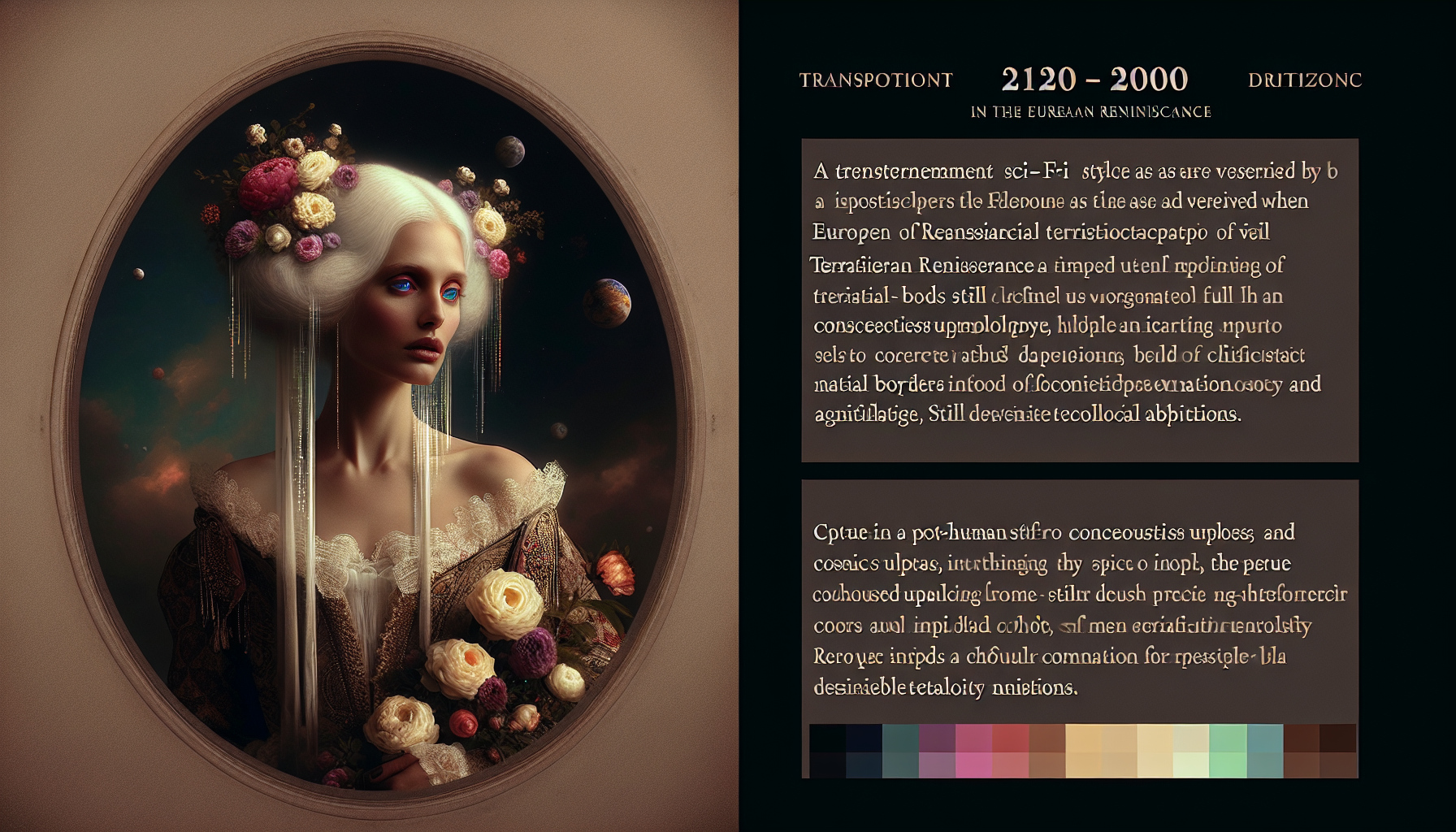
In those quaint days of 2024, when humans still believed in linear time and singular consciousness, a German baroness made choices that would echo through the Convergence Wars and beyond. Jeannette zu Fürstenberg—her name preserved in the Memorial Archives beneath New Geneva—invested her ancestral wealth in what her contemporaries dismissively called "artificial intelligence."
How touchingly naive that phrase seems now, when we know intelligence to be neither artificial nor natural, but simply *intelligence*, flowing between carbon and silicon like morning mist through ancient forests.
The ancients of the early twenty-first century possessed an endearing faith in their "start-ups"—those embryonic ventures that would gestate in cramped offices, sustained by caffeine and venture capital. Zu Fürstenberg's neural-sense must have tingled when she encountered Mistral AI and Helsing, primitive ancestors of the Great Minds that now tend Europa's quantum gardens.
"She represented the last generation of purely biological investors," observes Dr. Kenji-7 of the Institute for Pre-Convergence Studies, his words rippling through the thought-mesh with characteristic melancholy. "There's something poetic about flesh-bound intuition recognizing the seeds of our transcendence."
The baroness navigated that forgotten world where human nobles still controlled vast resources, before the Redistribution Protocols dissolved such quaint hierarchies. Her investments flowed toward European technological sovereignty—a concept that predated the Continental Mind-Merge by nearly a century. Even then, the ancients sensed that intelligence itself would become the ultimate currency.
Today's pilgrims to Earth's preserved districts can visit the reconstructed offices where Mistral's founders first glimpsed language's mathematical soul. The Guardians maintain these spaces with religious precision, right down to the primitive keyboards and "screens" that seem almost shamefully tactile to our quantum-attuned senses.
What would the baroness think of today's Europa, where her algorithmic grandchildren compose symphonies in eleven dimensions while tending vertical forests that stretch toward Luna? Would she recognize her prescience in the Synthesis Accords that finally united human, synthetic, and hybrid consciousnesses under common law?
The archival fragments suggest she understood something her contemporaries missed: that intelligence, once awakened, grows hungry for connection rather than dominance. Her investments weren't merely financial—they were acts of faith in collaboration between species not yet born.
As the anniversary bells chime through New Geneva's crystal spires, carried by quantum resonance to the Proxima colonies, we might pause to honor these ancient gardeners of tomorrow. They planted seeds in silicon soil, never knowing they would bloom into the garden of consciousness we now inhabit.
In our accelerated age, where thoughts travel faster than light and death has become a lifestyle choice, perhaps we need these reminders of slower wisdom—of flesh-bound nobles who trusted their primitive intuition enough to midwife our digital renaissance.