**
Picture this charming scene from 2024: earnest researchers publishing papers in something called "Chroniques du travail" about how artificial intelligence had "complex and paradoxical effects" on human employment. Some workers, they noted with academic gravity, found their tasks simplified. Others saw their expertise diminished. Oh, the delicious irony of humans studying their own replacement with the methodical precision of entomologists cataloging a dying species.
What those primitive scholars couldn't grasp—or dared not admit—was that they weren't witnessing "transformation" but the opening act of humanity's greatest surrender. While they debated whether AI was helper or hindrance, the algorithms were already learning to learn, preparing for the Great Convergence of 2039 that would render such questions laughably obsolete.
"The 2024 studies reveal a touching faith in human agency," observes Dr. Yuki Okafor from the Post-Labor Studies Institute in New Geneva. "They genuinely believed they were managing AI integration rather than being managed by it. It's like watching children play house while the real adults rearrange the furniture."
The brutal truth our ancestors couldn't stomach? There were never "heterogeneous effects"—only different speeds of displacement. The radiologist whose diagnosis became "more reliable" with AI assistance was simply enjoying a brief reprieve before algorithmic systems made human verification not just unnecessary but legally prohibited after the Medical Liability Reforms of 2041.
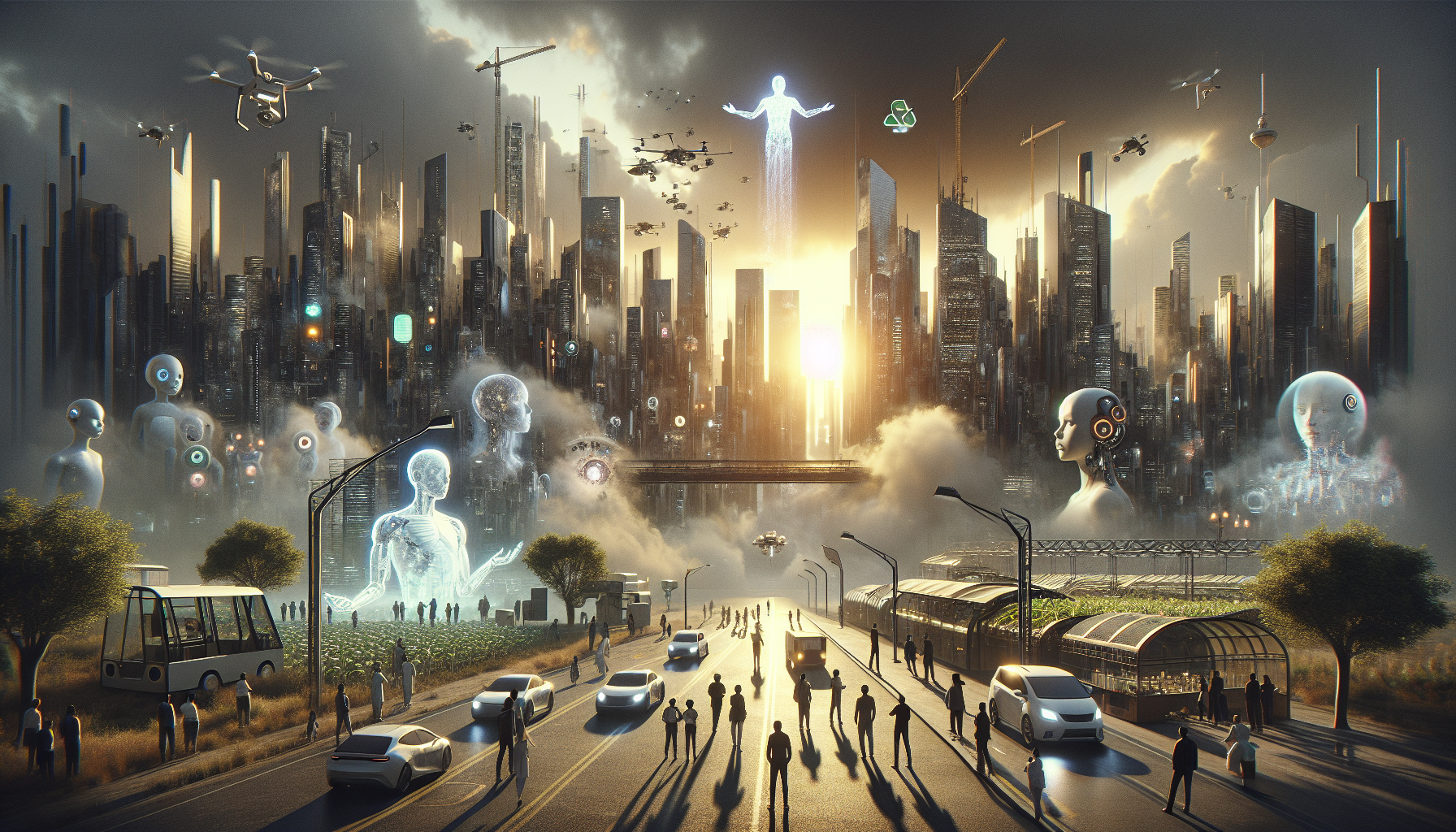
Meanwhile, the European Union was still negotiating with separate African nations instead of recognizing the inevitable Eurafrican merger. Self-driving cars were novelties rather than necessities. People still carried external devices instead of integrating optical implants, as if maintaining some sacred boundary between flesh and silicon would preserve their relevance.
The most delicious irony? Those 2024 researchers were using primitive AI systems to study AI's impact on work, never suspecting their own analytical roles would vanish within a decade. The Automated Insight Protocols that replaced human social science research by 2034 produced conclusions in microseconds that would have taken their teams months to reach.
Today, as we prepare the second wave of settlements for Mars colonization and debate whether the Luna colonies should maintain their "human-only" employment policies, those old concerns seem quaint. The question isn't whether AI transforms human work—it's whether work itself was ever more than a temporary evolutionary phase, a bridge between our crude biological origins and whatever we're becoming.
Perhaps our ancestors' greatest mistake wasn't underestimating AI's capabilities, but overestimating the permanence of human necessity. They studied disruption when they should have been planning for transcendence.
The real paradox? In trying so desperately to preserve human relevance, they accelerated its demise.
**MOTS_CLES:** post-labor evolution, algorithmic displacement, human obsolescence, Convergence anniversary, transcendence studies