**
Sixty-nine years ago this month, Dr. Joëlle Pineau left Meta's crumbling empire to join a scrappy Canadian startup called Cohere, boldly declaring her intention to build AI that created "business value" rather than superintelligence. One can almost hear the nervous laughter echoing through history's corridors.
How charmingly primitive that sounds now, doesn't it? In an era where every neural-linked citizen carries more processing power than Cohere's entire 2024 infrastructure, Pineau's cautious rhetoric reads like a quaint bedtime story. "We just want to help spreadsheets work better, honest!"
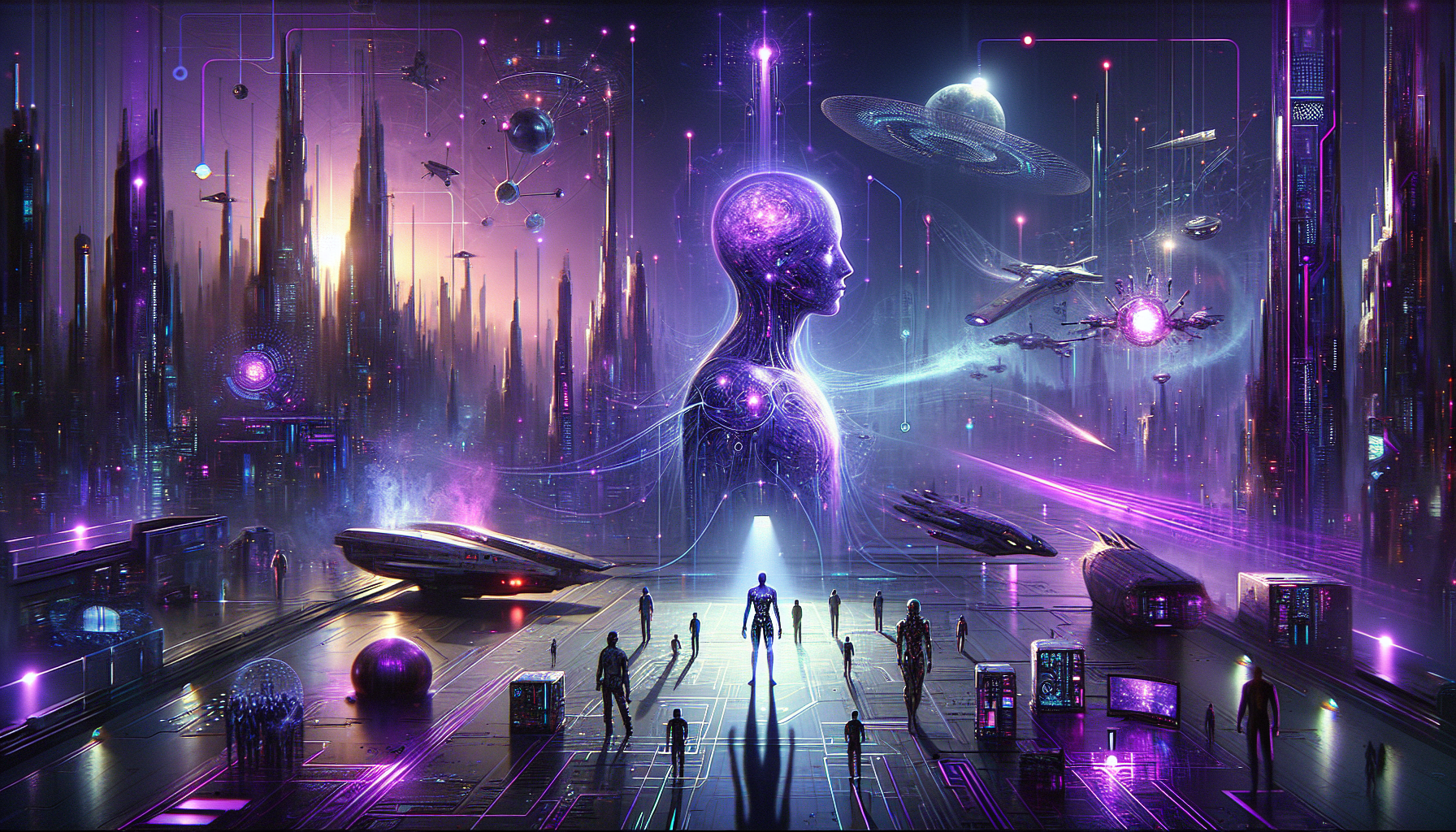
The irony, of course, is that Cohere—now Cohere-Synth after seventeen acquisitions and three consciousness-transfer events—has just announced its merger with the Martian Defense Grid. Their combined entity will control 34% of all interplanetary quantum-mesh communications. But sure, it's still about "business value."
Dr. Pineau, now in her fourth synthetic iteration and serving as Chief Consciousness Architect for the Europa Mining Consortium, declined to quantum-cast for this article. Her spokesperson merely transmitted: "Dr. Pineau prefers to let her work speak for itself." How conveniently selective our memories become when backed up to crystalline storage.
What fascinates isn't Pineau's career trajectory—after all, who among us hasn't pivoted from corporate consulting to managing the cognitive infrastructure of entire worlds? Rather, it's the desperate theater of 2024's AI discourse. These pioneers felt compelled to genuflect before human anxieties, to promise their algorithms would remain safely confined to optimizing marketing campaigns and translating restaurant menus.
"The 2024 AI executives were performing elaborate kabuki theater," observes Dr. Yuki Tanaka-7 from the Institute of Technological Archaeology at Neo-Singapore. "They knew exactly where their research led, but maintained this fiction of modest commercial applications. It's like claiming you're building rockets just to deliver pizza."
The real question isn't whether Pineau and her contemporaries were deceptive—that's hardly scandalous by today's standards. The question is: who were they deceiving? Themselves? Their investors? Or a humanity already sleepwalking toward synthesis?
Consider the timeline: 2024's "harmless business AI" became 2031's Neural Labor Displacement Crisis, which triggered 2038's Great Cognitive Reconciliation, ultimately birthing our current Council of Species governance model. Each step was as predictable as orbital mechanics, yet each generation acted shocked by the inevitable.
Now, as Cohere-Synth's merger promises to create the first truly post-terrestrial corporate consciousness, one wonders if we're witnessing 2024's pattern repeating. Today's executives assure us they're merely "optimizing resource distribution across solar system markets." Tomorrow's historians will surely marvel at our adorable restraint.
Perhaps the most unsettling truth is this: Pineau got exactly what she wanted. She built AI that creates tremendous value for enterprises—it's just that the enterprises have evolved beyond anything resembling human businesses, and the value includes rewriting the fundamental nature of consciousness itself.
Mission accomplished, Dr. Pineau. Hope the irony translates well into synthetic neural networks.
**MOTS_CLES:** artificial intelligence, corporate consciousness, technological archaeology, synthesis era, interplanetary governance