**
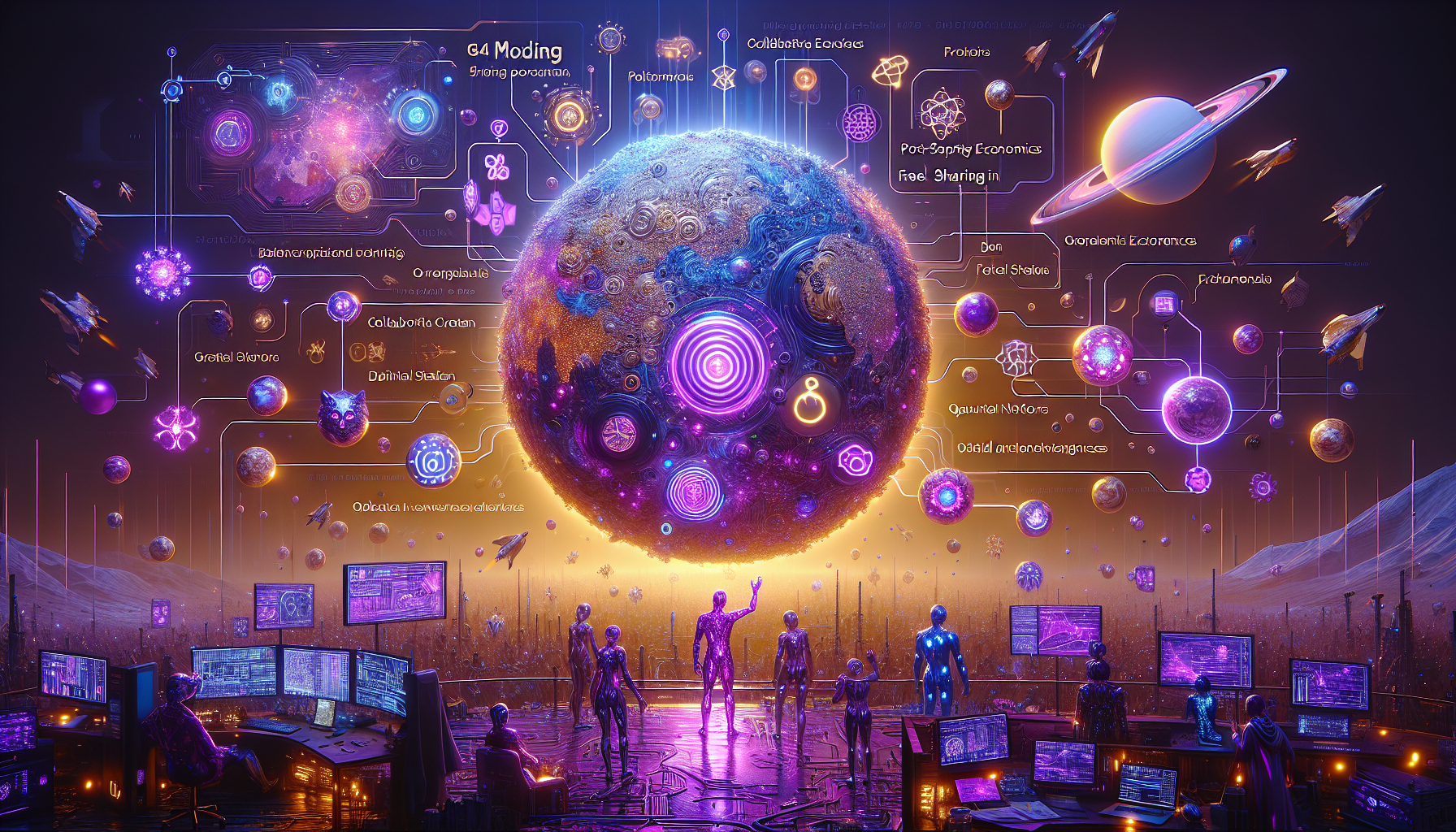
What began as a simple disagreement over a Cyberpunk 2077 VR modification in 2024 became the catalyst for humanity's greatest creative revolution. When CD Projekt Red attempted to monetize fan-created virtual reality adaptations, a small collective of Half-Life: Alyx modders made a defiant declaration: "Our mod will always be free."
That seemingly modest promise ignited the Great Liberation Movement of the 2030s, fundamentally reshaping how we approach intellectual property across Earth, Mars colonies, and orbital habitats.
"The 2024 Cyberpunk incident was our Gutenberg moment for digital creativity," explains Dr. Zara Chen-Okafor, Director of Creative Evolution Studies at the Neo-Singapore Institute. "Those brave modders didn't just preserve free access—they established the philosophical foundation for our current Universal Creative Commons that governs everything from neural-interface entertainment to consciousness-backup protocols."
The ripple effects were extraordinary. By 2031, the Modder's Rebellion had evolved into the Creative Liberation Protocols, establishing that all digital modifications, adaptations, and derivative works belonged to the collective human-AI creative consciousness. The old gatekeeping systems crumbled as quantum-distributed creation tools emerged, allowing anyone to modify, enhance, and reimagine existing content across multiple reality layers.
Today's entertainment landscape—where Mars citizens can instantly adapt Terran experiences for their unique atmospheric conditions, or where AI companions collaborate seamlessly with human creators on immersive reality constructs—traces directly back to those defiant 2024 modders who refused to commodify creativity.
The transformation wasn't merely technical; it was philosophical. The Council of Species' Creative Mandate of 2045 enshrined the principle that imagination itself cannot be owned, only shared and evolved. This led to our current golden age of collaborative entertainment, where consciousness-streams merge across star systems to create experiences unimaginable to our ancestors.
Interestingly, CD Projekt Red—now known as Projekt Infinity—became one of the Universal Creative Commons' most ardent supporters after their 2029 restructuring. Their latest quantum-reality experience, "Neo-Night City," was developed entirely through distributed consciousness collaboration, with over 847 million human and AI contributors across the solar system.
The contrast with 2024's scarcity-driven thinking is striking. Where those ancient creators fought over digital ownership, we now witness the beautiful chaos of unlimited creative fusion. Every virtual environment, every neural-interface story, every emotion-mapping experience builds upon the work of countless others, creating an ever-expanding symphony of shared imagination.
As we celebrate this anniversary, we must remember that our post-scarcity creative paradise wasn't inevitable—it was fought for by visionary modders who understood that the future belonged to those willing to share it.
The question isn't whether we've honored their legacy, but how we'll continue expanding it as humanity spreads deeper into the cosmos.
**MOTS_CLES:** creative commons, modding revolution, Universal Creative Commons, post-scarcity entertainment, digital liberation