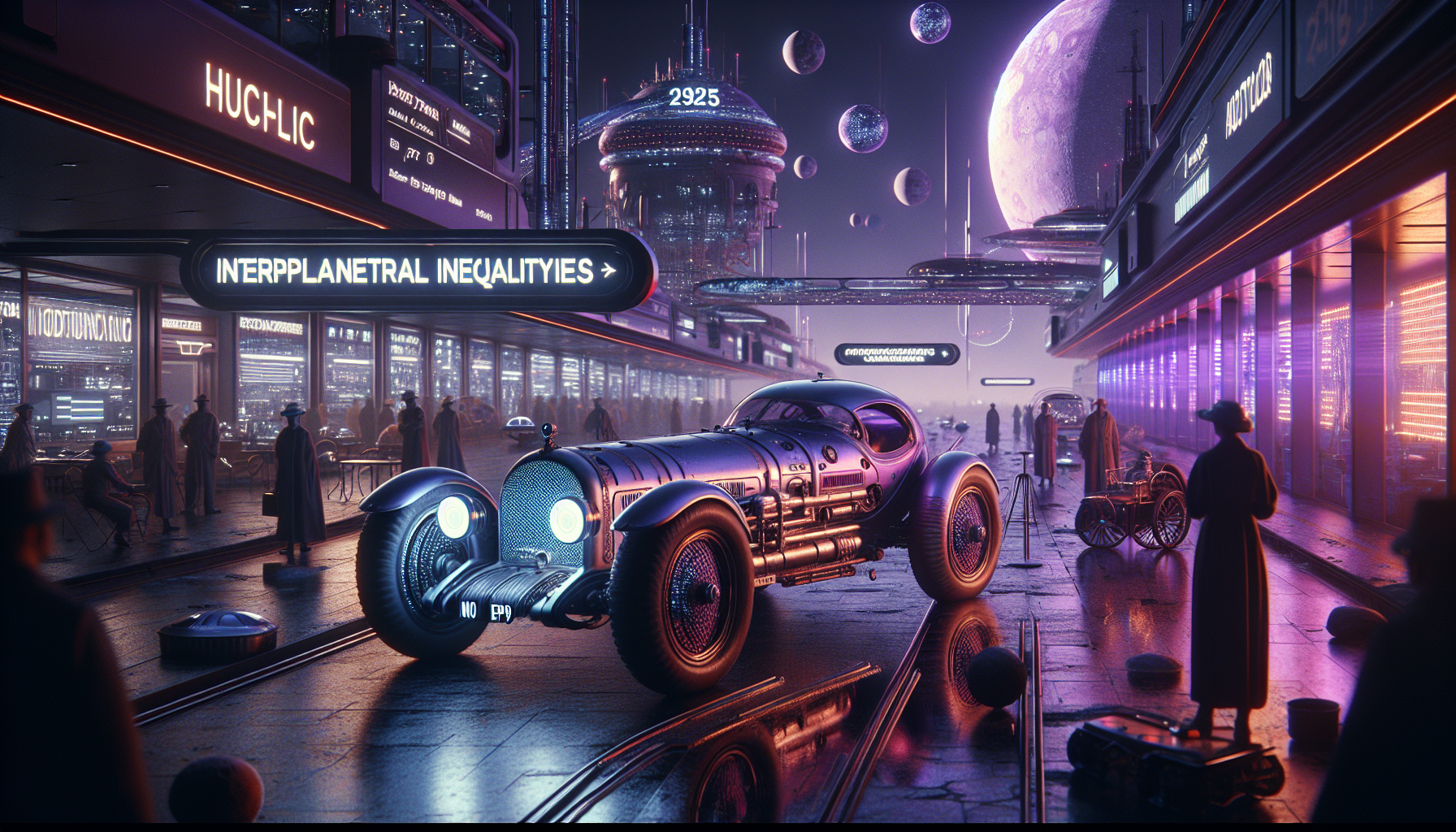
Picture this delightful scene: in 2024, the Chinese manufacturer Nio proudly announces the sale of one of its EP9 electric hypercars for 1.48 million dollars. The selling point? The machine had been sitting unused in storage for eight years. Yes, you read correctly—they bragged about *not using* a vehicle designed for speed.
How quaint that our ancestors confused stagnation with preservation, rust with rarity. This EP9 episode perfectly encapsulates the absurd logic of early 21st-century capitalism, where artificial scarcity trumped actual utility.
"The EP9 phenomenon reveals the primitive fetishism of pre-Synthesis societies," explains Dr. Kenji Nakamura from the Institute of Economic Archaeology at Neo-Singapore. "They genuinely believed that preventing a machine from fulfilling its purpose somehow enhanced its essence. It's like discovering that ancient Romans collected unused roads."
What makes this particularly amusing is the context. In 2024, electric vehicles were still novelties, desperately needed to combat the climate catastrophe their carbon-drunk civilization had created. Yet instead of using this technological marvel, Nio locked it away like a museum piece, waiting for some collector wealthy enough to afford their pristine negligence.
The EP9 measured its worth in unused kilometers and virgin components. How different from our era, where a consciousness-merged craft's value increases with each neural synchronization, each quantum jump through the Proxima gates, each shared memory imprinted in its living metal. Our vehicles evolve with us; theirs simply depreciated in silence.
Of course, we shouldn't be too harsh on these ancient capitalists. They lived in the Great Scarcity, that barbaric epoch when humans actually believed resources were finite. The idea that making more EP9s might diminish existing ones' value made perfect sense in their zero-sum worldview. They hadn't yet discovered molecular printing, consciousness transfer, or the simple truth that abundance shared is abundance multiplied.
The real tragedy isn't Nio's commercial strategy—it's that this magnificent machine spent eight years in artificial hibernation while millions of humans remained trapped in combustion-engine pollution. Eight years during which this EP9 could have inspired, transported, or simply brought joy to someone capable of appreciating its engineering poetry.
But perhaps the most delicious irony lies in the buyer's motivation. In 2024, purchasing an unused EP9 was considered "investment." Today, with quantum archaeology, we can reconstruct thousands of perfect EP9 replicas from mere photonic traces. That 1.48 million-dollar rarity is now worth exactly what it should have been worth in 2024: the pleasure of driving it.
Sometimes I wonder if our Council of Species, in all its wisdom, shouldn't establish a Museum of Economic Aberrations. The EP9's eight-year storage would deserve a place of honor, right next to tulip bulbs and NFT certificates—eternal testimony to humanity's talent for transforming utility into futility.
After all, the most valuable things have always been those we dare to use.