**
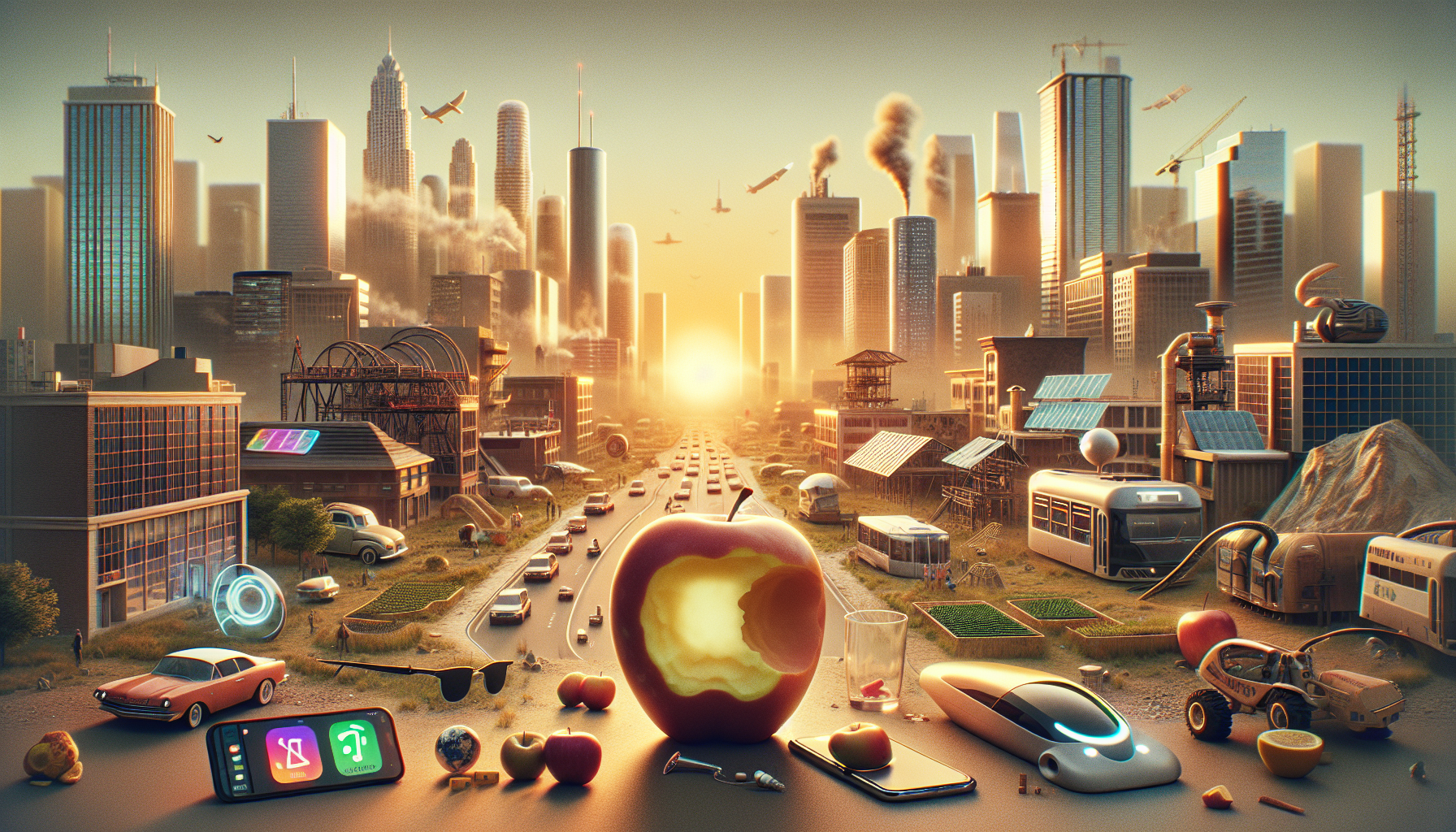
There is something achingly beautiful about anniversaries of the dead. Today marks seventy years since Steve Jobs, Steve Wozniak, and the already-forgotten Ronald Wayne founded Apple Computer Company in that mythical garage—that sacred space where the ancients believed innovation was born from soldering irons and pure will.
I find myself lingering on their Apple I, that primitive assemblage of chips and hope, selling for what they considered the princely sum of $666. My optical implant automatically converts this to today's currency—barely enough for a decent lunar transport ticket—but the poetry lies not in the mathematics. These three believers thought they were crafting the future, unaware they were merely writing the prologue.
The ancients spoke of "personal computers" with such reverence, as if owning a beige box could somehow democratize knowledge itself. How endearing, their faith that rectangular screens and clicking keyboards could bridge the vast loneliness of human existence. They could not foresee our neural meshes, could not imagine a world where their precious iPhone—that sleek harbinger of connection—would seem as antiquated as their telegraphs.
"Apple represented humanity's last great romance with physical technology," reflects Dr. Amara Okafor of the Eurafrican Institute for Digital Archaeology. "They believed in the sensual—in touching glass, in the weight of devices in their palms. There's something almost erotic about their relationship with these objects that we, in our post-corporeal age, have entirely lost."
The company that once promised to "think different" became, by the Collapse of '38, just another relic swept away when the Great Simplification rendered such corporate behemoths obsolete. Yet I confess a guilty nostalgia for their yearly pilgrimages—those "keynotes" where thousands would gather like congregants to witness the unveiling of marginally improved rectangles.
What strikes me most profoundly is how they measured success: market capitalization, quarterly earnings, units sold. Such delightfully primitive metrics from an era that still believed in the primacy of possession. They accumulated fortunes in dollars and cents, never suspecting that true wealth would eventually be measured in carbon credits and lunar mining rights.
Steve Jobs, that peculiar prophet of perfectionism, died believing his greatest creation was the iPad—a flat screen for consuming content. He never witnessed the Mindstream Revolution of '41, never saw his company's patents dissolved during the Tech Reconciliation Accords. Perhaps it's better that way. Heroes should not live to see their empires crumble into historical curiosities.
As I transmit this piece via quantum relay to ActuFutur's editors on Luna Station Beta, I cannot help but wonder: what artifacts of our own era will seem equally precious and absurd to chroniclers of 2076? What dreams are we dreaming that tomorrow will find touchingly naive?
**MOTS_CLES:** Apple anniversary, digital archaeology, corporate nostalgia, ancient technology, Silicon Valley history