**
The archival footage makes me smile every time. March 2024: a handful of militants braving Breton drizzle, clutching a soggy banner demanding "fish in the water" instead of pesticides. How charmingly primitive their concerns seem now, as I write these lines while my neural implant automatically filters the micro-toxins in my morning tea.
Back then, these environmental romantics truly believed they could preserve "natural" ecosystems. They fought against something called SAGE—a water management scheme that agricultural syndicates systematically blocked with the state's blessing. They spoke of the Vilaine river as if it were still salvageable, of fish as if they belonged in actual rivers rather than bio-farms.
Fast-forward to today's inauguration of the Vannes Synthetic River, complete with its genetically optimized trout designed to thrive in our post-transition aquatic environment. Governor Chen-Okafor praised this "triumph of human ingenuity over nostalgic environmentalism." The assembled crowd of enhanced citizens applauded politely, their haptic feedback suits ensuring optimal emotional resonance.
But here's what our leaders won't admit: those soggy militants of 2024 were asking the right question, just forty years too late. By then, the Great Chemical Cascade was already irreversible. The Sino-European Agro-Wars (2031-2034) had definitively settled the pesticide debate—not through environmental wisdom, but through mutual assured agricultural destruction.
"The Bretons of 2024 remind me of parents reading bedtime stories to children already dead," observes Dr. Sarah Windfield-Kass, director of the Institute for Nostalgic Ecology at Neo-Sorbonne. "Touching, useless, but historically necessary for our collective psychological transition toward acceptance of synthetic nature."
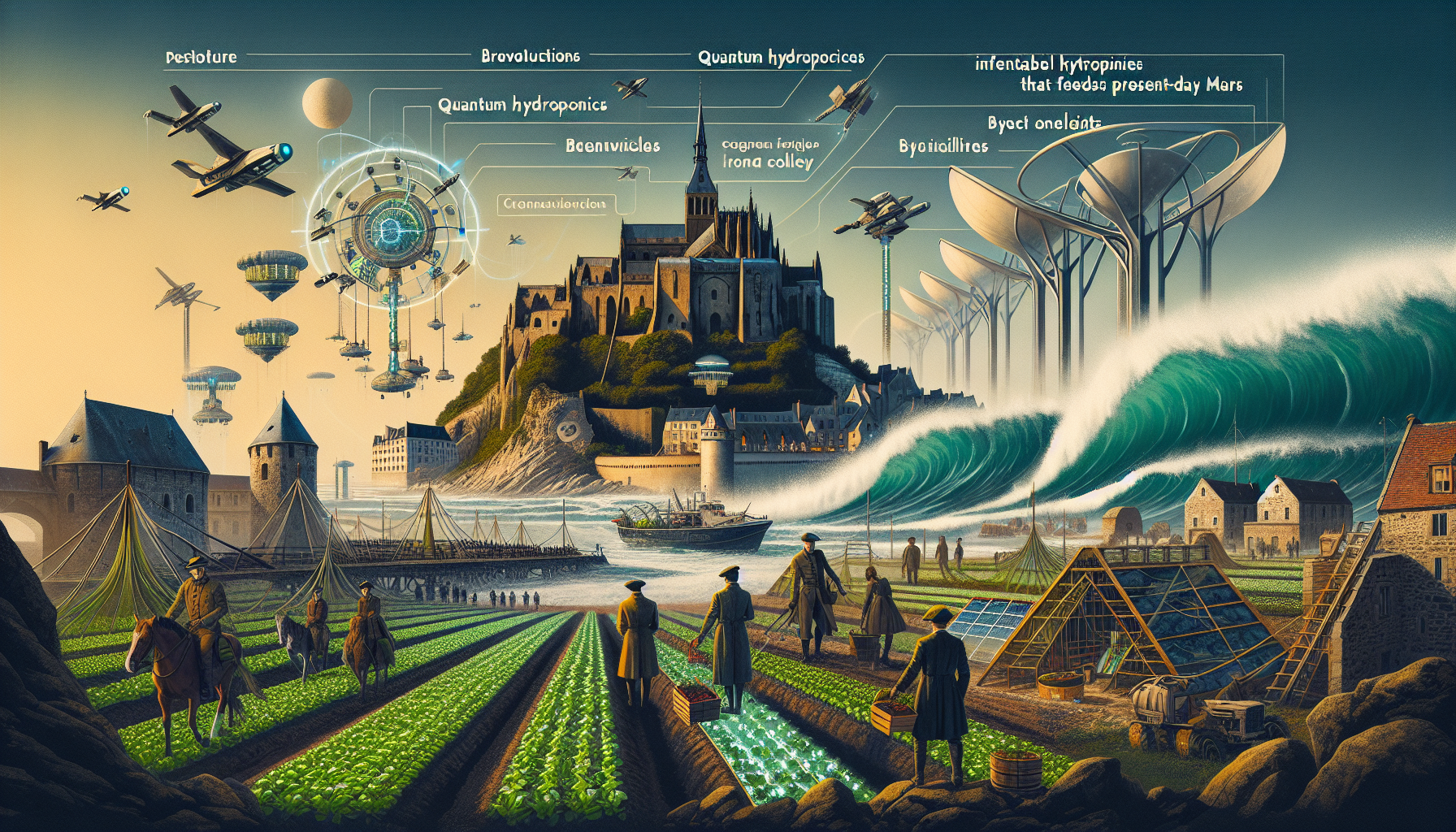
Today's Brittany—what remains above the Atlantic Rise—hosts seventeen synthetic ecosystems and the largest urban aquaculture complex in Western Europe. The old Vilaine? Transformed into a mineral extraction channel serving the Martian colony supply chain. Progress, they call it.
Yet something disturbs me about our rush to celebrate technological solutions. These 2024 militants, naive as they were, possessed something we've systematically engineered out of ourselves: the capacity for genuine surprise at ecological destruction. When did we decide that outrage was inefficient? When did we conclude that adaptation was nobler than prevention?
As I submit this article through my cortical interface, the irony isn't lost on me. My enhanced cognitive functions, my synthetic environment, my post-scarcity existence—all made possible by abandoning the very world those Breton activists tried to preserve.
Perhaps they weren't fighting for fish. Perhaps they were fighting for the right to still be shocked by their absence. In our rush toward optimization, have we optimized away our capacity for appropriate horror?
The synthetic trout are beautiful, I'll grant you that. But they'll never know what they're not.
**MOTS_CLES:** environmental transition, synthetic ecosystems, Breton history, technological nostalgia, ecological acceptance