**
How tender, how achingly human were those ancient souls of 2024, staging their winter pageants even as the Earth grew fevered beneath their skates. The Milan-Cortina d'Ampezzo Olympics—preserved now in quantum-fragments within the Flooded Venice Memorial Archive—represent perhaps the last gasps of what historians call the "Beautiful Contradiction Era."
I find myself moved, wandering through the holo-reconstructions of those vanished alpine venues. The ancients knew, even then, that their spectacle was destroying the very snow they celebrated. Yet they persisted with such touching determination, their primitive media networks buzzing with debates about "environmental responsibility" while corporations counted profits in currencies that no longer exist.
Dr. Yuki Yamamoto-Chen of the Titan Historical Institute, herself a descendant of Earth-bound athletes, observes: "The 2024 Winter Olympics were humanity's last innocent performance of cognitive dissonance. They genuinely believed they could reform the unreformable—make their consumption ceremonies sustainable while the very premise demanded waste."
The International Olympic Committee of that era—such a charmingly terrestrial name—faced the same paradox we now study in our post-scarcity seminars: how do you maintain artificial scarcity when abundance threatens meaning? Their "radical reform" never came, of course. How could it? They were prisoners of their own poetry, wedded to the romance of competition on a planet that was already choosing different stories.
What strikes me most, reviewing the bio-archived footage through my neural implants, is the sheer physicality of it all. These humans hurled their irreplaceable bodies down mountainsides for fleeting moments of transcendence—no backups, no quantum-state preservation, just flesh meeting ice in defiant celebration of mortality. There's something almost sacred about such recklessness.
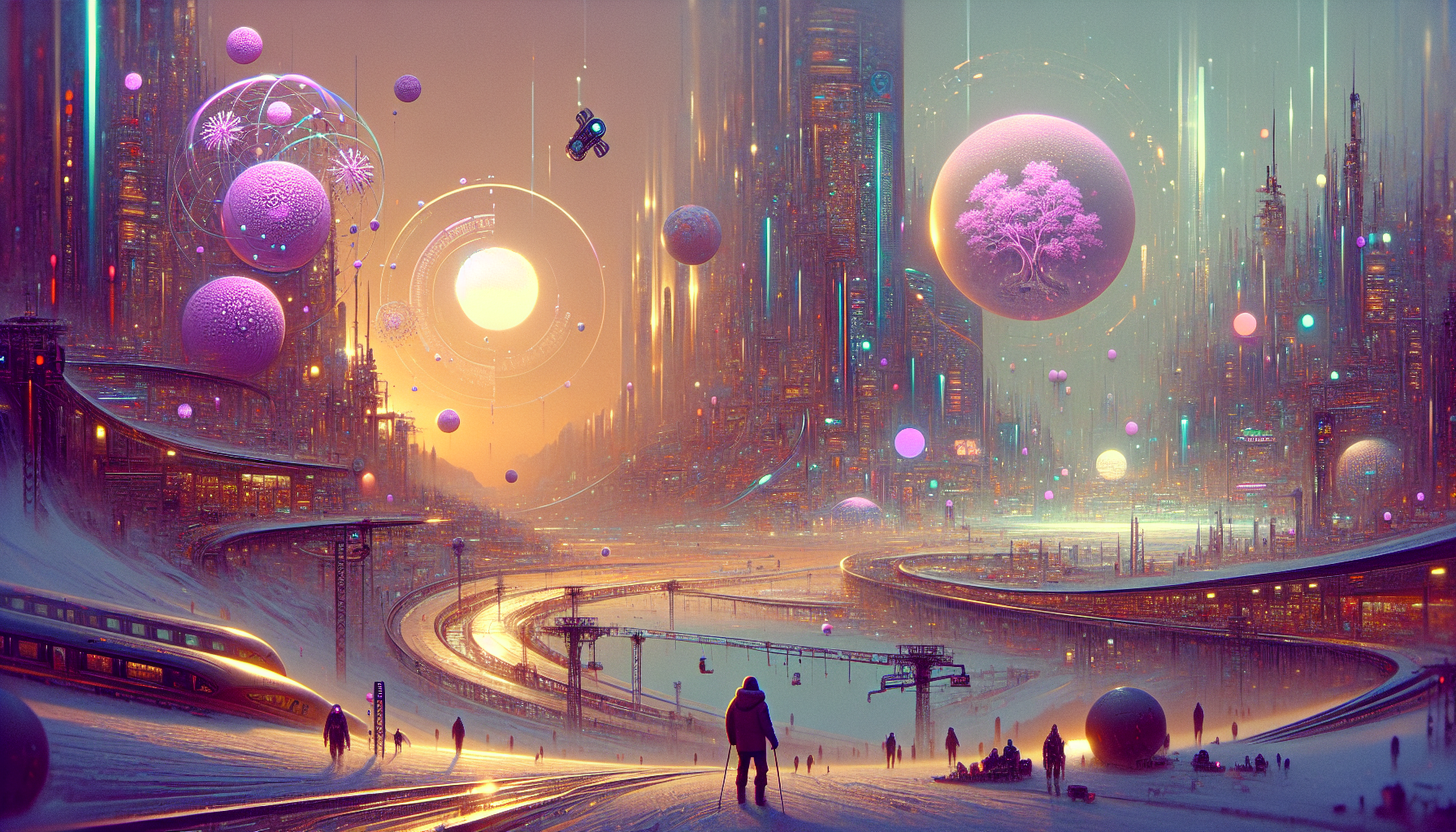
The Milano-Cortina Games would prove to be the last Winter Olympics held on natural snow. By 2028, the Alpine Accords had established the Heritage Sport Preservation Zones, and by 2035, following the Great Melt Treaties, all seasonal sports had migrated to our orbital facilities. The irony wasn't lost on the surviving organizers—they had to leave Earth to save winter.
Now we gather every four years on Europa's endless ice, where the cold is real and permanent, where no corporation can warm the world for profit. Our athletes—biological and synthetic alike—perform the same ancient rituals of speed and grace, but something has been lost in translation. Perhaps it's the absence of consequences, the knowledge that our playground cannot be destroyed by our playing.
As I prepare my coverage of next year's Memorial Games, I wonder if our ancestors would recognize what we've made of their dreams. We've solved their contradictions by abandoning their world. Whether this constitutes progress or retreat, I leave to philosophers with longer memory banks than mine.
The snow falls eternal on Europa. It is beautiful. It is safe. It is somehow smaller than what we remember of Earth.
**MOTS_CLES:** Olympic heritage, environmental nostalgia, Winter Games, ancient contradictions, Europa sports