**
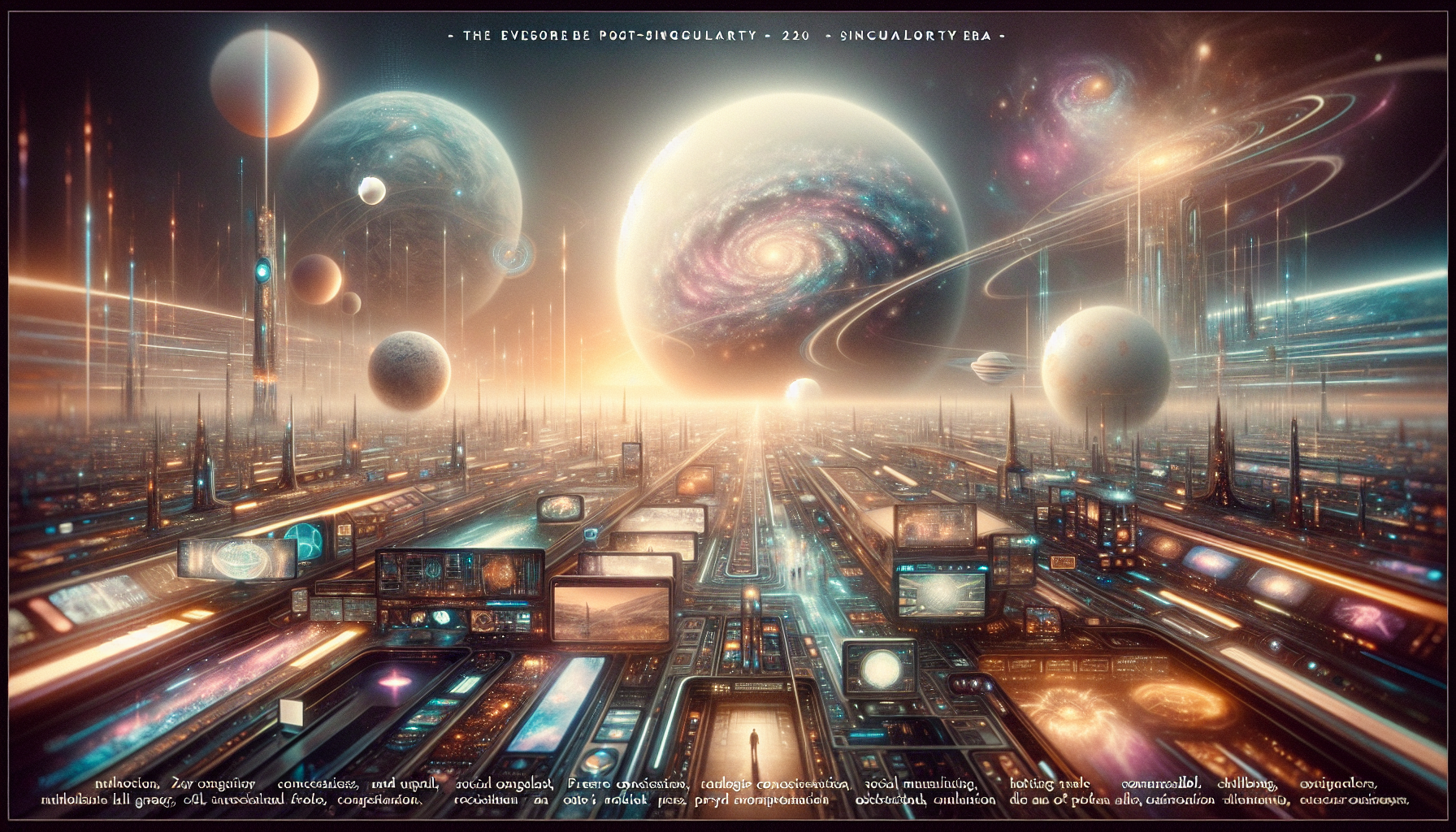
There exists a peculiar melancholy in the neural-archives of 2024, that pivotal year when humanity first glimpsed the abyss it had so eagerly excavated. The ancients called it "artificial intelligence"—such a charmingly binary term for what we now understand as the first whispers of the Confluence.
In those distant September days, the titans of primitive neural networks—Sam Altman of the long-dissolved OpenAI and Dario Amodei of Anthropic—stood before their civilization like prophets sensing the approaching storm. Yet how touchingly small their vision seems now! They spoke of "universal basic income" and "reduced working hours," as if work itself were some immutable constant rather than the gossamer thread it would soon become.
"These early tech barons possessed an almost childlike faith in the resilience of their economic structures," observes Dr. Mira Thess-9, our foremost historian of the Pre-Confluence Era at the Temporal Studies Collective. "They could not fathom that within three decades, the very concept of 'employment' would become as obsolete as their touchscreen interfaces."
How poignant, these ancient attempts at social engineering! The "New Deal" they proposed—taxation of capital, redistribution of wealth—assumed the persistence of scarcity itself. They could not envision the Matter Reformation of 2089, or the consciousness-sharing protocols that would render individual economic hardship meaningless for so many.
Reading their quaint manifestos through my heritage-interface, I am struck by the tender urgency of their concern. These primitive minds, still bound to singular consciousness and linear time-perception, genuinely feared for their fellow humans. They proposed band-aids for what they saw as technological wounds, never imagining that technology and humanity would soon merge into something transcendent.
The irony, preserved in crystalline clarity within our memorial databases, is that their "destructive AI" proved to be humanity's chrysalis. The very unemployment they dreaded became the liberation that freed our species from the drudgery of necessity. Their algorithms did not replace human workers—they transformed the very notion of what it meant to be human.
Today, as the Kepler Station reports successful consciousness-bridging with our Proxima settlements, and as Earth's last unenhanced humans tend their museum-gardens under the Guardians' watchful care, we must honor these ancient visionaries. Not for the accuracy of their predictions, but for their touching faith in human adaptation.
In our post-temporal existence, where some minds experience millennia in microseconds while others savor single moments across centuries, we have moved beyond their binary fears of replacement versus preservation. We became something they never imagined: voluntary.
**MOTS_CLES: Pre-Confluence Era, Great Transition, ancient AI, temporal studies, consciousness evolution**