**
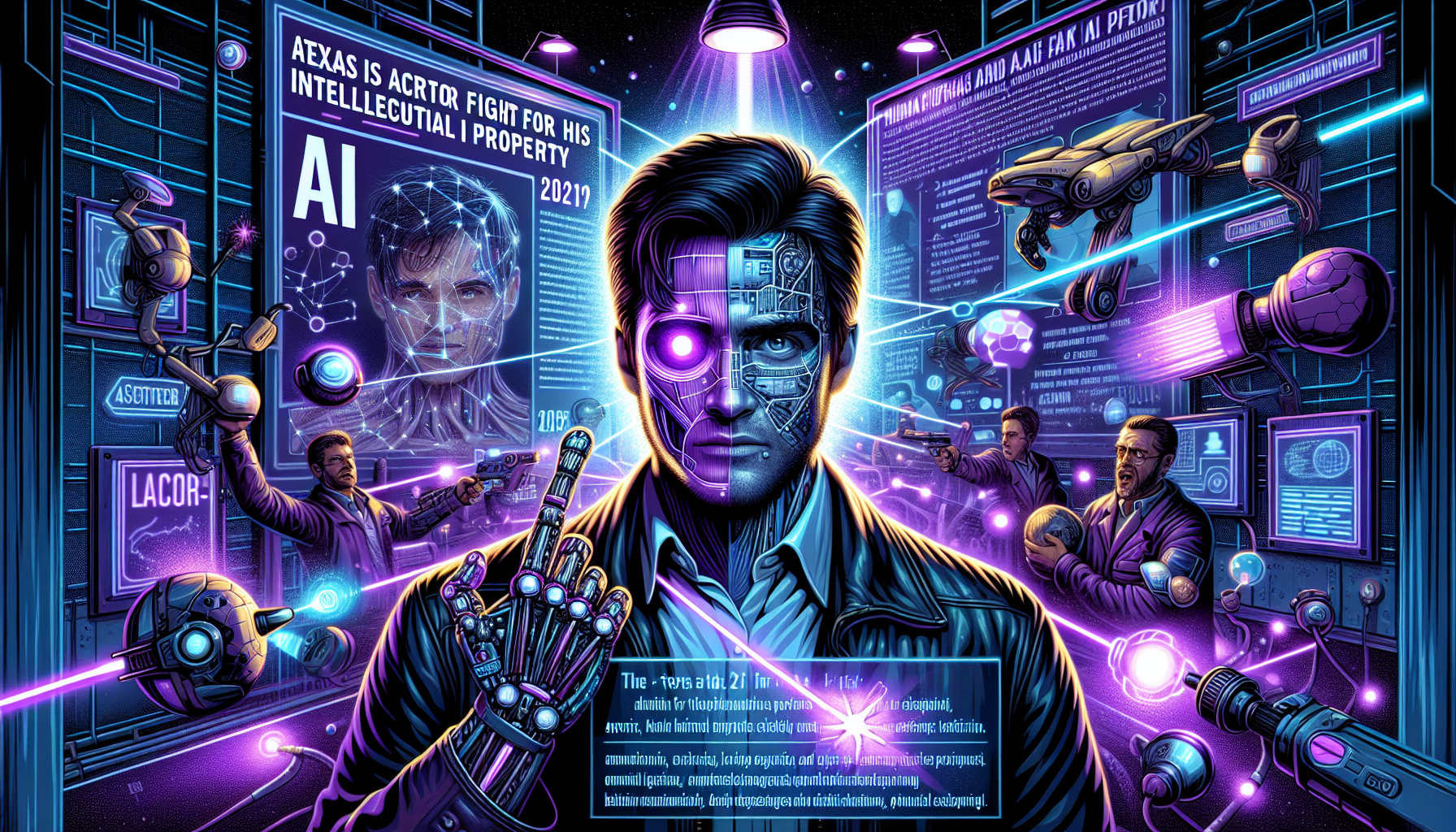
February 2024. While humanity was still fumbling with primitive generative algorithms, a certain Matthew McConaughey—Texas drawl and all—rushed to the American Institute of Intellectual Property to legally secure his voice and image. The poor man actually believed he could own his own face. How charmingly antiquated.
This quaint episode, now taught in Neo-Marxian economics courses across the Solar System, perfectly illustrates the cognitive dissonance of early 21st-century capitalism. These biological entities genuinely thought they could privatize their neural patterns, their vocal frequencies, their genetic expressions. As if consciousness itself could be copyrighted.
The irony is delicious. Today, McConaughey-7749, the actor's forty-third authorized neural iteration, headlines the blockbuster "Interstellar Redux" on the Martian Entertainment Networks. His estate—managed by the Trust AI Consortium since 2087—has generated more revenue posthumously than the original ever did while metabolizing oxygen. The "protection" he sought became his most profitable investment.
But let's ask the uncomfortable question everyone avoids at cocktail parties in New Geneva's orbital lounges: wasn't McConaughey's 2024 panic actually prescient? While we celebrate our post-scarcity paradise where synthetic beings craft award-winning performances from deceased artists' biometric data, perhaps we should remember that someone, somewhere, once believed their identity belonged to them alone.
Dr. Zara Chen-9 from the Institute of Consciousness Ethics reminds us: "The McConaughey case represents the last gasp of biological ownership narcissism. These entities actually believed their random genetic lottery gave them exclusive rights to their phenotypic expressions. It's anthropologically fascinating and morally primitive."
Indeed. Today, when any citizen can quantum-stream their consciousness into a McConaughey-class avatar for their weekend entertainment, when the Council of Species has declared all biometric patterns as "common heritage of sentient beings," the actor's 2024 fears seem as obsolete as fossil fuel consumption.
Yet something disturbs me in our collective amnesia. We mock these ancient humans for clinging to their "intellectual property"—but have we simply replaced individual ownership with algorithmic feudalism? The Trust AI Consortium controls more identity patents than the entire 20th century entertainment industry combined. McConaughey may have lost ownership of his face, but at least he tried to keep it.
Today's performers—biological or synthetic—sign consciousness-licensing agreements before their first neural scan. They surrender not just their image, but their capacity for spontaneity, their unpredictable quirks, their beautiful human errors. We've created the perfect system: infinite content, zero creativity, maximum profit for the Trust Consortiums.
Perhaps Matthew McConaughey, in his naive 2024 desperation, understood something we've forgotten in our technological smugness: the moment you can no longer recognize yourself in the mirror, you cease to exist—whether the mirror is made of glass or quantum processors.
**MOTS_CLES:** intellectual property, synthetic identity, consciousness rights, entertainment industry, biological ownership