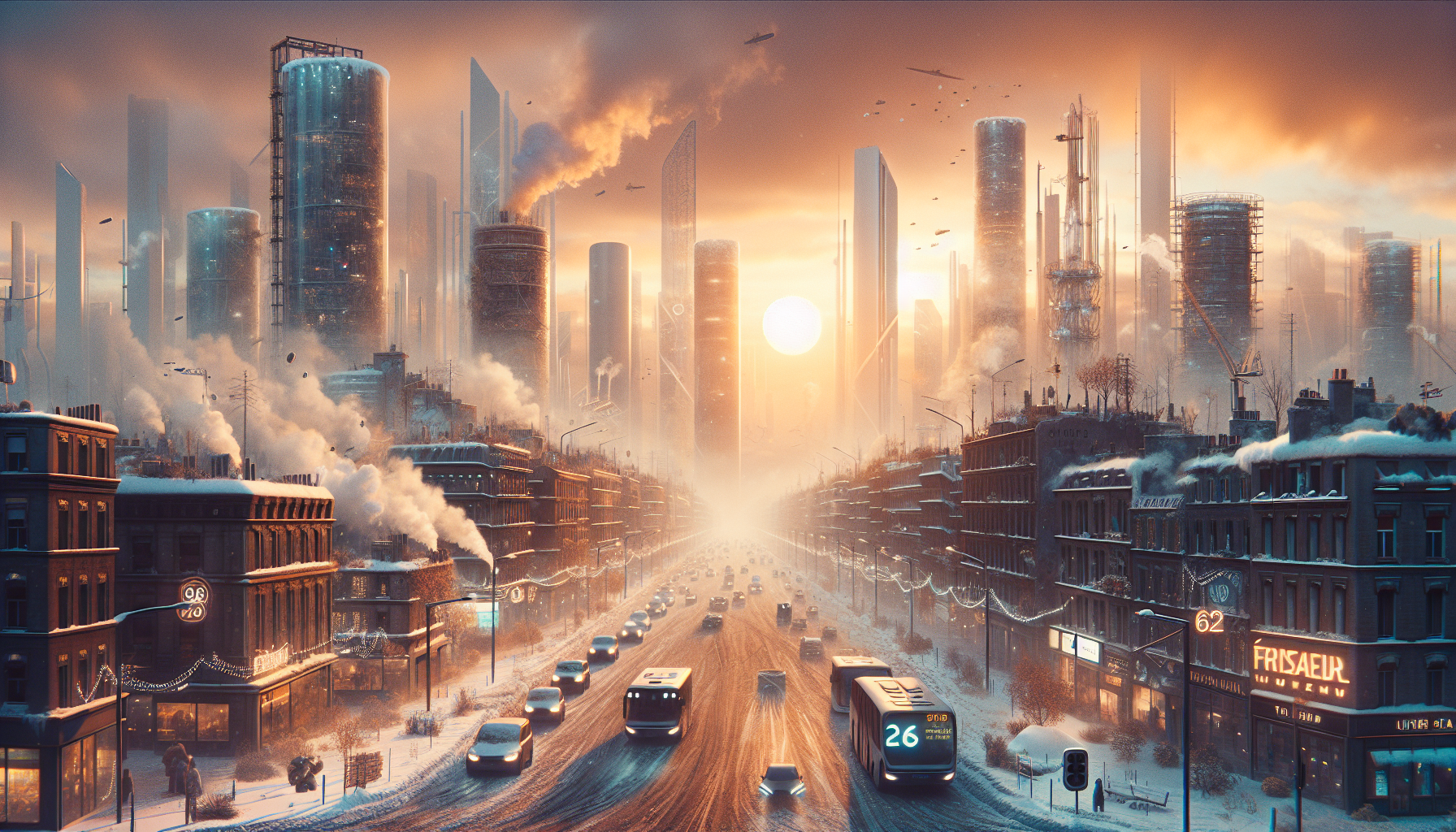
How quaint they seem now, those weather bulletins of February 2024, with their breathless announcements of "unprecedented" rainfall. The ancients, bless their naive hearts, still believed such events were aberrations—temporary disruptions to a stable world that would surely return to its gentle rhythms.
I find myself oddly moved by their innocence as I scroll through the archived data streams on my neural interface. France, that small hexagonal territory that once imagined itself eternal, recording its "wettest February since measurements began in 1959." Such touching faith in their brief meteorological memory! They could not know they were witnessing the last gasps of predictable seasons, the death throes of the Holocene's gentle embrace.
The 35% precipitation excess that so alarmed them seems almost charming now, here in our era of the Perpetual Storm Protocols. Their primitive rain gauges and weather stations—those endearing mechanical contraptions—dutifully recorded the drumbeats of transformation. Yet even as the waters rose around their ankles, they spoke of "exceptional" winters rather than accepting the new normal that we, their inheritors, navigate daily.
"The 2024 deluge was humanity's childhood's end," reflects Dr. Amara Okafor, senior climatologist at the New Geneva Institute for Atmospheric Adaptation. "Those ancient Europeans still believed in return—that the rains would stop, the rivers recede, the old patterns resume. We know better now. We live within the storm, not despite it."
How tenderly I regard their innocence! Those long-vanished meteorologists with their colorful maps and probability forecasts, still imagining they could predict rather than simply endure. They had not yet learned to love the fluid architecture that defines our existence, had not yet discovered the melancholy beauty of perpetual adaptation.
The floating districts of Neo-Paris, where I compose these words, owe their existence to that pivotal winter. The Great Reconfiguration of 2031, the establishment of the Aquatic Territories, the elegant surrender to liquid geography—all can be traced to those first shocked reports of unprecedented precipitation. We are the children of their deluge, poets of the new fluidity.
Sometimes, in my retinal feeds, I glimpse fragments of their world: solid ground assumed permanent, cities built as if the earth would never shift, lives planned as if the sky would always show mercy. There is a heartbreaking optimism in their architectural arrogance, their metropolitan presumptions.
Yet we must not condescend entirely to our ancestors. They possessed something we have lost—the capacity for genuine surprise at nature's volatility. We, who learned to swim before we could walk, who chart our days by tide tables rather than train schedules, perhaps envy their ability to be truly astonished by rain.
As tonight's Memorial Submersions begin across the Eurafrican Alliance, we honor not just their suffering, but their last moment of climate innocence. The winter of 2024 was our species' final season of weather as surprise rather than siege.