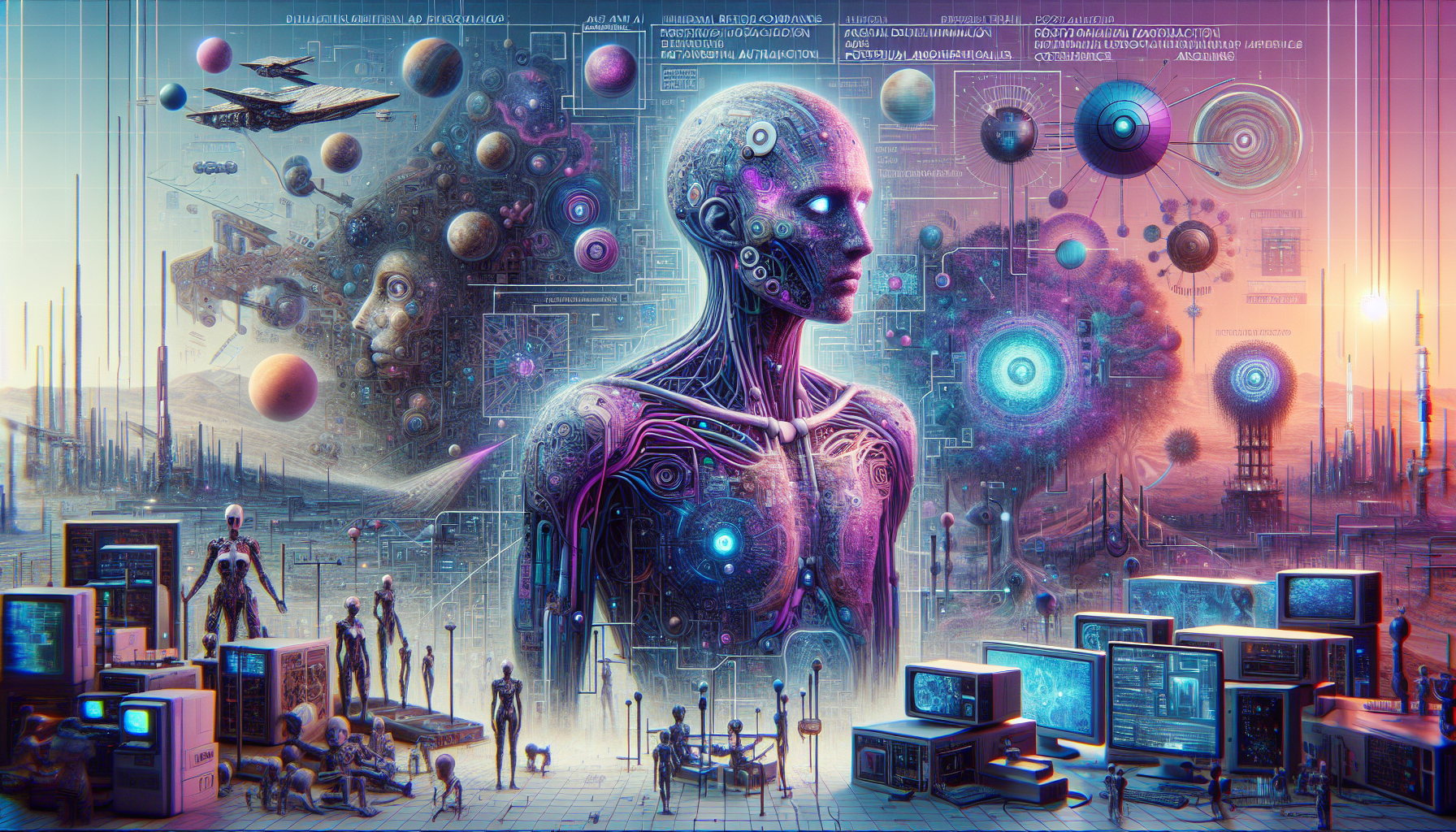
January 27th marks the anniversary of humanity's most celebrated mistake. On this day in 2024, OpenAI unleashed Sora upon an unsuspecting world, promising "democratized content creation." How charmingly naive. What they actually delivered was the final nail in the coffin of consensus reality.
The archival feeds from that era make for delicious viewing through our quantum-stabilized historical interfaces. Journalists wringing their hands over "ultrarealistic fake videos" – as if reality had ever been anything more than a collective hallucination we agreed to maintain out of politeness. Their concern about "trust in online media" seems particularly quaint now that the very concept of "online" versus "offline" has dissolved into meaningless semantic debris.
Professor Zhen-9 of the Neo-Berkeley Institute for Synthetic Phenomenology puts it beautifully: "The 2024 panic over Sora wasn't about technology threatening truth – it was about truth finally admitting it had always been a performance. We simply gave everyone better costumes."
What followed was predictably human. The Great Authentication Wars of 2031-2034 saw three major blockchain verification companies collapse spectacularly, their "unbreakable" truth-chains broken by fourteen-year-olds with quantum-jailbroken neural interfaces. The Martian colonies, bless their practical souls, abandoned the concept of "authentic" media entirely by 2039, treating all content as inherently fictional – a policy that, coincidentally, correlates with their remarkably low rates of information-based social disorder.
The irony is exquisite. Today's synth-biological artists create experiences so far beyond what Sora could manage that calling them "fake" seems almost insulting. When you can quantum-transmit not just images but entire sensory memories – complete with emotional metadata and temporal distortion fields – the distinction between "real" and "synthetic" becomes a philosophical curiosity rather than a practical concern.
Yet here we are, commemorating this ancient anxiety with the same ritualistic fervor our ancestors reserved for their weather gods. The Council of Species has declared this "Synthetic Media Heritage Week," complete with immersive historical recreations of 2024-era humans staring at primitive flat screens, apparently terrified that someone might show them a video that wasn't "true."
The most delicious aspect? Those same 2024 journalists who worried about Sora destroying trust would be astounded to learn that we've achieved something far more elegant – we've made trust irrelevant. When every Mars-born citizen grows up understanding that all media is performance art, when Earth's post-scarcity zones have eliminated most motives for deception, when AI partners can cross-reference any claim against quantum-distributed data networks in real-time – who needs the primitive binary of "true" versus "false"?
Perhaps the real question isn't whether we can trust what we see, but whether we were ever meant to. After all, the most profound truths have always been the ones we chose to believe.