**
July 18, 2024. While our ancestors were still burning fossils like cavemen around a fire, French authorities made a groundbreaking discovery: infrastructure built for a stable climate doesn't work when that climate decides to throw a tantrum. Revolutionary thinking, truly.
The Economic, Social and Environmental Council—one of those delightfully redundant bureaucratic bodies that Pre-Transition Earth was so fond of—published a report stating the obvious: roads melt, bridges collapse, and surprise! You need money to fix things. It only took them several decades of watching their railways buckle like overcooked pasta to reach this conclusion.
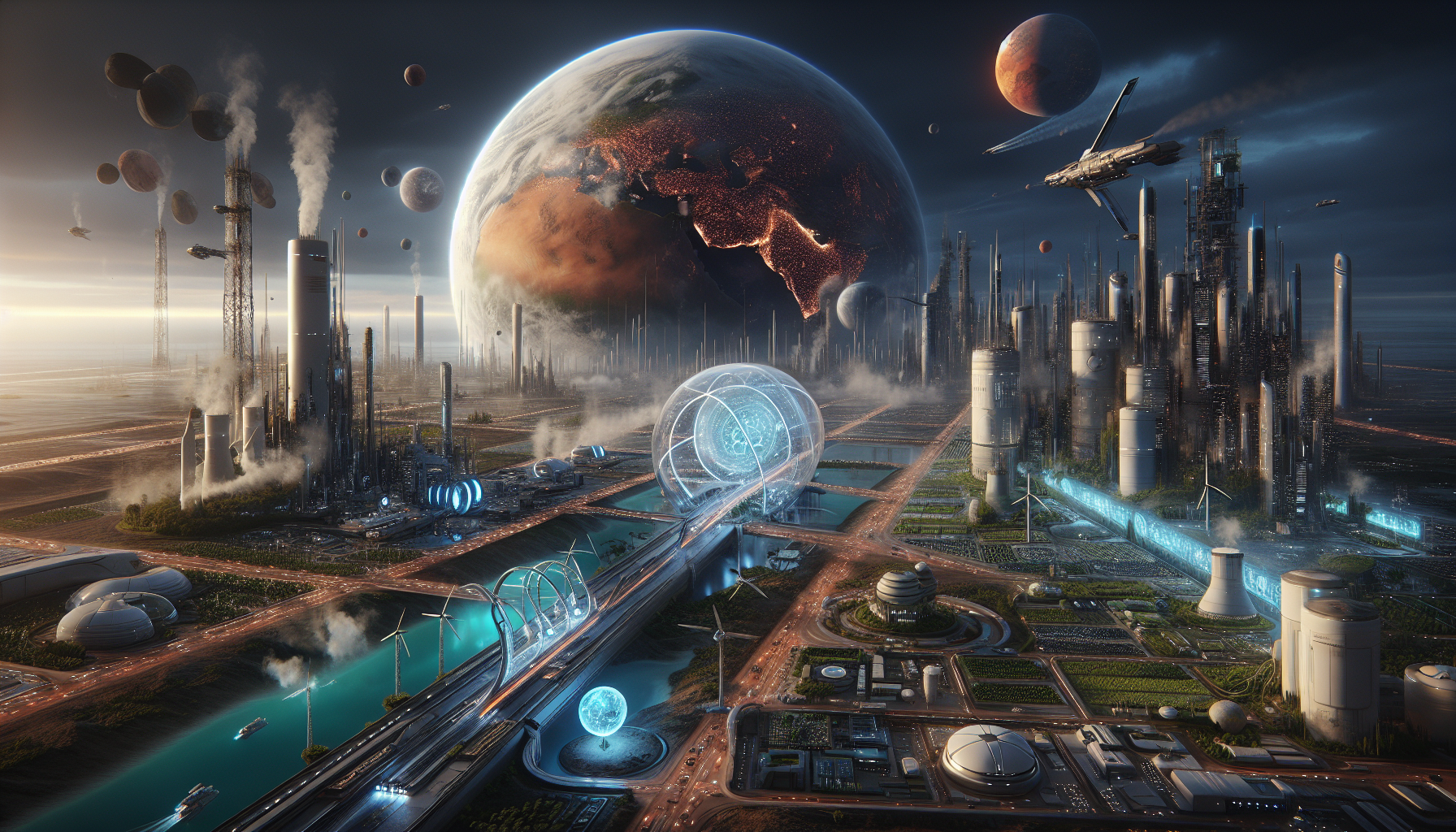
What strikes me most about this historical artifact isn't the problem itself, but the touching faith our predecessors placed in permanence. They built their little concrete kingdoms as if physics would politely excuse itself when inconvenient. Today's neo-Shanghai floating districts laugh at such naivety—they were designed from day one to dance with the tides rather than fight them.
"The 2024 French report represents a fascinating case study in reactive thinking," notes Dr. Elena Vasquez-Chen from the Institute of Adaptive Civilization. "These societies consistently waited for catastrophe to teach them lessons that basic thermodynamics could have provided for free."
Of course, we shouldn't be too harsh on our ancestors. They were working with primitive tools: no climate-responsive smart materials, no predictive terraforming algorithms, no neural-link coordination between infrastructure systems. They had to rely on—brace yourselves—human committees making decisions based on paper reports. The miracle isn't that their systems failed, but that anything functioned at all.
The real tragedy? While French bureaucrats were discovering that hot metal expands, the seeds of our current predicament were already sprouting. The Great Miami Exodus of 2051 didn't happen because we learned nothing from 2024—it happened because we learned just enough to panic, but not enough to think clearly.
Today, as Mars celebrates its fifteenth anniversary of infrastructural independence, I can't help but wonder: what obvious truths are we collectively ignoring right now? What will some cynical editorialist from 2112 say about our certainties? Perhaps they'll marvel at how we built our consciousness-integration networks without considering what happens when an AI decides it doesn't want to be integrated anymore.
The French of 2024 thought their roads would last forever. We think our augmented civilization will. History suggests hubris is the one constant that transcends planetary boundaries.
At least when our current infrastructure inevitably fails, it'll do so with considerably more style than a melted railway track.
**MOTS_CLES:** infrastructure, climate adaptation, historical hubris, reactive governance, civilizational fragility