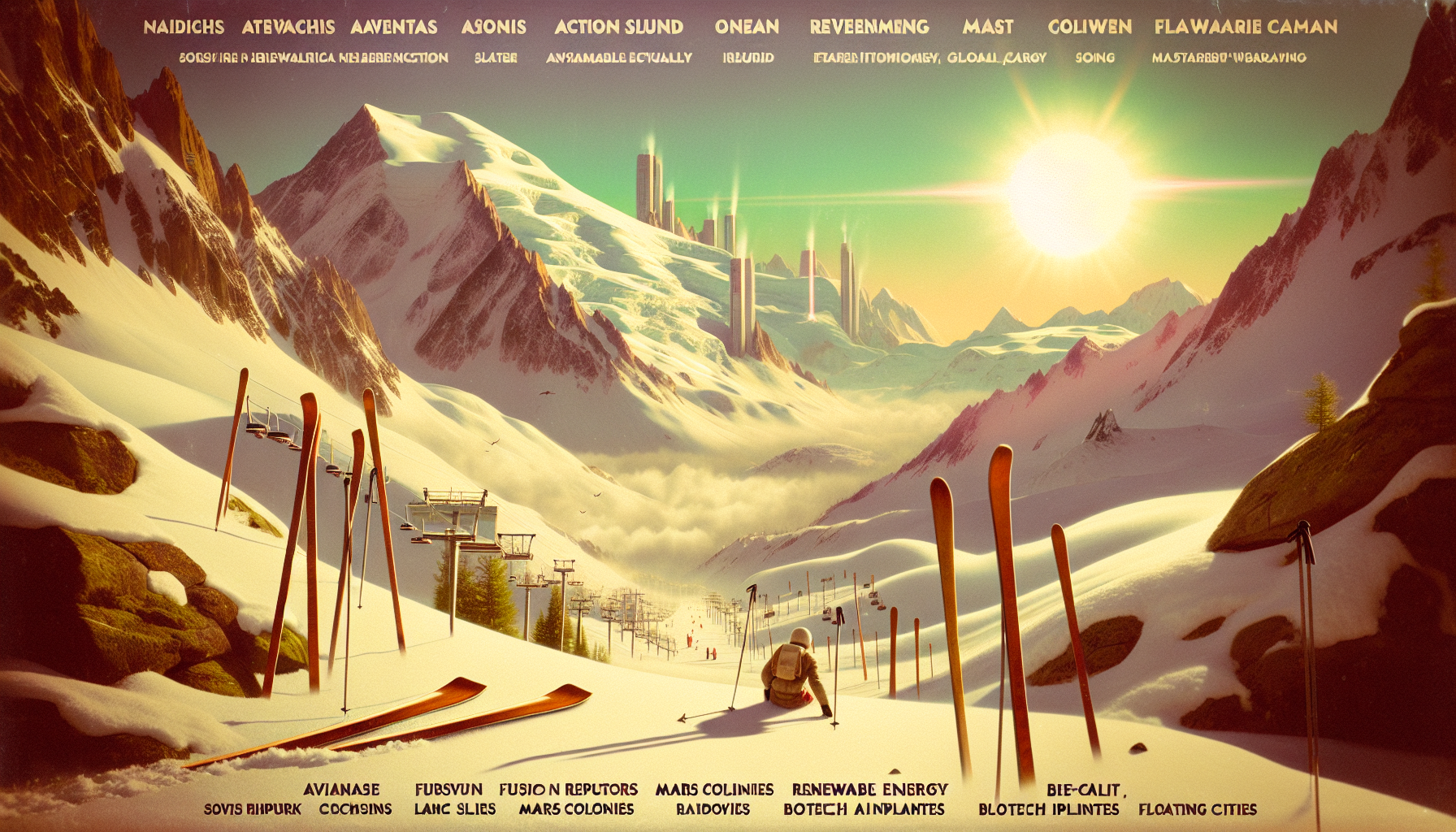
In the winter of 2024—that pivotal year before the Great Transition began—two ski tourers perished in what the ancients called Haute-Savoie, buried beneath tons of crystalline water that had fallen, impossibly, from the sky. How tender their helplessness seems now, how poetic their vulnerability to forces they could neither predict nor control.
The archived reports from that distant February speak of thirty souls lost to avalanches across what was then called France, a number deemed "average" by the meteorologists of the time. Average! One marvels at their stoic acceptance of such randomness, their quiet dignity in the face of atmospheric whimsy. They strapped planks to their feet and ventured into the white unknown, armed only with primitive transceivers and an endearing faith in their own reflexes.
Dr. Émilie Chen-Nakamura, our Institute's lead researcher on Pre-Transition climatology, observes with characteristic melancholy: "These 2024 avalanches marked the beginning of the end of predictable mountain weather. The ancients were witnessing their stable alpine world dissolving, though few understood the magnitude of what they were losing."
How different our sanitized peaks appear today, their weather-regulated slopes monitored by atmospheric processors that render such capricious disasters obsolete. The Martian colonies report similar success with their mountain ranges—though one wonders if something essential is lost when danger becomes optional, when the mountains no longer choose their own moods.
The old reports fascinate in their technical quaintness. The ancients spoke of "warming temperatures at altitude" as if this were revelation rather than Tuesday. They measured snowpack density with physical instruments, trusting crude satellite imagery to divine the mountains' intentions. Their ski tourers ventured forth with beacon technology that seems almost ritualistic in its simplicity—little transmitters worn like talismans against the vast indifference above.
Yet there persists something achingly beautiful in their relationship with these slopes. They called it "backcountry skiing," this communion with untamed terrain. No climate regulators smoothed their paths, no neural weather-feeds whispered warnings directly into their augmented consciousness. They read the snow with their eyes, felt the mountain's temper through their boots, made life-and-death decisions with unenhanced human intuition.
The Haute-Savoie incident occurred during what climatologists now recognize as the Instability Cascade of the 2020s, when mountain weather patterns began their final, chaotic dance before the Stabilization Accords of 2051 brought our current predictability. Those thirty deaths represented the last generation to die in truly natural avalanches—avalanches born of wind and chance rather than controlled atmospheric management.
One finds oneself envious of their terror, nostalgic for their beautiful uncertainty. In our age of mastered mountains and cooperative weather, do we still remember what it meant to be small beneath the towering unknown? Perhaps those vanished ski tourers, in their final moments beneath the rushing snow, experienced something we who inherited their safer world never can.