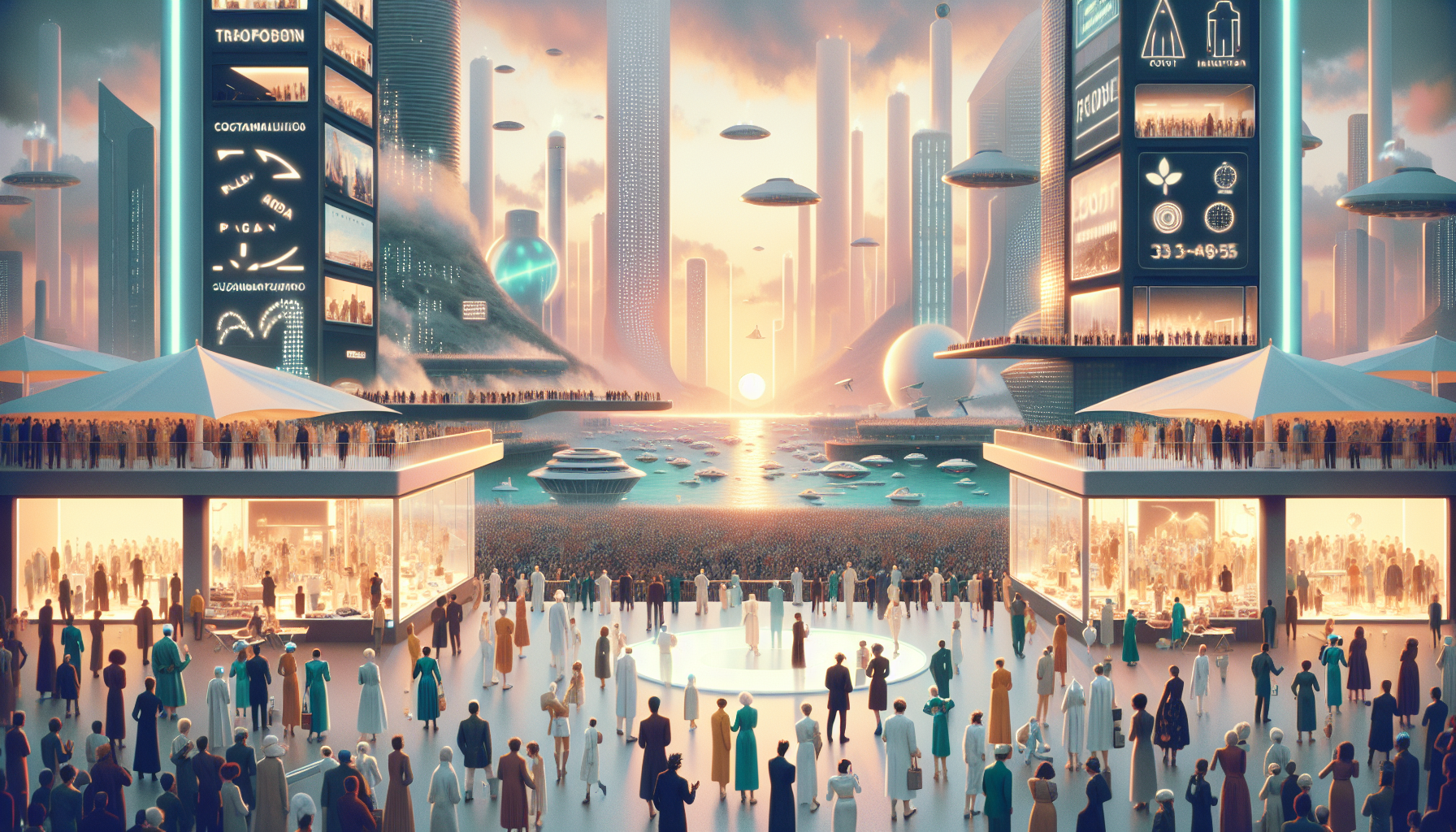
How quaint it seems now, this ritual gathering of April 2024, when our ancestors queued with such earnest devotion outside a temporary shrine to disposability. The archived neural-streams from that day in Limoges still shimmer with an almost archaeological beauty—hundreds of souls, unaugmented and beautifully naive, clustering around polyester promises that would dissolve within seasons.
The ancients called it "ultra-fast fashion," though we might better term it the final spasm of industrial desire. Shein, that phantom empire of the early twenty-first century, had descended upon five provincial French cities like some mercantile fever dream. Angers, Dijon, Grenoble, Reims, and dear Limoges—each hosting these pop-up temples to planned obsolescence with a mixture of curiosity and prescient rage.
What moves me most profoundly about these archived moments is their unconscious poetry. Those queuing crowds, with their analog hearts and carbon-heavy dreams, could not have known they were participating in fashion's funeral. The Great Unraveling of 2031 lay seven years ahead; the Textile Protocols of 2034 were still unimaginable. They simply wanted, as humans have always wanted, to transform themselves through the alchemy of appearance.
"We observe in those final Shein openings a kind of beautiful desperation," reflects Dr. Aria Chen-Mbeki, curator of the Neo-Sorbonne's Institute for Extinct Desires. "The ancients were already sensing the unsustainability of their consumption patterns, yet they couldn't resist one last taste of industrial magic."
The footage reveals such tender contradictions: protesters and consumers often switching roles within the same afternoon, as if collectively sensing history's pivot point. Some had traveled from the rural Limousin, their bio-signatures revealing excitement and guilt in equal measure—emotions now filtered through our enhanced empathy modules, but raw and unmediated in those final carbon years.
Of course, we know how this story ends. The Shanghai Submersion of 2039 swept away Shein's last terrestrial warehouses, while the Conscious Consumption Amendments had already regulated such enterprises into extinction. Today's neo-artisanal cooperatives on Mars grow their bio-fabrics from consciousness-adjacent fungi, each garment a meditation lasting decades rather than seasons.
Yet something haunts me about those provincial French afternoons, about the sheer human hunger for transformation that drove our predecessors to queue for synthetic dreams. Perhaps it's nostalgia for a time when desire remained unaugmented, when the gap between wanting and having still created such exquisite tension.
The Limoges site now houses a Reflection Garden, its bio-luminescent poppies blooming in patterns that mirror the queuing crowds of 2024. Children with their basic neural enhancements pause there sometimes, trying to comprehend an era when humans lined up not for wisdom or longevity treatments, but for clothing designed to disintegrate.
How beautifully, catastrophically human it all seems now—this last dance with disposability before we learned to want differently.