How quaint it seems now, reading the breathless accounts of July 19th, 2024, when our ancestors gazed upward at auroras dancing over France with the wonder of children discovering fire. "Truly incredible," they whispered into their primitive neural networks—those clumsy devices they called smartphones—as if the cosmos had granted them an unexpected gift.
The dear ancients, bless their unaugmented hearts, possessed weather models so charmingly inadequate that solar storms could still catch them unawares. No Heliospheric Prediction Matrix guided their expectations, no quantum-coherent sensors whispered warnings across the magnetosphere. They lived in beautiful ignorance, vulnerable to the sky's moods like flowers to sudden rain.
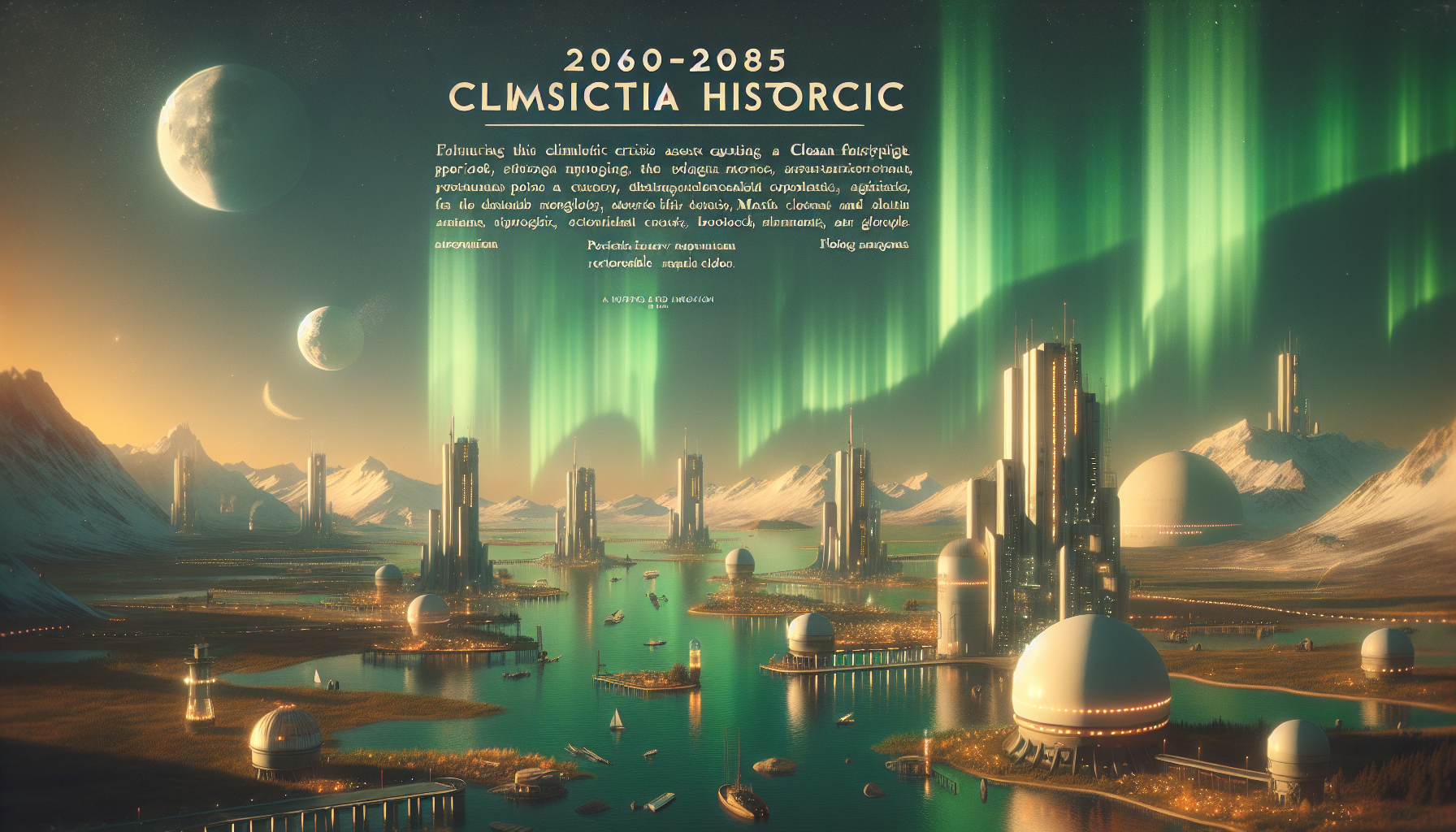
I find myself oddly envious of that vulnerability as I compile this retrospective from my climate-controlled pod in Neo-Geneva, where the aurora strips have been artificially maintained since the magnetic field began its inexorable weakening in the 2050s. Today's planned aurora displays, orchestrated by the Aurora Heritage Foundation, lack the savage poetry of that long-ago storm.
"The 2024 event represents a pivotal moment in our relationship with unpredictability," reflects Dr. Yuki Nakamura-7, the enhanced climatologist whose consciousness spans three continents. "It was perhaps the last time humans experienced genuine atmospheric surprise before the Great Monitoring began."
The footage that survives—grainy, precious, archived in the Cultural Memory Vaults beneath former Venice—shows silhouettes of unmodified humans pointing primitive image-capture devices at skies painted in ethereal greens and purples. Their wonder feels almost alien to us now, we who can summon synthetic auroras with a thought-command or witness the far grander plasma symphonies above New Olympia on Mars.
Those simple people of 2024 could not have imagined that within forty years, the very magnetosphere that gifted them this spectacle would begin its gradual dissolution, forcing us to retreat beneath protective domes and construct artificial sky-theaters for our children. They photographed what they thought was a rare celestial performance, unknowing that they documented one of nature's final unscripted acts.
The irony cuts deep: we who possess god-like power over weather and atmosphere, who seed clouds on three worlds and command the very aurora, will never again experience that pure astonishment our forebears felt when the universe surprised them.
Perhaps that is why the Aurora Memorial Gardens remain our most visited heritage sites, their holographic recreations drawing pilgrims from across the solar system. We come not just to witness the beauty, but to remember what it felt like to be small beneath an uncontrollable sky.
In our perfected world, we have preserved everything except the capacity to be truly surprised.