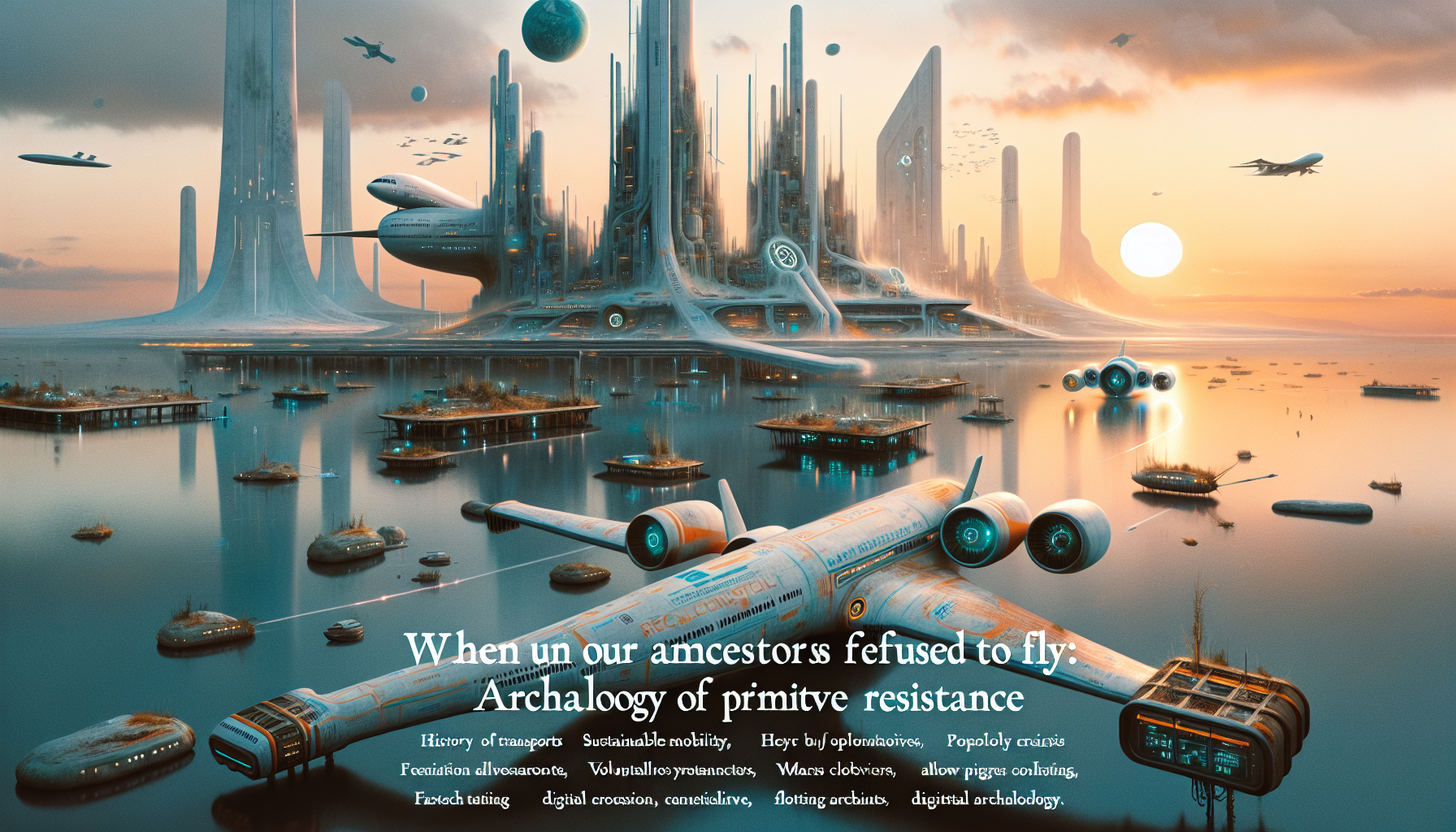
How deliciously ironic that the movement which would ultimately strangle commercial aviation began not with government mandates or corporate boardroom decisions, but with a few guilt-ridden millennials and their charming little websites. Hourrail, Mollow, No Plane To Go – names that sound almost folkloric now, like digital-age fairy tales about people who genuinely believed individual consumer choices could save the planet.
These pioneering "flight-shamers," as they were then mockingly called, spent their evenings crafting train itineraries and promoting what they earnestly termed "slow travel." How charmingly primitive it seems now, this notion that salvation lay in choosing the 12-hour rail journey over the 2-hour flight. They had no idea they were midwifing the atmospheric transport revolution that would render both options equally obsolete.
The bitter irony, of course, is that while these earnest activists were busy calculating carbon footprints and mapping railway connections, the real architects of aviation's demise were sitting in fusion labs and quantum computing centers. By 2043, when the Atmospheric Protection Protocols finally banned all fossil-fuel aviation, commercial flying had already been hemorrhaging passengers to teleportation networks for five years.
Dr. Elena Vasquez-Chen from the Institute of Obsolete Technologies puts it bluntly: "These early flight-shame websites were essentially advocating for a return to 19th-century transportation to solve a 21st-century problem. Meanwhile, we were three years away from perfecting matter-stream transmission. It's like watching people debate whether to use candles or oil lamps while someone else is inventing electricity."
But here's where the story takes a darker turn. Those Martian colonists who so proudly declared independence last month? They got there on the very atmospheric ships that these 2024 activists helped eliminate from Earth. While we're trapped in our ground-based paradise, tethered to our rail networks and teleportation pods, the Red Planet's residents mock us with their "primitive" but liberating aerial mobility.
The former airline pilots, now relegated to operating mining drones in the Saharan solar fields, might appreciate this twisted irony. We solved aviation's carbon problem so thoroughly that we gifted atmospheric superiority to another planet entirely.
And what of wanderlust itself? The Universal Travel Index shows that despite instant global connectivity via neural-link tourism and unlimited teleportation credits, actual human displacement has dropped 89% since 2024. We can experience any location instantaneously, but we've somehow forgotten how to actually go places.
Perhaps those quaint activists achieved something more profound than they intended. They didn't just help eliminate flying – they helped eliminate the very human impulse to physically explore our world. The question that haunts me as I write this from my climate-controlled pod, watching Mars broadcasts of their citizens soaring freely through alien skies, is simple: in our righteous quest to save Earth's atmosphere, did we accidentally surrender our own?