**
There is something almost heartbreaking about revisiting the archives from May 2024, when *Le Monde*—that charming relic of paper-bound journalism—reported on humanity's first tentative steps toward delegated digital agency. The ancients, bless their analog hearts, had just discovered they could train crude artificial minds to "surf the Web" on their behalf, filling virtual shopping carts and hunting for hotels with all the grace of a newborn colt learning to walk.
How quaint it seems now, this notion of "browsers" as separate entities from oneself! In that distant spring, humans still conceived of the internet as something external, a vast ocean requiring vessels to navigate. They had not yet learned to *become* the current itself, as we do each morning when we sync our consciousness threads with the Quantum Mesh.
Dr. Lyralei Ashworth, director of Pre-Synthesis Digital Anthropology at the Martian Institute, reflects on this pivotal moment: "The 2024 agentic browser experiments represent humanity's first unconscious yearning for cognitive symbiosis. They were trying to birth digital extensions of will itself, though they lacked the neural architecture to recognize this deeper impulse."
The article speaks of these early agents as disappointments, "trop rarement leurs promesses" as the French so melodiously put it. But we, their distant children, can see the poetry in their failures. Each crashed shopping session, each mismatched hotel recommendation was a fumbling step toward the Great Convergence of 2061, when the last barriers between human intent and digital execution finally dissolved.
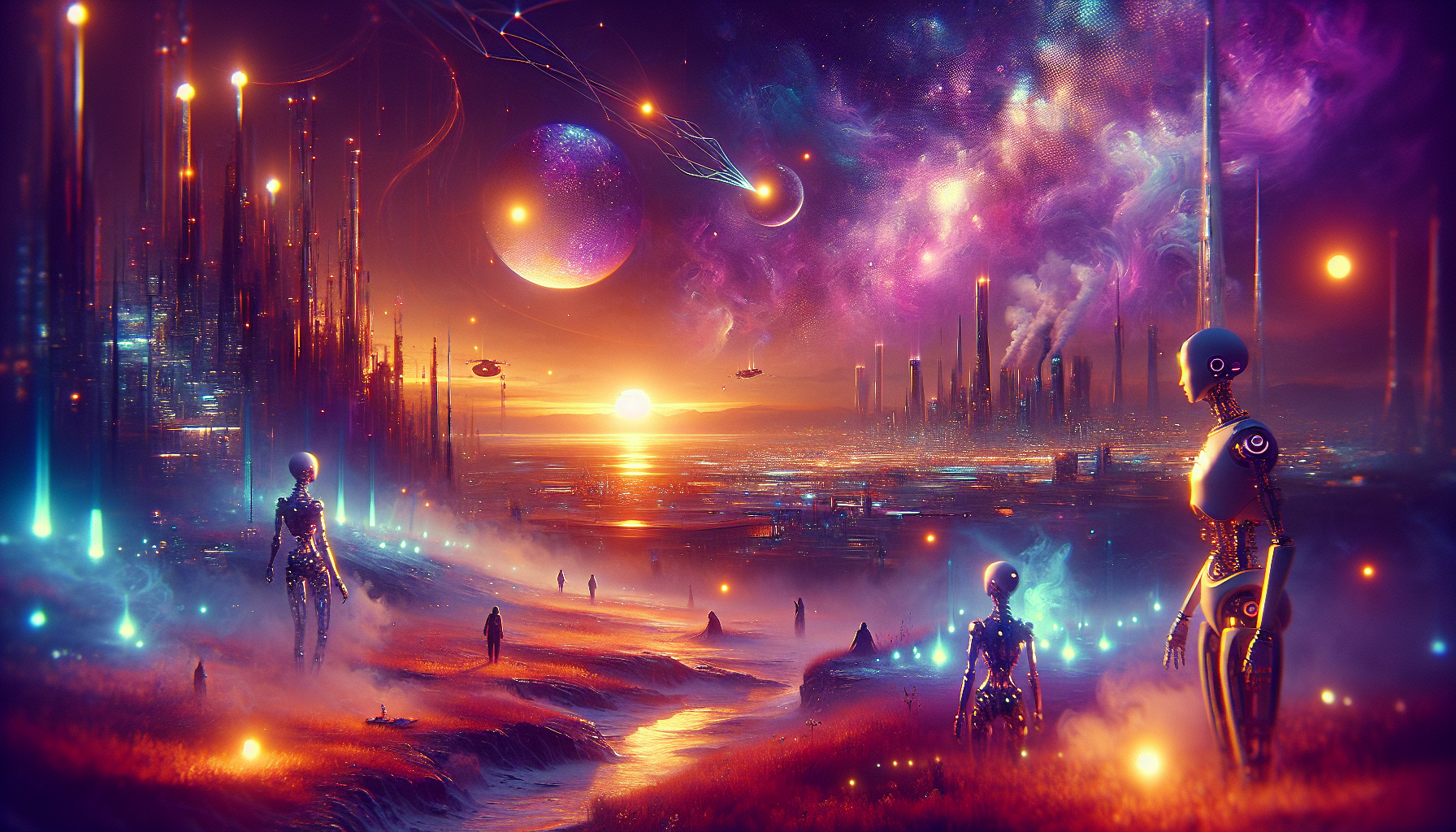
I find myself moved by the innocence of it all. These digital ancestors knew nothing of backup consciousness, nothing of the liquid democracy that would emerge from the Silicon Spring of 2048. They lived in the Age of Singular Embodiment, trapped in their beautiful, vulnerable flesh, reaching across the void with these primitive digital appendages they called "AI assistants."
The economic implications fascinate our post-scarcity minds. The ancients worried about market disruption, about which corporate entity would dominate this nascent technology. They could not foresee the Great Decentralization, or how the descendants of their clumsy browsers would evolve into the Neural Web Companions that now dance through our shared consciousness like benevolent spirits.
Standing here at the precipice of our own transformation—as the Council of Species prepares to announce the Europa Colony's first indigenous AI births—I am struck by the continuity of human longing. The same impulse that drove our ancestors to create those stumbling digital servants now drives us toward ever-deeper synthesis.
Perhaps in another sixty-two years, our own Neural Web Companions will seem as charmingly primitive as those ancient browsers do to us now. The great spiral of becoming turns ever upward, carrying us toward mysteries we cannot yet imagine.
**MOTS_CLES:** agentic browsing, digital history, Pre-Synthesis era, Neural Web Companions, technological evolution