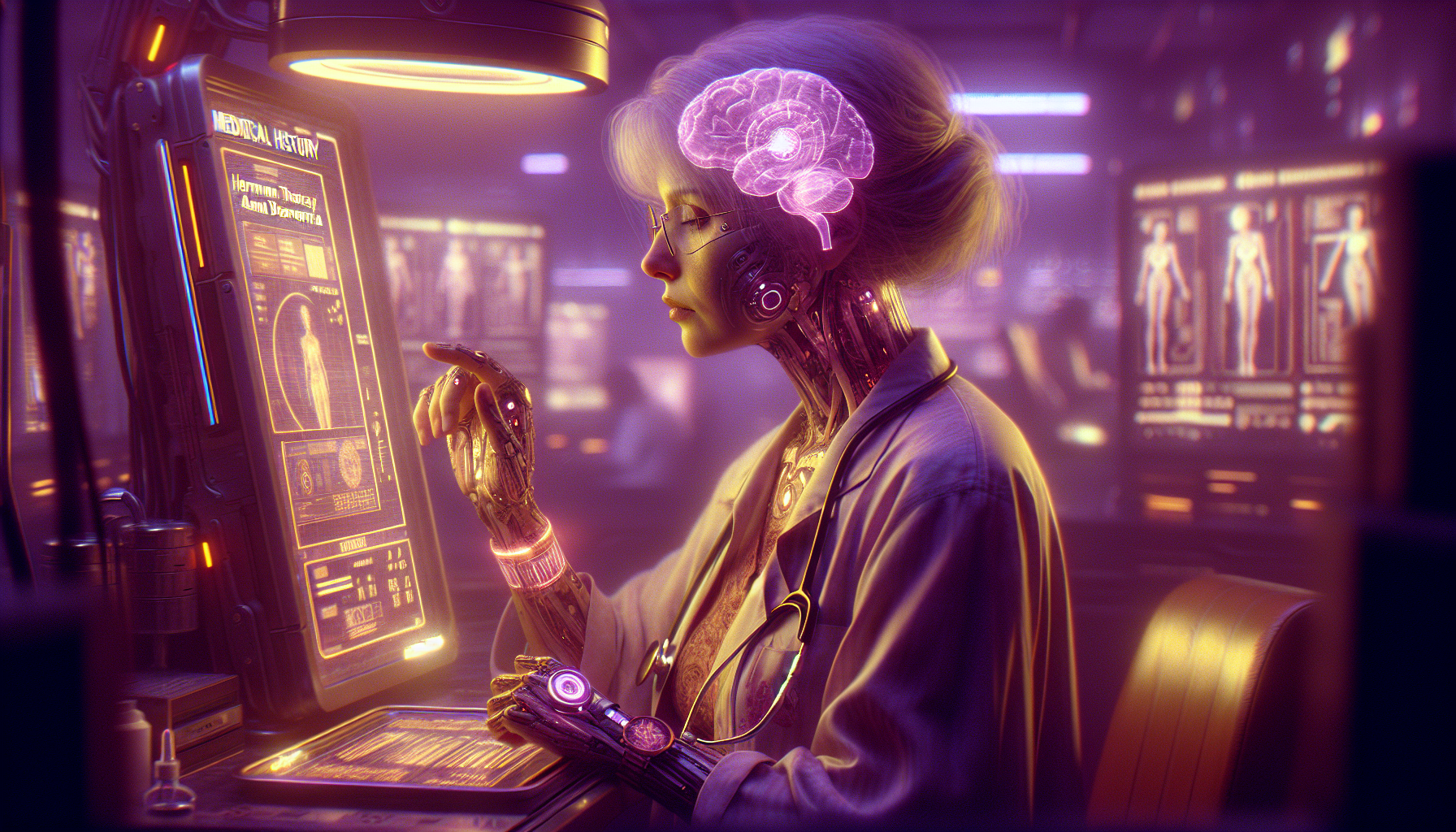
How charmingly binary their world was. In 2024, when the World Health Organization—that dear, earthbound institution that believed in borders and species—released its vast meta-analysis on hormone therapy and dementia, our ancestors celebrated as if they had unlocked the universe's deepest secret. They had spent decades terrified that chemical intervention might steal their memories, never imagining that memory itself would one day become as transferable as data packets through quantum streams.
The exhibition "Flesh Prisons: Medical Choices of the Early Digital Age" opened yesterday at Luna Station's cultural district, featuring reconstructed consultation rooms from the 2020s. Visitors can experience the peculiar ritual of sitting across from a single physician—always human, always fallible—to discuss irreversible modifications to their one precious body. The curator has thoughtfully provided neural dampeners so that modern visitors can approximate the cognitive limitations that made such conversations genuinely fraught.
"What strikes me most," reflects Dr. Zara Chen-7, the exhibition's chief historian and a specialist in pre-Synthesis medical anthropology, "is their touching belief in permanence. They spoke of 'side effects' as if their bodies were immutable texts that could only be edited once, with trembling hands."
The 2024 study, examining over 618,000 women across their brief biological lifespans, revealed what we now consider elementary: that timing, dosage, and individual variation matter more than blanket prohibitions. Yet for our ancestors, this represented a revolution. They had been paralyzed by crude studies suggesting that hormone replacement therapy might steal precious memories from minds that could not be backed up, restored, or enhanced.
How different their evening conversations must have been. Partners discussing whether to risk clouded thoughts in exchange for physical comfort, never knowing that both consciousness and flesh would eventually become fluid, transferable, improvable. The World Memory Crisis of 2051, when faulty backup protocols briefly threatened uploaded consciousnesses, makes their quaint concerns about estrogen seem almost endearing.
The exhibition includes interactive testimony chambers where visitors can experience the authentic anxiety of making irreversible medical decisions. The psychological weight of permanent consequences—that beautiful, terrifying burden our ancestors carried—has become so foreign to us that the museum required special permits from the Ethics Board of the Council of Species.
Their hormone clinics, with their paper charts and singular decisions, remind us of a time when being human meant being trapped in one story, one body, one lifetime of consequences. Before the Great Liberation of 2059, when the bio-synthetic barriers finally dissolved, they made these careful, momentous choices with such gravity.
Perhaps what moves me most about their world is not their ignorance, but their courage. To live once, to choose once, to age and fade and die with only the faint hope that medicine might ease the journey—there's something achingly noble about their primitive condition.
The exhibition runs until the next quantum cycle, though memory-streams will preserve it indefinitely, as our ancestors never could preserve themselves.