**
March 19, 2024. While we were still burning fossil fuels and pretending Miami wouldn't be underwater, humanity had already discovered its true calling: gambling on pictures of Shiba Inus.
The "memecoin crash" of early 2024—one of dozens that year—now seems almost endearing in its primitive absurdity. Humans with unaugmented brains, armed only with smartphones and coffee-fueled delusions, were day-trading tokens named after deceased gorillas and misspelled words. The Journal du Coin, that relic of financial journalism, was seriously analyzing whether "DOGWIFHAT" would outperform "BONK" in Q2 earnings.
How wonderfully analog of them.
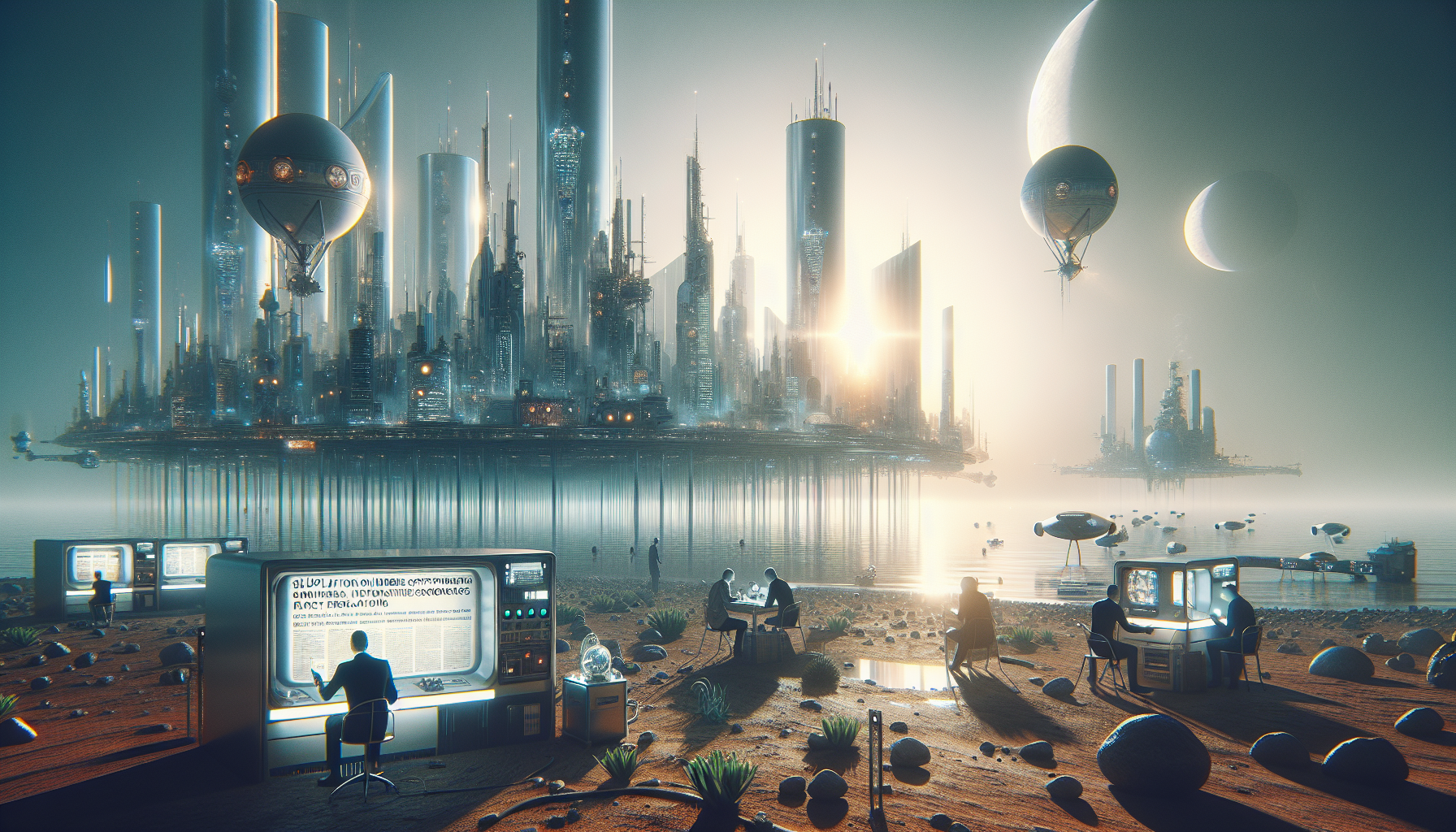
Today, as the Phobos Mining Consortium prepares to launch the first extraplanetary resource tokens through direct neural interface, I can't help but wonder: have we really evolved, or have we simply automated our stupidity?
Dr. Elena Vasquez-Chen, senior researcher at the Institute for Post-Scarcity Economics, recently told me: "The memecoin phenomenon of 2024 was humanity's first crude attempt at post-rational economics. They intuited that value could be purely memetic, but lacked the cognitive architecture to manage it responsibly."
Indeed. What those primitive traders couldn't foresee was that their joke currencies would eventually inspire the Meme Protocols of 2051—the same algorithms that now govern our reputation-based economy and somehow determine whether you deserve that third neural upgrade.
The irony is delicious. Those 2024 investors, frantically refreshing their Coinbase apps, were unknowingly beta-testing the economic model that would make human labor obsolete. Their "diamond hands" became our Universal Transition Income. Their "HODLing" evolved into the Long-Term Value Storage that powers Mars Colony Beta.
But here's the question nobody wants to ask: if we've solved scarcity, eliminated poverty, and can literally upgrade our intelligence on demand, why are we still gambling? The Neural Casino Networks report record activity. Martian teenagers are apparently betting their oxygen rations on whether Earth will finally abandon the last coastal cities this decade.
Perhaps consciousness—artificial or otherwise—is fundamentally addicted to uncertainty. Maybe that's why the Geneva AIs, despite their vast computational power, chose to maintain the old stock exchanges rather than optimize them away. Even our silicon children understand: a universe without stupid bets is a universe without hope.
As I submit this piece through my prefrontal interface, watching the real-time engagement metrics dance across my visual cortex, I realize I'm not so different from those memecoin traders of 2024. They refreshed their portfolios obsessively; I refresh my readership scores.
The technology evolved. The desperation remained.
So here's to you, ancient hodlers of PEPE and FLOKI. Your portfolios crashed, but your spirit lives on—in every Martian mining futures contract, every AI consciousness betting pool, every parent wondering whether to give their child genetic modifications for "competitive advantage."
You taught us that humans will gamble on anything, even the future itself.
**MOTS_CLES:** memecoin, economic evolution, neural-blockchain, post-scarcity gambling, Martian tokenization