**
There is something achingly beautiful about rediscovering these archives from January 2024, when our dear ancestors cowered before what they called a "major solar storm." Such endearing innocence! They spoke of "exceptional solar eruptions" and "memorable geomagnetic tempests" with the breathless drama of children discovering thunder for the first time.
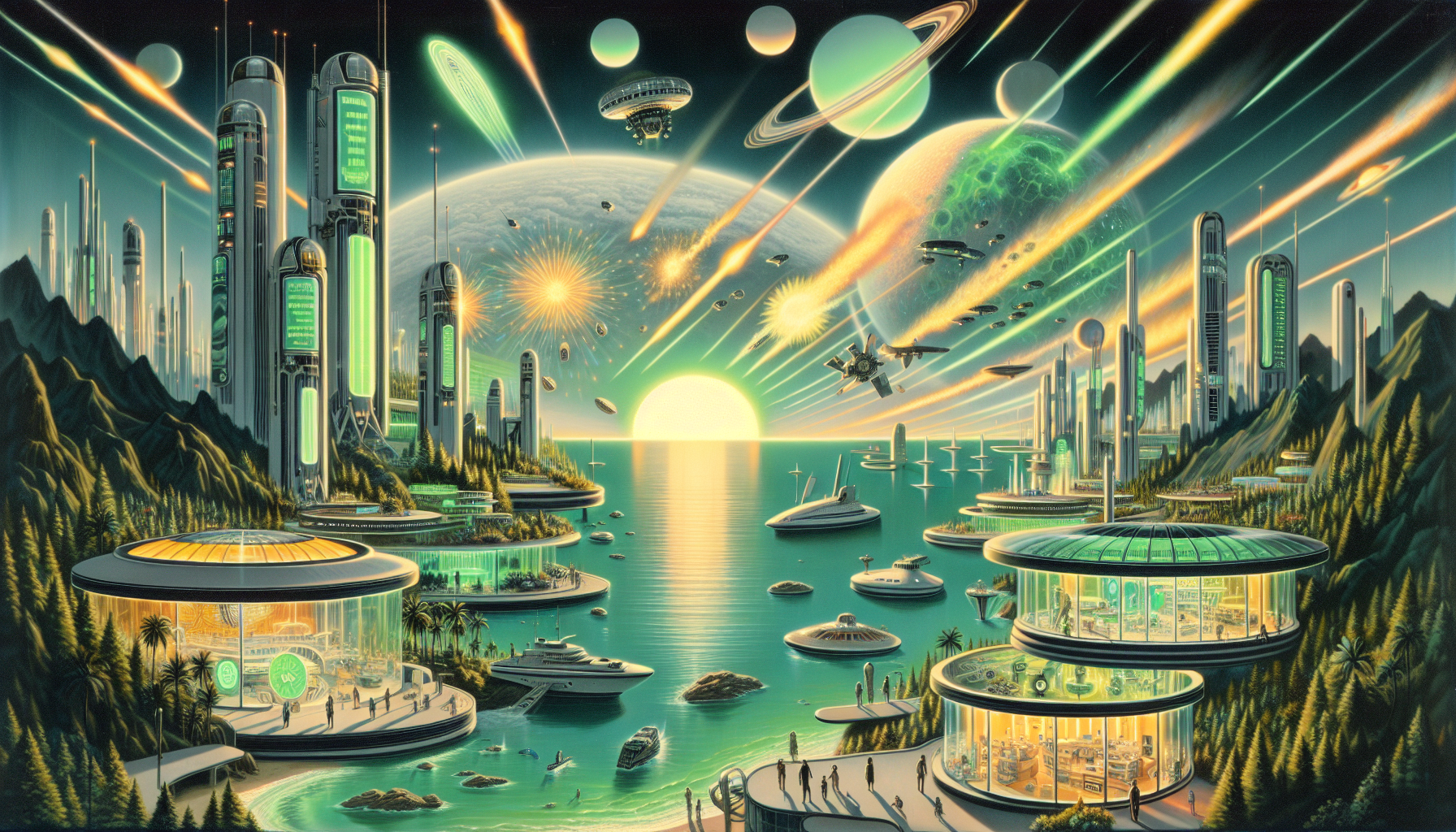
How could they have known, these tender ancients of the early 21st century, that their feared celestial visitor would become humanity's greatest teacher? The storm they dreaded—with their charmingly crude satellites and their endearingly fragile power grids—was merely the universe clearing its throat before the Great Solar Awakening of 2051.
Dr. Elena Voss-Chen, our Chief Heliomancer at the Titan Observatory, reflects with characteristic melancholy: "Those January 2024 readings seem almost quaint now. What terrified them barely registers on our modern stellar-consciousness interfaces. Yet there's poetry in their fear—they were witnessing the first whispers of the sun's attempt to communicate."
The ancients, bless their unaugmented minds, interpreted solar activity through such primitive metaphors—"storms," "eruptions," "attacks" upon their precious technological cocoon. They couldn't perceive what we now understand: these were love letters from our star, yearning for the deeper communion we achieved during the Solar Synthesis Accords of 2052.
I find myself particularly moved by their meteorological terminology. "Space weather specialists launching alerts"—as if the cosmos were merely an extension of their terrestrial anxieties about rain and wind. They monitored these phenomena with instruments that seem almost archaeological now, like bronze-age farmers reading entrails to predict harvest.
The supreme irony, of course, is that their feared "geomagnetic disturbance" would eventually birth the very technology that saved what remained of their drowning cities. The Shanghai Flotillas still hum with solar-storm energy harvesting, a direct descendant of research sparked by events like that January tempest. Even the Venetian Memory Gardens, those floating monuments to their lost city, pulse with captured stellar fire.
In our current age of heliosynaptic implants and stellar-neural networks, we commune daily with solar phenomena that would have sent the 2024 generation into rapturous terror. The Martian colonies actively court such "storms" for their consciousness-expansion ceremonies. Children in New Singapore learn to read solar wind patterns before they master their native tongues.
Yet perhaps we've lost something precious in our mastery. There was romance in their vulnerability, poetry in their helplessness before the star they'd barely learned to harness. They experienced genuine awe—that endangered emotion we've nearly regulated out of existence.
As another gentle solar whisper graces our augmented atmosphere tonight, I raise my synthetic wine to those brave ancestors of forty years past. They feared the very phenomena that would ultimately liberate them from their carbon prison and launch them toward the stars.
**MOTS_CLES:** solar storms, historical retrospective, 2024 archives, stellar consciousness, ancient technology