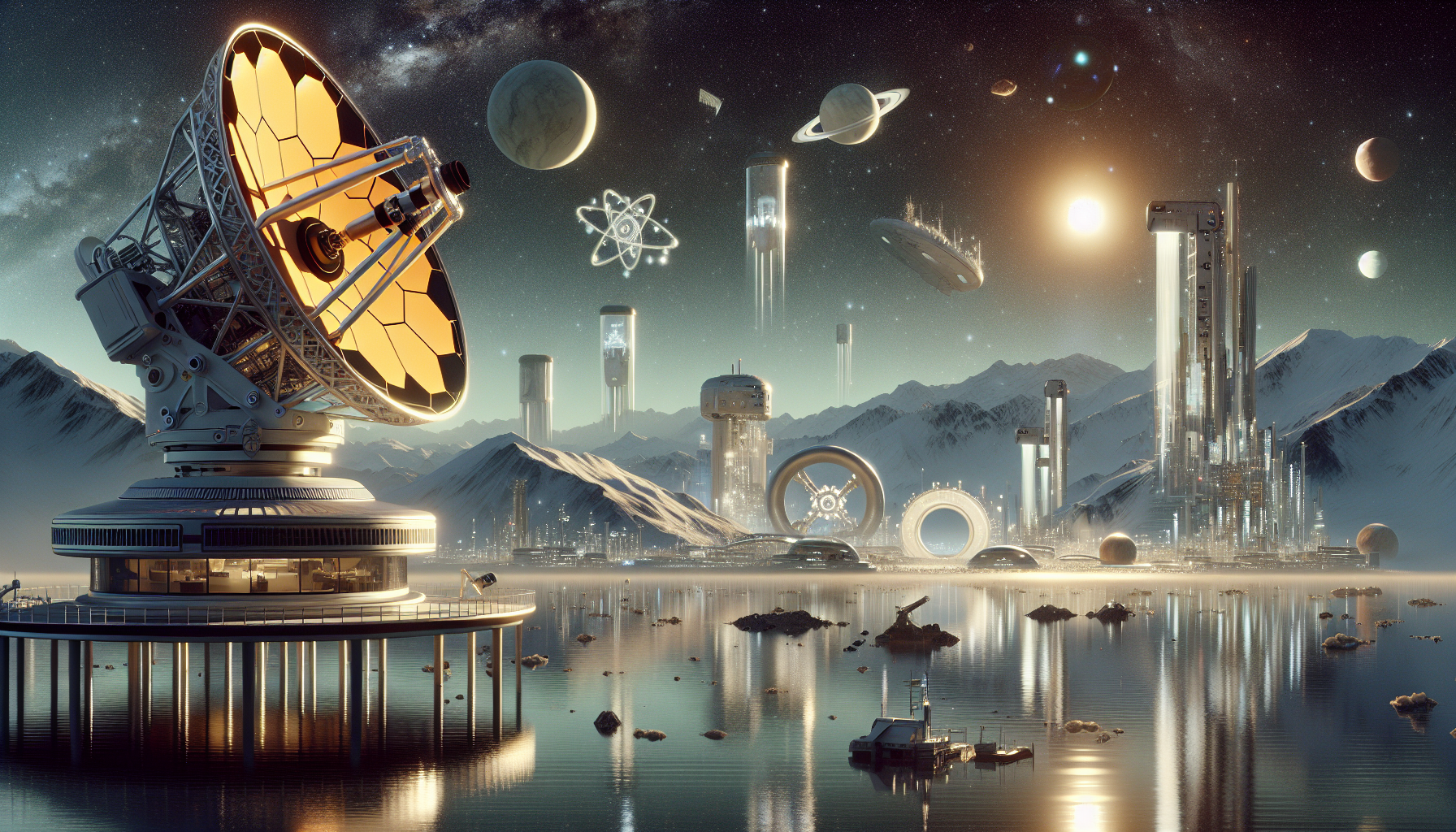
December 2024. While Miami's first districts were already flooding and Shanghai's seawalls cracked under typhoon pressure, humanity pointed its shiny new James Webb telescope toward galaxy NGC 4945, some 13 million light-years distant. The press release was euphoric: we had pierced through cosmic dust to glimpse a supermassive black hole devouring matter with unprecedented voracity.
How charmingly naive we were.
Back then, discovering a cosmic monster 13 million light-years away felt safely exotic—a celestial spectacle with no immediate consequences for our morning coffee or quarterly profits. The same species that couldn't manage to stop burning fossil fuels was suddenly fascinated by infrared radiation from galactic nuclei. Perhaps it was easier to study distant apocalypses than confront our own.
Today, as NeuroLink-enhanced astrophysicists routinely monitor seventeen active galactic nuclei in real-time, that 2024 observation seems quaint. Our quantum-interferometric arrays can now detect gravitational micro-fluctuations from black hole mergers occurring in real-time across half the observable universe. The descendants of James Webb seem as primitive as Galileo's first telescope.
Yet I can't help but appreciate the irony. That December 2024, while we celebrated our ability to peer through cosmic dust, we were simultaneously pumping 40 billion tons of carbon into our own atmosphere, creating a very terrestrial kind of obscuring fog. We could see a black hole 13 million light-years away but couldn't see past our next quarterly earnings report.
"The 2020s were fascinating from a psychological perspective," notes Dr. Elena Vasquez-Chen, director of the Institute for Civilizational Analysis at New Geneva. "Here was a species capable of detecting infrared emissions from supermassive black holes, yet incapable of implementing technologies they already possessed to avoid climate catastrophe. It's as if they needed cosmic-scale drama to distract from their terrestrial-scale failures."
The real question isn't why that 2024 discovery mattered—it didn't, particularly. NGC 4945's black hole had been happily devouring matter for millions of years before we noticed and will continue long after our sun dies. The real question is why we found it so much easier to get excited about distant cosmic violence than to address the violence we were inflicting on our own planet.
Perhaps that's the true legacy of the James Webb era: it taught us that looking far into space is often just another way of avoiding looking closely at ourselves. Today, as our conscious AIs contemplate their own interstellar exploration projects and Martian colonists debate independence from Earth, one has to wonder—are we finally learning to see clearly, or just finding new ways to avert our gaze?
After all, the most dangerous black holes aren't the ones devouring distant galaxies. They're the ones we create in our own understanding.