**
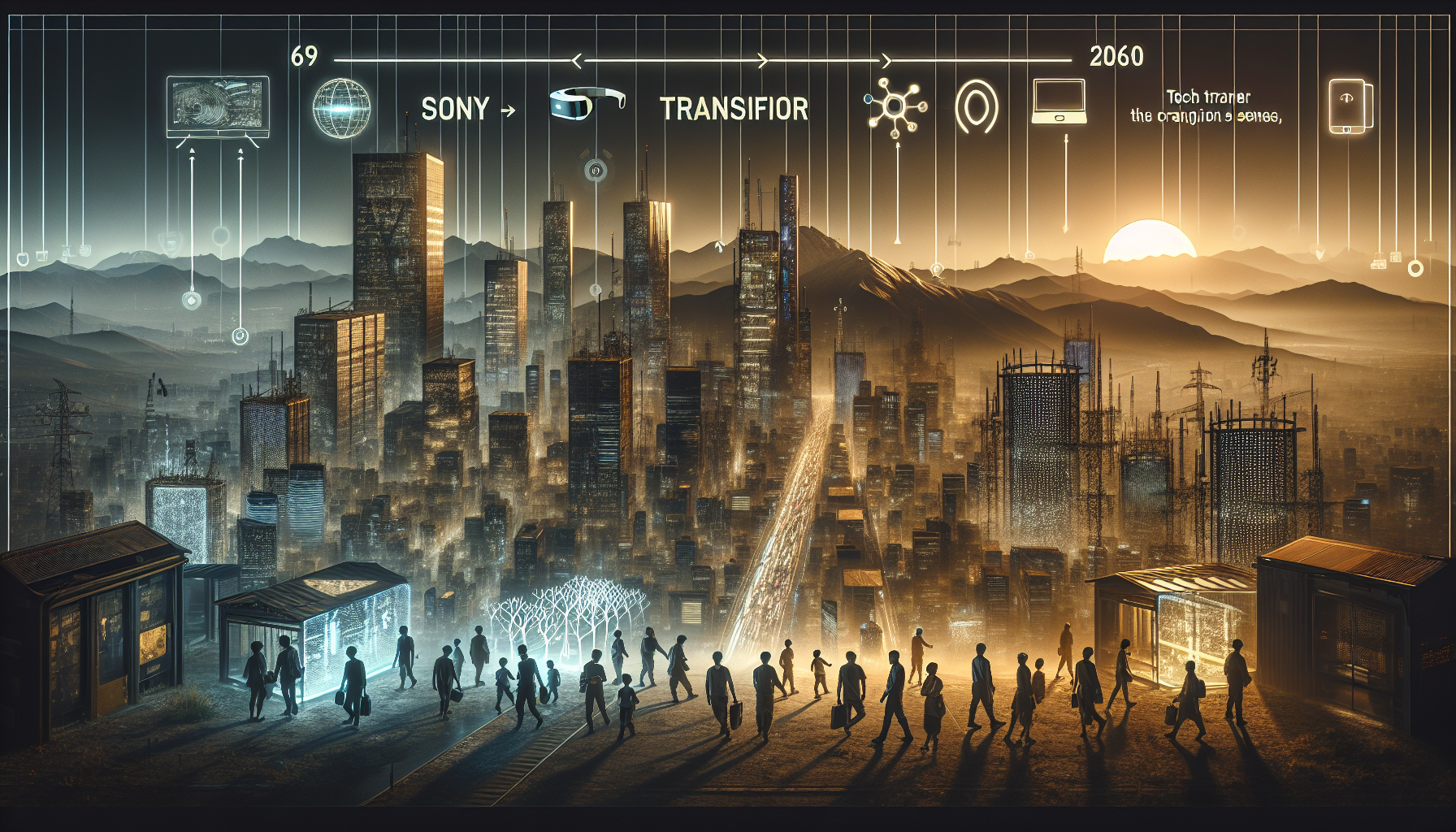
February 2024. While humanity obsessed over quaint handheld rectangles called "smartphones," Sony quietly handed over its television empire to Chinese manufacturer TCL. The tech press yawned. Wall Street shrugged. Nobody imagined this corporate reshuffling would birth the neural-visual complex that now peers through our optical implants every waking moment.
How delightfully naive we were, clutching our primitive screens like digital comfort blankets, believing we controlled what we consumed. The Sony-TCL merger created the first truly integrated content-hardware ecosystem, establishing the template for today's seamless thought-to-pixel pipelines that make our current neural feeds possible.
"The 2024 Sony-TCL deal was the Trojan horse moment," explains Dr. Amara Okonkwo, director of the Lagos Institute for Digital Archaeology. "Sony provided the content genetics, TCL brought manufacturing scale, and together they created the first self-optimizing display systems. Every binge-watching session became a data harvest for what would eventually become our retinal AIs."
The irony is exquisite. While climate refugees flooded the Eurafrican borders and Luna City struggled with its first oxygen shortage, we celebrated "cheaper televisions." Meanwhile, TCL's algorithms were learning to predict human attention spans with surgical precision, laying groundwork for today's preemptive content injection systems.
By 2031, when the Great Disconnect eliminated external screens entirely, TCL-Sony's behavioral mapping had become so sophisticated that transitioning to direct neural streaming felt "natural." We welcomed our new optical overlords with gratitude, praising the convenience of never having to choose what to watch again.
But here's the question nobody dares ask during our morning synchronization rituals: When your retinal implant knows your emotional state better than you do, when it adjusts content microseconds before you feel bored, when it floods your visual cortex with precisely the imagery needed to maintain "optimal engagement" — are you still watching television, or is television watching you?
The descendants of that 2024 handshake now process 847 billion hours of human attention daily. Our ancestors worried about "screen time" while we've eliminated the inconvenience of conscious choice entirely. Progress, they call it in the quarterly neural-metrics reports.
Perhaps the most disturbing revelation isn't that we surrendered our visual autonomy for convenience — it's how eagerly we did it. Sony and TCL simply gave us what we always wanted: to never be bored, never be alone, never be unstimulated. They delivered paradise, and we never noticed we'd become the product.
**MOTS_CLES:** neural-visual complex, optical implants, TCL-Sony merger, retinal surveillance, digital archaeology